Plant Overview
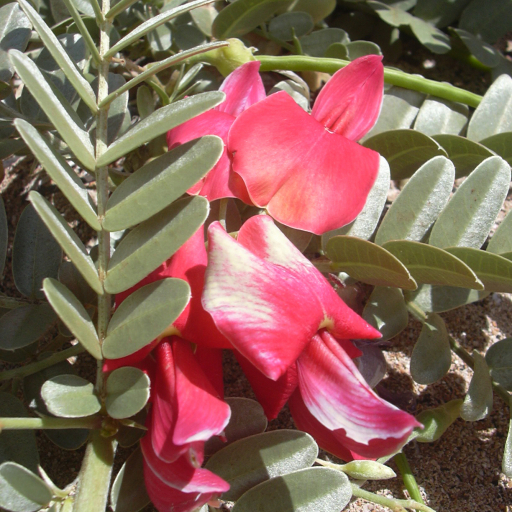
Known in its native Hawaii as ‘Ohai, this stunning member of the pea family is as rare as it is beautiful. Often found clinging to coastal dunes or sprawling across weathered lava flows, it is a resilient survivor that drapes the landscape in silvery foliage and vibrant, flame-colored blooms. To encounter an ‘Ohai is a special experience, as it is a critically endangered treasure of the Pacific islands.
🔍 How to Identify
- 🍃 The Foliage: The leaves are pinnate (feathery) and have a distinct silvery-grey cast. This "frosted" look comes from a dense layer of soft, velvety hairs—a feature known as tomentose that protects the plant from the harsh salt spray.
- 🌸 The Flowers: Large, pea-like blossoms that curve upward like a bird’s beak. They typically transition through a sunset palette, starting as pale yellow or salmon and deepening into brilliant orange or scarlet.
- 📏 Growth Habit: Depending on the wind and salt exposure, it can grow as a low-lying, sprawling groundcover or a small, gnarled tree reaching up to 15 feet.
🏡 In Your Garden
- 🏝️ Coastal Specialist: This plant is a "halophyte," meaning it thrives in salty environments. It is the perfect choice for seaside gardens where most plants struggle with the ocean breeze and sandy soil.
- ☀️ Sun & Drainage: The ‘Ohai demands full sun and exceptionally well-draining soil. Because it develops a sensitive taproot to find water deep underground, it is notoriously difficult to transplant; it’s best to plant it once in its "forever home."
⚠️ Safety & Toxicity
- 🟢 General Safety: Sesbania tomentosa is generally considered non-toxic to touch and is safe for the skin.
- 🐾 Seed Precaution: Like many members of the legume family, the seed pods should not be consumed. While not high on the list of dangerous plants, the seeds contain saponins that may cause mild digestive upset if ingested by curious pets or small children.
✨ Fun Fact
In ancient Hawaii, the vibrant flowers of the ‘Ohai were highly prized for making royal lei. Because the plant is now so rare and protected, "‘Ohai lei" are often mentioned in traditional songs and chants as symbols of rare and fleeting beauty.

Detailed Care Instructions
To grow Sesbania tomentosa plants, follow these steps:
- Choose the right location: Sesbania tomentosa plants prefer bright, full sun locations. Ensure they receive at least 6-8 hours of direct sunlight every day.
- Prepare the soil: The soil should be well-draining and fertile. Add compost or well-rotted manure to improve the soil's fertility and drainage.
- Sow the seeds: Sesbania tomentosa plants can be grown from seeds. Soak the seeds in water for about 24 hours before sowing. Plant the seeds about 1 inch deep in the prepared soil, and space them at least 12-18 inches apart.
- Watering: Keep the soil moist, but not overly saturated. Water the plants regularly, especially during dry periods. Ensure the soil doesn't dry out completely between waterings.
- Fertilization: Sesbania tomentosa plants do not require heavy fertilization. However, you can apply a balanced, slow-release fertilizer once or twice during the growing season to promote healthy growth.
- Pruning: Prune the plants to maintain shape and control their size. Remove any dead or damaged branches. Pruning encourages new growth and enhances the plant's appearance.
- Mulching: Apply a layer of organic mulch around the base of the plants. Mulching helps to retain moisture in the soil, suppresses weeds, and protects the plant's roots during extreme temperatures.
- Pests and diseases: Sesbania tomentosa plants are relatively resilient and not commonly affected by pests or diseases. However, keep an eye out for any signs of infestation or disease and treat accordingly.
- Support: If the plants are tall or sprawling in nature, provide support such as stakes or trellises to prevent them from falling or breaking.
- Harvesting: Sesbania tomentosa plants produce yellow flowers followed by bean pods. If you aim to harvest the seeds, allow the pods to mature and turn brown before collecting them. Harvest the seeds once they are fully dry.
By following these steps, you can successfully grow Sesbania tomentosa plants and enjoy their beautiful foliage and flowers.

Place in a bright room that is sun drenched almost all day. Or directly in a south-facing window.

To water this plant properly, you should make sure that the soil is adequately hydrated but not overwatered. One way to achieve this is by checking the moisture level of the soil using your finger. If the top inch of soil feels dry, it's time to water.
When watering, use a watering can or hose with a gentle stream to avoid damaging the plant. Water the soil around the base of the plant until it is moist but not muddy. Make sure to water deeply, so that the roots receive enough water to survive.
However, it’s important to note that this plant requires little watering after it has established itself in the ground. Only water it during an extended drought to keep it alive.
Additionally, it is recommended to avoid watering the foliage of the plant, as this can cause disease and issues with the leaves. Finally, be careful not to overwater the plant, as too much moisture can cause root rot and other diseases.
To fertilize this plant, use a balanced fertilizer with equal amounts of nitrogen, phosphorus, and potassium. Apply the fertilizer once every month during the growing season. Be cautious not to over-fertilize, as it may result in burnt roots and stunted growth. Water the plant thoroughly after fertilizing.
Sesbania tomentosa plant thrives in a well-draining soil mix that is rich in organic matter. The ideal soil for this plant is one that contains a blend of sandy loam, compost, and perlite or vermiculite to improve drainage. The soil should have a pH range between neutral to slightly acidic (6.0-7.5). A porous pot or container with drainage holes is recommended to allow excess water to drain through. It is essential to avoid soil that is heavy in clay, as it will retain water and may lead to root rot. Additionally, the soil should be kept moist but not saturated, and regular fertilization is essential for healthy growth. A balanced fertilizer with equal parts of nitrogen, phosphorous and potassium can be applied to the soil once a month.
The propagation of this plant can be done through seed germination or vegetative propagation. To propagate through seed germination, collect mature seeds from the plant and soak them in warm water overnight. Sow the seeds in well-drained soil and keep them moist. They prefer warm temperatures and full sun. The seeds should germinate within two weeks.
Vegetative propagation can also be done by taking stem cuttings from healthy plants. Cut a 6-8 inch stem section, removing the lower leaves, and dip the cut end into rooting hormone. Place the cutting into a pot filled with well-draining soil and keep it moist. The cutting should root within 2-3 weeks if kept in a warm and sunny location.
Once the plant has rooted, transplant it into a larger pot or directly into the garden. Ensure that the soil is well-drained and provide regular watering and fertilizing for optimal growth.








