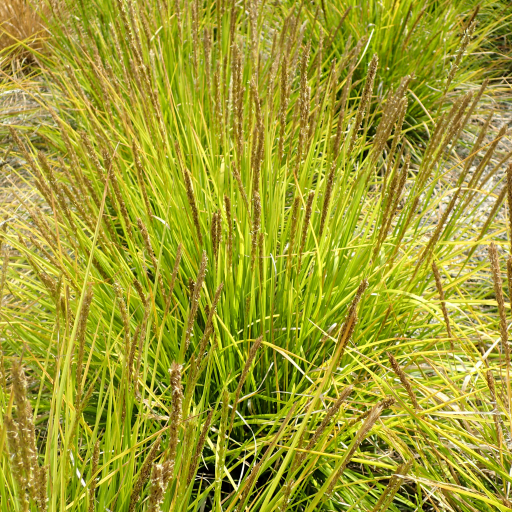
Plant Overview
Known affectionately as Autumn Moor Grass, this plant is the dependable backbone of the modern meadow garden. Native to the limestone-rich hills of Italy and Albania, it offers a refreshing lime-green hue that remains vibrant even when other grasses begin to fade. It is beloved by landscape designers for its "well-behaved" nature—staying in neat, polite mounds rather than invading the rest of your flower beds.
🔍 How to Identify
- 🌿 The Foliage: Look for narrow, linear blades that boast a distinct chartreuse or yellowish-green tint, which provides a bright pop against darker green shrubs.
- 🌾 The Flowers: In late summer, it sends up thin, wiry stems topped with narrow, silvery-white flower spikes (inflorescences) that eventually age to a soft, tawny beige.
- 📏 The Growth Habit: It forms a tidy, dense "tussock" or rounded mound, typically reaching about 12 to 18 inches in height and width.
🏡 In Your Garden
- 🌞 Adaptability: While it thrives in full sun, this is one of the few ornamental grasses that is surprisingly tolerant of light shade and alkaline (lime-heavy) soils.
- ✂️ Maintenance Nuance: As a "cool-season" grass, it begins growing early in the spring. Avoid the urge to cut it to the ground in winter; instead, give it a light "haircut" in early spring to remove dead tips and allow new growth to emerge.
- 💧 Resilience: Once its root system is established, it is remarkably drought-tolerant, making it an excellent choice for low-water landscapes or "gravel gardens."
⚠️ Safety & Toxicity
- ✅ Status: Non-toxic and generally safe.
- 🐾 Details: This grass is safe for households with curious cats, dogs, or children. Unlike some ornamental grasses that have razor-sharp serrated edges, Sesleria autumnalis has relatively soft blades that are unlikely to cause skin irritation during handling.
✨ Fun Fact
This plant is a superstar in the "New Perennial Movement." Famous designers like Piet Oudolf use it as a "matrix plant"—a living mulch that fills the gaps between showier flowers to suppress weeds and create a natural, cohesive look.

Detailed Care Instructions
To grow Sesleria Autumnalis plant, also known as Autumn Moor Grass or Silver Moor Grass, follow these steps:
- Choose the right location: Sesleria Autumnalis prefers full sun to partial shade. It can tolerate a wide range of soil types, but well-draining soil is essential. Avoid areas with heavy clay or waterlogged soil.
- Prepare the soil: If the soil is compacted or clayey, amend it with organic matter like compost to improve drainage and nutrient content. Level the soil surface and remove any weeds or grass.
- Planting: Sesleria Autumnalis can be planted from seeds or transplants. If using seeds, sow them in early spring or late fall directly into the prepared soil surface. Lightly cover the seeds with a thin layer of soil. For transplants, dig a hole slightly larger than the root ball and place the plant in it, ensuring the top of the root ball is level with the soil surface.
- Watering: Keep the soil evenly moist but not waterlogged during the establishment period. Once established, this plant is drought-tolerant and does not require frequent watering. Water deeply when the soil feels dry.
- Mulching: Apply a layer of organic mulch around the plant to help retain moisture and suppress weed growth. Keep the mulch a few inches away from the stem to prevent crown rot.
- Pruning: Sesleria Autumnalis is a low-maintenance plant that does not require regular pruning. However, you can remove any dead or damaged foliage in early spring before new growth appears.
- Fertilizing: This plant generally does not require heavy feeding. However, applying a balanced slow-release fertilizer in early spring can provide a boost to growth and overall health.
- Overwintering: Sesleria Autumnalis is hardy to USDA zones 5-9. It can withstand cold temperatures and does not require special winter protection. However, in extremely harsh climates, providing a layer of winter mulch around the plant can be beneficial.
By following these steps, you can successfully grow Sesleria Autumnalis plant and enjoy its ornamental grass-like foliage throughout the year.

Place in a bright room that is sun drenched almost all day. Or directly in a south-facing window.

Sesleria Autumnalis is a type of plant that requires regular watering to ensure its optimal health and growth. To water this plant, you should begin by selecting a watering method that is suitable for its unique needs.
For best results, you may want to use a watering can or a drip irrigation system that delivers water directly to the roots of the plant. You should avoid using a hose attachment or any method that sprays water over the plant, as this can damage its leaves and stems.
When watering Sesleria Autumnalis, you should aim to keep the soil consistently moist but not waterlogged. This can be achieved by watering thoroughly once per week, or more frequently during hot, dry weather. It is important to check the soil moisture level regularly, especially during periods of drought, to ensure that the plant is receiving enough water.
You should also take care to avoid allowing water to accumulate on the surface of the soil or in any of the plant's foliage, as this can lead to fungal diseases and other issues. It is important to water Sesleria Autumnalis in the morning or evening, when the temperatures are cooler and the plant is better able to absorb moisture.
Overall, watering Sesleria Autumnalis requires regular monitoring and attention to ensure that the plant receives enough moisture and is able to thrive in its environment. With the right care and attention, this unique and beautiful plant can be a valuable addition to any garden or landscape.
To fertilize this plant, first ensure that the soil is moist but not waterlogged. Then, apply a slow-release fertilizer with a balanced ratio of nitrogen, phosphorus, and potassium. Follow the manufacturer's instructions for the application rate, and avoid getting the fertilizer directly on the plant's foliage. Apply the fertilizer once in the early spring and again in the early fall to promote healthy growth.
Sesleria Autumnalis is a type of perennial grass that requires well-draining, nutrient-rich soil for optimal growth and development. Ideally, the soil should be slightly acidic with a pH range of 5.5 to 7.0 to promote healthy root growth and nutrient uptake.
It is important to choose a soil that is free from excessive clay or sand, as this can negatively impact water retention and drainage. Instead, a loamy soil with a mix of sand, silt, and clay is ideal, as it provides a good balance of drainage and moisture retention.
In terms of nutrients, Sesleria Autumnalis thrives in soil that is rich in organic matter. Adding compost or well-aged manure to the soil can help to improve its fertility and promote healthy root growth.
Overall, selecting the right soil for Sesleria Autumnalis is crucial for ensuring that it grows and thrives. By choosing a well-draining, nutrient-rich soil, gardeners can help this grass to establish strong roots and produce lush foliage over time.
To propagate this plant, the following steps can be taken:
- Choose a healthy and mature Sesleria Autumnalis plant with well-developed rhizomes.
- DIG OUT the plant gently from the soil, making sure to not damage the roots.
- CAREFULLY SEPARATE the rhizomes of the plant by hand.
- PLANT the divided rhizomes into new soil or containers. Make sure to plant them at the same depth as they were in the original soil.
- WATER the new plants accordingly and PLACE them in a sunny and well-drained location.
- Keep the soil moist but not waterlogged.
- Wait for the new plants to grow.
- After a few weeks, the new plants should have established roots and can now be relocated to their permanent growing location or planted in the ground.








