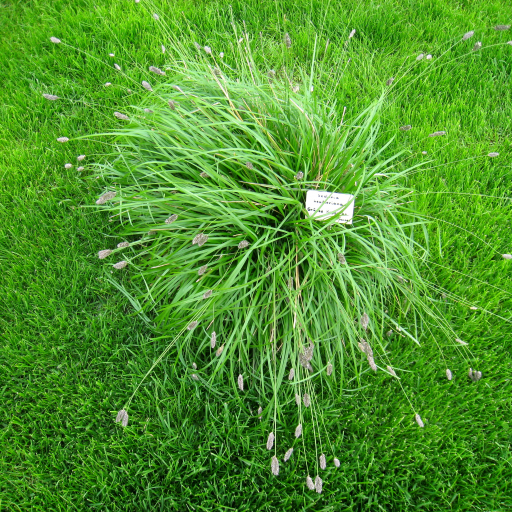
Plant Overview
Often called the Blue Moor Grass, Sesleria heufleriana is the "early bird" of the ornamental grass world. While other garden residents are still shaking off their winter slumber, this hardy Balkan native is already showing off its shimmering, two-toned foliage and dark, dramatic flower spikes. It is a favorite for those who want a low-maintenance landscape that offers visual interest even in the coldest months.
🔍 How to Identify
- 🍃 The Two-Toned Leaf: The most striking feature is the foliage; the top of the leaf blade is a bright, refreshing green, while the underside is a cool, chalky silvery-blue.
- 🌾 Dark Flower Spikes: In early spring, it produces small, egg-shaped flower heads that emerge a deep, moody purple or nearly black, eventually dusted with creamy yellow pollen.
- Compact Mound:** It grows in a tidy, tufted cushion shape, reaching about 12 to 15 inches in height, making it look like a well-groomed pincushion.
🏡 In Your Garden
- 🌱 Tough as Nails: Unlike more finicky grasses, Blue Moor Grass thrives in alkaline (lime-rich) soils and can handle heavy clay better than most. It’s a "set it and forget it" plant once established.
- ❄️ Semi-Evergreen Resilience: It holds its color throughout the winter in many climates. To keep it looking fresh, simply give it a light "haircut" in late winter before the new flower spikes emerge to clear out any tired blades.
- 🌓 Light Flexibility: While it loves the sun, it is surprisingly tolerant of light shade, making it a perfect transition plant for the edges of woodland gardens or under open-canopy trees.
⚠️ Safety & Toxicity
- ✅ Non-Toxic: Sesleria heufleriana is considered safe and non-toxic for humans, dogs, and cats.
- 🧤 Garden Comfort: Unlike some ornamental grasses (like Pampas) that have razor-sharp edges, the blades of Blue Moor Grass are relatively soft, though garden gloves are always recommended when doing heavy pruning to avoid minor skin irritation.
✨ Fun Fact
The specific epithet heufleriana honors Ludwig Ritter von Heufler, a 19th-century Austrian botanist. The plant’s unique leaf structure allows it to "shimmer" in the wind; as the breeze flips the blades, the color shifts rapidly between green and silver-blue, creating a twinkling effect in the garden.

Detailed Care Instructions
To grow Sesleria heufleriana, also known as blue moor grass, follow these steps:
- Choose an appropriate location: Sesleria heufleriana thrives in full sun to partial shade conditions. Ensure that the soil has good drainage and is not too wet. A slightly acidic to neutral pH (around 6 to 7) is ideal.
- Prepare the soil: Loosen the soil in the planting area by removing any weeds, rocks, or debris. Add organic matter like compost or well-rotted manure to improve soil fertility and drainage.
- Planting: Dig a hole slightly larger than the root ball of the plant. Place the Sesleria heufleriana in the hole, ensuring that it is at the same level as it was in the container. Backfill the hole with soil, gently patting it down around the plant to remove any air pockets.
- Watering: Water the newly planted Sesleria heufleriana thoroughly after planting to settle the soil. Thereafter, water the plant regularly, especially during periods of drought.
- Mulching: Apply a layer of organic mulch around the base of the plant to help retain moisture, prevent weed growth, and regulate soil temperature. Keep the mulch a few inches away from the stem to avoid excess moisture and potential rot.
- Pruning: Sesleria heufleriana typically does not require much pruning. However, if you notice any dead or diseased foliage, you can trim it back to maintain the plant's appearance and health.
- Fertilizer: Blue moor grass is not a heavy feeder. A light application of a balanced organic fertilizer in the spring season should be sufficient. Avoid over-fertilizing, as it can lead to excessive leaf growth and reduced flower production.
- Dividing: Over time, Sesleria heufleriana can become congested. To rejuvenate the plant and promote healthy growth, you can divide it every few years. Lift the clump from the ground and carefully separate it into smaller sections, ensuring each division has a good portion of roots and foliage intact. Replant the divisions in prepared soil.
- Protection from pests and diseases: Sesleria heufleriana is generally resistant to pests and diseases. However, keeping the plant in healthy conditions by providing adequate sunlight, watering, and drainage will minimize the risk of issues.
By following these guidelines, you should be able to grow Sesleria heufleriana successfully and enjoy its unique blue-green foliage and attractive seed heads.
One way to water this plant is to ensure that the soil around its root system is consistently moist but not soggy. This can be achieved by watering the plant deeply once a week rather than lightly every day. It is important to avoid letting the plant sit in standing water or in a container without proper drainage. Additionally, this plant requires well-draining soil and does not tolerate soils that are too heavy or have poor drainage. It is also important to avoid watering the plant too late in the day, as this can increase the risk of fungal diseases. Instead, it is best to water early in the morning so that the plant can dry off during the day.
To fertilize this plant, you should use a nitrogen-rich fertilizer in the early spring before new growth appears. Scatter the fertilizer around the base of the plant and water thoroughly to ensure the nutrients reach the roots. Avoid over-fertilizing, as this can lead to excessive foliage growth at the expense of flowering.
Sesleria heufleriana is a perennial plant species that prefers well-drained soils. It can grow in a range of soil pH levels but prefers those that are slightly acidic to neutral in nature. The soil for this plant should be fertile and have good water-holding capacity to ensure proper growth and development. The use of a well-draining potting mix with a mix of compost, sand, perlite, and vermiculite would be suitable for this plant. The mix should be rich in organic matter and provide good drainage while retaining enough moisture to support the plant's growth. It is essential to ensure that the soil is not too compacted as it affects nutrient uptake, water retention, and oxygen availability, leading to stunted growth or even death of the plant. Regular soil testing can also help determine soil requirements and the need for amendments to maintain optimal soil conditions for Sesleria heufleriana.
To propagate this plant, one can divide the clumps in the spring or fall. Gently dig up the clump and separate it into smaller clumps with roots attached. Replant the smaller clumps in well-draining soil and water thoroughly. Alternatively, one can take stem cuttings in the summer. Cut a stem that is about 3 inches long and remove the lower leaves. Dip the end into rooting hormone and plant it in a well-draining potting mix. Keep the soil moist and in a warm, bright location until roots form. Transplant to a larger pot or the garden once the cutting has established itself.








