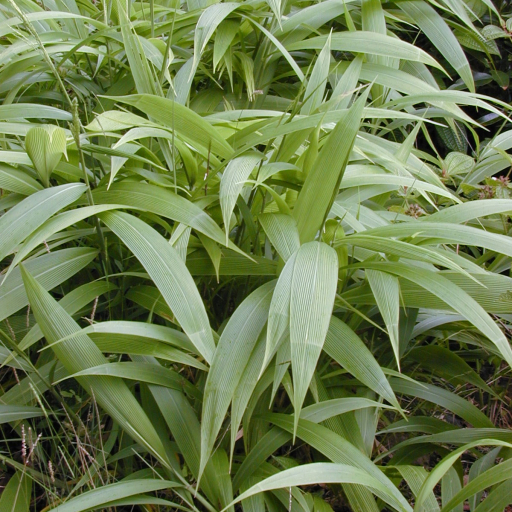
Plant Overview
Known as the Palm Grass or Highland Grass, this lush evergreen is one of nature’s greatest imposters. While it looks remarkably like a cluster of baby palm seedlings, it is actually a vigorous member of the grass family (Poaceae). Native to the tropics of Asia, it has traveled the world as a popular ornamental plant, prized for adding a structural, "jungle" feel to gardens and interiors without the slow growth rate of actual palms.
🔍 How to Identify
- 🍃 The Foliage: The most striking feature is the wide, lance-shaped leaves that are deeply pleated or "ribbed" lengthwise, mimicking the texture of a young palm frond.
- 🎋 The Growth Habit: It forms dense, architectural clumps that can reach up to 5 feet tall, with stems that emerge from a central base.
- 🌾 The Seed Heads: During the blooming season, it produces tall, slender stalks topped with bristly, greenish-purple flower spikes that sway gracefully in the wind.
🏡 In Your Garden
- 💧 Thirsty Tendencies: Unlike many grasses that tolerate drought, Palm Grass craves moisture. It thrives near water features or in damp garden spots, and its leaves will quickly brown at the tips if the soil stays dry for too long.
- 🌑 The Shade Seeker: While most grasses are sun-worshippers, this plant is happiest in partial shade. In intense afternoon sun, those beautiful pleated leaves can suffer from sunburn.
- 🌱 Space Management: Be mindful of its enthusiasm! In warm, humid climates, it can spread rapidly via its seeds and underground rhizomes, sometimes outcompeting its neighbors if not kept in check.
⚠️ Safety & Toxicity
- 🟢 Status: Generally considered non-toxic to humans and common household pets.
- ✂️ Mechanical Irritation: While not poisonous, the leaf edges are very finely serrated. Rough handling can lead to minor "grass cuts," so wearing gloves while pruning or dividing the plant is a smart move for those with sensitive skin.
✨ Fun Fact
In many parts of Southeast Asia, Setaria palmifolia isn't just an ornamental plant; it is a traditional food source. The grain-like seeds are sometimes harvested and cooked as a substitute for rice or millet, earning it a place in historical "famine food" records.

Detailed Care Instructions
To grow Setaria palmifolia plants, also known as Fountain Grass or Palm Grass, you can follow these steps:
- Climate and soil: Setaria palmifolia plants prefer a tropical or subtropical climate and thrive in well-drained soil. They can tolerate a variety of soil types, including sandy, loamy, or clay soils.
- Planting location: Choose a spot with full sun exposure, as Setaria palmifolia plants require at least 6-8 hours of direct sunlight each day to flourish.
- Seed selection and preparation: Obtain Setaria palmifolia seeds from a reputable source. Soak the seeds in warm water for 24 hours to soften their hard outer shell. This process, known as scarification, helps improve germination rates.
- Germination: Fill a small pot or seed tray with a well-draining seed-starting mix. Plant the seeds about 1/4 inch deep into the soil, covering them lightly. Water the soil to keep it moist but not waterlogged. Place the pot or tray in a warm area with temperatures around 70-80°F (21-27°C).
- Watering and care: During the germination stage, it's important to keep the soil consistently moist. Once the seedlings emerge, reduce watering to allow the soil to dry out slightly between waterings. However, avoid letting the soil completely dry out, as it can harm the young plants.
- Transplanting: When the seedlings have developed a few sets of leaves and are about 2-3 inches tall, they are ready to be transplanted into larger pots or directly into the ground. Choose a location with enough space for the plant to reach its full size, as Setaria palmifolia can become quite large.
- Pruning: Setaria palmifolia plants generally do not require frequent pruning. However, you can trim back any dead or damaged foliage to maintain a tidy appearance.
- Fertilization: Apply a balanced slow-release fertilizer in spring and summer to provide necessary nutrients for growth. Follow the manufacturer's instructions for application rates.
- Pest and disease control: Setaria palmifolia plants are generally resistant to pests and diseases. However, keep an eye out for common garden pests like aphids or mites and treat them accordingly if necessary.
- Enjoyment: As your Setaria palmifolia plant grows, it will develop large, feathery plumes that resemble palm fronds, giving it a distinctive tropical look. Enjoy its beauty and incorporate it into your landscape design as desired.
Remember to check your local regulations before growing Setaria palmifolia plants, as they can be considered invasive in certain areas.

Place in a bright room that is sun drenched almost all day. Or directly in a south-facing window.

To water this plant, you should first determine the moisture level of the soil by sticking your finger into the dirt. If the top layer of soil feels dry, it is time to water the plant. You should provide a deep watering, making sure that the water reaches the plant's roots. It is important not to overwater the plant, as this can lead to root rot. Allow the soil to dry out slightly between waterings. You may also consider using a well-draining soil mix and a pot with drainage holes to help prevent waterlogging. Additionally, you can mist the plant regularly to increase humidity levels.
To fertilize this plant, use a balanced liquid fertilizer during the growing season, following the instructions on the label. Apply fertilizer every two weeks during the spring and summer, and reduce frequency during the fall and winter. Always water the soil before and after fertilizing to prevent root burn. Additionally, be sure to monitor the plant's growth and adjust fertilization as needed based on its health and appearance.
The recommended soil type for the Setaria Palmifolia plant should be well-draining and fertile. The pH level of the soil should range from 6.0 to 7.5. It thrives in soil that is rich in organic matter. The soil should be deep to accommodate the plant's root system. The recommended soil mix can include a combination of peat moss, compost, and perlite. The soil should be kept constantly moist but not waterlogged. It is advised to avoid using heavy clay soils because they can cause root rot. The plant prefers slightly acidic soil.
- Start by selecting a healthy mature plant with a well-developed root system.
- Prepare a well-draining potting mix using equal parts of sand, perlite, and peat moss.
- Take a sharp and sterile cutting tool and cut a stem from the mature plant. It is best to do this in the early morning or late afternoon when the plant is less stressed.
- Remove the lower leaves from the stem, leaving only a few leaves at the top.
- Dip the cut end of the stem into rooting hormone powder to promote root growth.
- Insert the stem into the prepared potting mix, making sure that the bottom of the stem is buried at least one inch deep.
- Water the soil thoroughly, ensuring that the soil is evenly moist.
- Cover the pot with a clear plastic bag or a plastic wrap to create a humid environment.
- Place the pot in a warm location with bright, indirect sunlight.
- Occasionally remove the plastic wrap to allow for some air circulation and check the soil moisture level.
- In approximately four to six weeks, the stem should have rooted and started to grow new leaves.
- Once the plant has grown several new leaves, it can be transplanted into a bigger container or planted outdoors.








