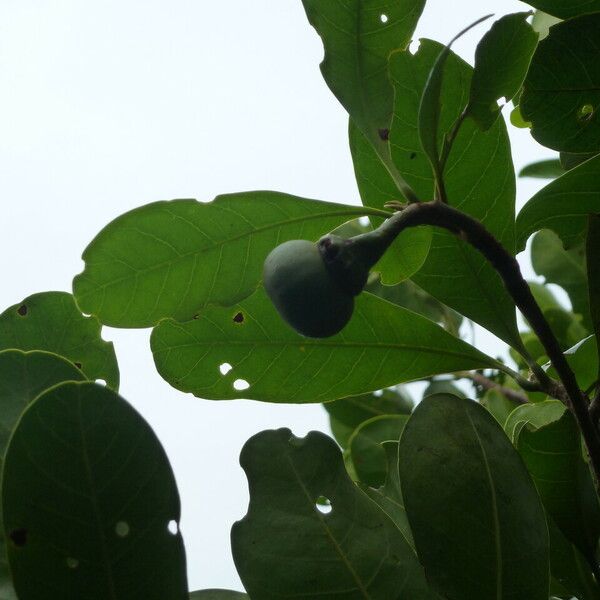
Plant Overview
Deep within the Amazonian basin, the Sextonia rubra—commonly known as Louro Vermelho or Determa—reigns as a towering guardian of the rainforest. Often nicknamed the "Red Louro" due to the warm, mahogany-like hue of its inner wood, this tree is a cornerstone of South American ecology. It’s a species that tells a story of endurance, producing aromatic resins that have protected it from the humid jungle elements for centuries.
🔍 How to Identify
- 🍃 Leathery Foliage: The leaves are thick, elliptical, and have a waxy texture that helps the tree shed the heavy tropical rains of its homeland.
- 🍒 Acorn-like Fruit: It produces small, dark fruits tucked into woody, cup-shaped bases (cupules), bearing a striking resemblance to tiny, exotic acorns.
- 🪵 Red-Tinged Bark: While the outer bark is grayish-brown, any small nick reveals a rich, reddish-brown interior that gives the plant its Latin name, rubra.
🏡 In Your Garden & Ecology
- 🌳 The Space Giant: In its natural habitat, this tree can reach over 100 feet. For those attempting to grow it in botanical collections, it requires immense vertical space and deep, well-draining soil to accommodate its powerful root system.
- ☁️ Atmospheric Needs: As a child of the tropics, it thrives on high humidity and consistent warmth. It is highly sensitive to frost and will "pout" by dropping leaves if the air becomes too dry or the temperature dips significantly.
- 💧 Hydration Nuance: While it loves water, it hates "wet feet." In a landscape setting, it prefers a site where water moves freely through the soil, mimicking the sloped terrain of the Amazonian uplands.
⚠️ Safety & Toxicity
- ✅ General Safety: Sextonia rubra is generally considered non-toxic to humans and common pets if touched or grown nearby.
- 🤧 Respiratory Sensitivity: The wood and sawdust of this tree contain high amounts of natural oils and resins. Woodworkers often report that the dust can be an irritant to the skin and lungs, so caution is advised during any pruning or handling of the timber.
✨ Fun Fact
The wood of the Sextonia rubra is so rich in natural waxes and oils that it is naturally resistant to water and insects. Because of this, it was historically the preferred material for building dugout canoes and riverboats in the Amazon—some of which could last for decades without rotting!

Detailed Care Instructions








