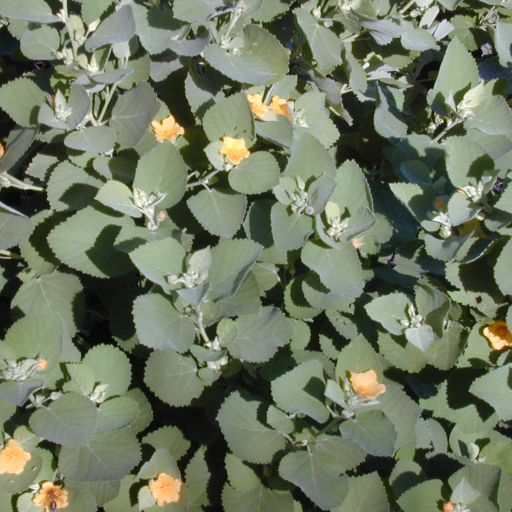
Plant Overview
Known as the 'Ilima, this sun-loving beauty is a iconic symbol of the Hawaiian Islands, specifically serving as the official flower of O'ahu. It is a remarkably versatile species, appearing as a creeping groundcover on salt-sprayed rocky coasts or as a lush, upright shrub in mountain forests. Often called the "Yellow Sida," its delicate blossoms have been cherished for centuries, once reserved for the highest levels of Hawaiian royalty.
🔍 How to Identify
- 🌼 Hibiscus-like Blooms: Small, five-petaled flowers that are usually bright yellow to deep golden-orange, often featuring a subtle dark red ring at the center.
- 🍃 Velvety Foliage: Heart-shaped or oval leaves with serrated (saw-toothed) edges and a soft, fuzzy texture created by tiny silver-green hairs.
- 🌱 Adaptable Habit: In windy, coastal areas, it grows as a dense, prostrate mat, while in sheltered inland gardens, it can reach up to 5 feet tall.
🏡 In Your Garden
- 🌊 Salt & Wind Specialist: Because it evolved on Pacific coastlines, 'Ilima is exceptionally resistant to salt spray and high winds, making it an elite choice for seaside landscaping where other plants wither.
- ☀️ Sun and Drainage: While it is drought-tolerant once established, it "hates wet feet." It requires extremely well-draining soil—ideally sandy or rocky—to prevent root rot during rainy seasons.
⚠️ Safety & Toxicity
- ✅ Safe Status: 'Ilima is generally considered non-toxic to humans, cats, and dogs. It is a very "friendly" addition to family gardens.
- 🍵 Historical Context: While parts of the plant were used in traditional Hawaiian medicine and even as a mild food source for children in the past, it is best enjoyed today for its visual beauty rather than consumption.
✨ Fun Fact
A single high-quality "Lei 'Ilima" can require over 500 to 1,000 individual blossoms. Because the petals are so thin and delicate, making these leis is a labor-intensive art form that was historically a sign of immense prestige and wealth.

Detailed Care Instructions
| Humidity | Dry |
| Lighting | Full Sun |
| Difficulty | Medium |
To grow Sida fallax, also known as the Whitehead's mallow or Brazilian Tea, follow these steps:
- Choose the right location: Select a spot with full sun to partial shade for planting the Sida fallax. Ensure the area has well-draining soil.
- Prepare the soil: Before planting, prepare the soil by loosening it with a garden fork or tiller. You can also add compost or organic matter to improve the soil's fertility and drainage.
- Propagation: Sida fallax can be propagated from seeds or stem cuttings. If using seeds, sow them directly into the prepared soil, lightly covering them with a thin layer of soil. If using stem cuttings, take 4-6 inch cuttings from a healthy plant, remove the lower leaves, and insert them into the soil. Keep the soil slightly moist until roots form.
- Watering: Sida fallax prefers moderate watering. Water the plant deeply but infrequently, allowing the top few inches of soil to dry out between waterings. Avoid overwatering as it can lead to root rot.
- Fertilizer: It is generally not necessary to fertilize Sida fallax unless the soil is poor in nutrients. If required, you can use a balanced slow-release fertilizer once or twice a year to promote healthy growth.
- Pruning: While Sida fallax doesn't require significant pruning, you can trim back any overgrown or damaged branches to maintain the desired shape and promote better air circulation.
- Protection from pests: Monitor the plant for common pests like aphids, whiteflies, or scale insects. If infestation occurs, treat with organic insecticidal soap or neem oil according to the manufacturer's instructions.
- Winter care: In areas with cold winters, provide protection to Sida fallax by covering it with a frost cloth or moving it indoors in a well-lit area. Sida fallax is typically hardy in USDA zones 8-11.
By following these guidelines, you should be able to successfully grow Sida fallax. Remember to provide care, monitor for pests, and enjoy the beautiful blooms of this plant.

Place in a bright room that is sun drenched almost all day. Or directly in a south-facing window.

To properly water this plant, it is important to first check the soil moisture level. This can be done by inserting your finger into the soil up to the first knuckle. If the soil feels dry at this depth, it's time to water the plant.
When watering, it's important to avoid getting the leaves wet as this can promote the growth of fungal diseases. Instead, water the plant at the base, either by using a watering can or a drip irrigation system. Be sure to water thoroughly, allowing the water to soak into the soil and reach the plant's roots.
Overwatering can be detrimental to this plant, so it's important to not water too frequently. Aim to water deeply once a week or when the soil has completely dried out between watering sessions. Adjust watering according to environmental conditions, such as humidity, temperature and rainfall.
To fertilize Sida Fallax, use a balanced fertilizer with equal amounts of nitrogen, phosphorus, and potassium. Apply the fertilizer every four to six weeks during the growing season, from spring to fall. Avoid over-fertilizing, which can lead to excessive foliage growth at the expense of flowers. Water the plant well after fertilizing to prevent root burn. Always follow the label instructions for the specific fertilizer being used.
Sida fallax is a plant species that thrives in well-draining soil that is rich in organic matter. A sandy loam or loamy soil with a pH level between 6.5 and 7.0 is ideal for the growth of Sida fallax. Additionally, adding compost or aged manure to the soil can help provide essential nutrients for the plant to thrive. It is important to avoid waterlogged or compacted soil, as this can lead to root rot and hinder the plant's growth. Proper soil preparation is essential for the successful cultivation of Sida fallax plants.
Sida fallax is a plant species that can be propagated using several methods. One of the most common propagation methods is using cuttings. To propagate Sida fallax using cuttings, follow these steps:
- Choose a healthy plant to propagate from. Look for a plant that is disease-free and has healthy leaves.
- Prepare a pot with potting soil. Make sure the pot has proper drainage.
- Cut a stem from the Sida fallax plant. The stem should be around 10 cm in length, and it should have several healthy leaves.
- Remove the lower leaves from the stem. Leave only a few leaves at the top.
- Dip the cut end of the stem into rooting hormone powder.
- Make a hole in the soil and insert the stem into it. Gently press the soil around the stem to hold it in place.
- Water the soil to keep it slightly moist. Do not overwater as it can cause the stem to rot.
- Place the pot in a warm, bright area, but not in direct sunlight. The stem should start rooting in a few weeks.
- After the stem has rooted, transplant it to a larger pot or outdoors in a garden bed.
Other propagation methods for Sida fallax include seed propagation and division. Seeds can be collected from the plant and sown in a pot or directly in a garden bed. Division involves splitting the root ball of a mature plant and replanting the divided sections.








