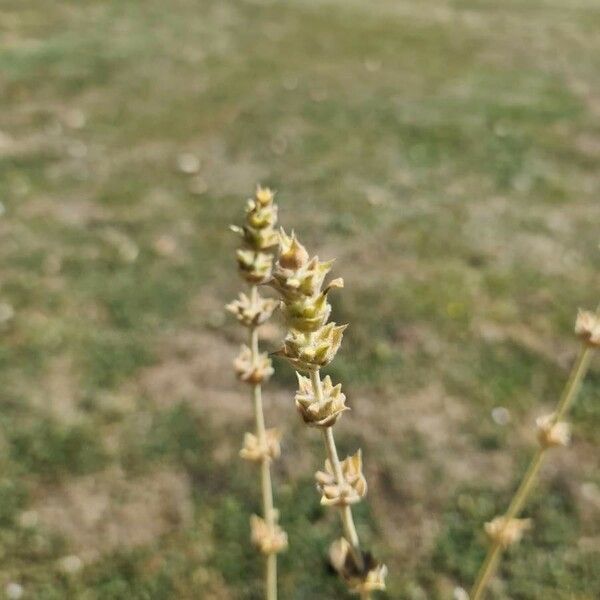
Plant Overview
Known affectionately as "Italian Ironwort," this resilient perennial is a staple of sun-drenched Mediterranean hillsides. It has been prized since antiquity, not just for its soothing herbal tea, but for its legendary reputation for healing wounds—specifically those inflicted by iron weapons. Its silvery, wooly appearance makes it look as though it’s perpetually dusted in a fine layer of frost, even in the heat of summer.
🔍 How to Identify
- ☁️ Velvety Foliage: The leaves and stems are covered in a dense, soft "wool" of silver-grey hairs, which helps the plant retain moisture in harsh sun.
- 🍦 Flower Spikes: It produces upright, pagoda-like spikes. Small, pale yellow flowers peek out from between greenish-yellow, leaf-like bracts.
- 🌿 Aromatic Scent: When the leaves are bruised or dried for tea, they release a mild, earthy fragrance reminiscent of citrus and sage.
🏡 In Your Garden
- 🪨 The Rocky Life: This plant is a true lithophyte at heart; it thrives in poor, rocky, or sandy soils where other plants might struggle. It absolutely hates "wet feet," so ensuring sharp drainage is the secret to keeping it happy.
- ☀️ Sun Worshipper: To develop its characteristic silver color and potent essential oils, Sideritis italica needs full, intense sun. In shadier spots, it may turn greener and lose its compact, sturdy shape.
⚠️ Safety & Toxicity
- ✅ Safe for Humans: This species is famously used to make "Mountain Tea," valued for its antioxidant and anti-inflammatory properties.
- 🐾 Pet Friendly: There are no known toxicities for cats or dogs. However, the fuzzy texture of the leaves can occasionally cause mild mouth irritation if a curious pet decides to chew on a large amount.
✨ Fun Fact
The name Sideritis is derived from the Greek word sideros, meaning iron. In ancient times, it was believed that the plant was a literal "iron-heal," capable of curing any soldier wounded by a sword or an arrow during battle.

Detailed Care Instructions
To water this particular plant, it is important to take into consideration the soil moisture level. The plant prefers well-draining soil, so it's important to avoid waterlogging the roots. It's ideal to water the plant deeply but infrequently to encourage root growth and promote drought tolerance. To determine when to water, check the soil moisture level by sticking your finger or a moisture meter into the soil. If the soil is dry to a depth of about 1 inch, it's time to water. Water the plant slowly at the base, avoiding wetting the foliage, and allow the excess water to drain from the pot. Avoid letting the plant sit in standing water, as this can lead to root rot. It's generally better to underwater than to overwater this plant, as it is adapted to drier conditions.
Sideritis Italica plant requires soil that is well-drained and has good aeration. The soil should be slightly acidic to neutral with a pH range of 5.5 to 7.0. It is recommended to use a mixture of several types of soil, including sandy loam, loam, and clay loam. The soil should be rich in organic matter and nutrients, and it is essential to avoid using heavy, compacted soils that do not drain well. Adding compost, perlite, or vermiculite to the soil can also help improve drainage and aeration. It is crucial to water the plant regularly and avoid overwatering, as this can lead to root rot.








