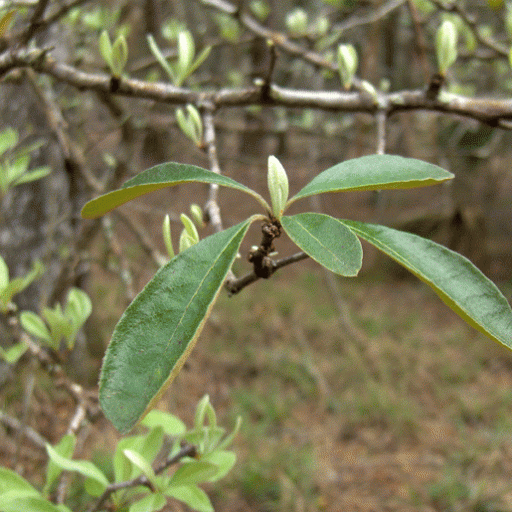
Plant Overview
Often referred to as the Gum Bully, Chittamwood, or Woollybucket Bumelia, this resilient North American native is a true survivor of the Southern landscape. While its name might sound a bit intimidating, it is actually a gentle giant (or shrub) known for its incredibly hard wood and soft, "woolly" leaves. Historically, children in the Southern United States would seek out this tree to find the sticky, clear sap that oozes from its bark to use as a natural, wild chewing gum.
🔍 How to Identify
- ☁️ The "Woolly" Underside: The most distinct feature is the leaf's underside, which is covered in a dense mat of soft, rusty, or silvery hairs, giving it a velvety texture.
- ⚔️ Hidden Spines: Watch your fingers! The branches often feature short, sharp thorns tucked among the leaves, which help protect the tree from browsing animals.
- 🌳 The Bark & Sap: Older trees have deeply fissured, dark gray bark. If the bark is pierced, it exudes a gummy, milky latex sap that eventually hardens.
- 🍇 Dark Berries: In the autumn, it produces small, oval, black fruits that look like tiny plums, providing a vital feast for local bird populations.
🏡 In Your Garden
- 💪 Iron-Clad Resilience: This is a "plant it and forget it" species once established. It is exceptionally drought-tolerant and thrives in poor, rocky, or alkaline soils where other trees might struggle.
- 🐢 Slow and Steady: Because its wood is so dense (it is part of the "Ironwood" family), it grows quite slowly. It invests its energy into deep roots and sturdy limbs rather than quick height.
- 🦋 Wildlife Magnet: It is a fantastic choice for a pollinator garden. Its tiny, bell-shaped white flowers have a sweet, honey-like fragrance that attracts bees and butterflies by the dozen.
⚠️ Safety & Toxicity
- 🟢 Generally Safe: Sideroxylon lanuginosum is not known to be toxic to humans, dogs, or cats. In fact, many parts of the plant have been used in traditional folk medicine.
- 🌵 Physical Hazard: The primary safety concern is the thorns. They are quite rigid and can easily puncture skin or bicycle tires, so it is best planted away from high-traffic walkways or children's play areas.
✨ Fun Fact
The name Sideroxylon literally translates from Greek as "Iron Wood." Its wood is so dense and heavy that it is one of the few types of timber that will actually sink in water rather than float!

Detailed Care Instructions
To grow a Sideroxylon lanuginosum plant, also known as gum bully or woolly bully, you can follow these steps:
- Choose the right location: Gum bully grows well in full sun or partial shade. Ensure that the chosen spot has good drainage and enough space for the plant to grow.
- Soil preparation: Prepare the soil by clearing any weeds or debris from the area. Amend the soil with organic matter like compost to improve its fertility and drainage.
- Planting: Dig a hole twice as wide and deep as the plant's root ball. Gently place the plant in the hole, ensuring that it sits at the same level as it was in the nursery pot. Backfill the hole with soil, firming it gently to remove any air pockets.
- Watering: Water the newly planted gum bully thoroughly, allowing the water to reach the roots. After watering, spread a layer of mulch around the plant to retain moisture and control weed growth.
- Pruning: Prune the plant in early spring to remove any dead or damaged branches. This will promote healthy growth and shape the plant as desired.
- Fertilizing: Apply a slow-release fertilizer during the growing season to provide the plant with essential nutrients. Follow the manufacturer's instructions for the appropriate dosage.
- Maintenance: Monitor the plant regularly for any signs of pests or diseases. Treat any issues promptly to prevent them from spreading. Regularly water the plant during dry periods, but avoid overwatering as it can cause root rot.
- Propagation: You can propagate Sideroxylon lanuginosum through seeds or cuttings. Collect seeds from mature fruits and sow them in well-draining soil. Plant cuttings in a pot with a mix of sand and peat moss, keeping them moist until roots develop.
Remember to check the specific care requirements for Sideroxylon lanuginosum in your region, as different climates may require minor adjustments to these general guidelines.

Place in a bright room that is sun drenched almost all day. Or directly in a south-facing window.

When caring for Sideroxylon Lanuginosum, it is important to properly water the plant. One way to do this is to first check the soil moisture level by inserting your finger about two inches into the soil. If it feels dry, it is time to water the plant.
When watering, it is important to do so slowly and evenly, allowing the water to penetrate the soil deeply. This will ensure that the roots receive adequate moisture. Avoid watering too frequently, as this can lead to waterlogged soil and root rot.
If the plant is in a container, make sure there are drainage holes in the bottom to allow excess water to escape. If the plant is in the ground, make sure the soil is well-draining.
During periods of high heat or drought, it may be necessary to water Sideroxylon Lanuginosum more frequently. However, be careful not to overwater, as this can also be detrimental to the plant's health.
To fertilize this plant, first, choose a balanced fertilizer with equal amounts of nitrogen, phosphorus, and potassium. Apply the fertilizer in the early spring or late fall when the plant is not actively growing. Spread the fertilizer evenly around the base of the plant, being careful not to allow it to come into contact with the leaves or stems. Water the plant thoroughly after applying the fertilizer to help it absorb the nutrients. Avoid over-fertilizing, as this can damage the plant and make it more susceptible to pests and diseases.
The ideal soil for this plant should be well-draining with good moisture retention properties. A mixture of loam, sand, and organic matter is recommended to provide adequate nutrients and drainage. The soil pH should be slightly acidic, ranging from 5.5 to 6.5. This plant prefers soils that are rich in minerals and organic matter, and will thrive in soils that are moderately fertile. It is also tolerant of salty soils and can grow well in coastal areas with sandy soils. It is important to avoid overwatering and allow the soil to dry out slightly between watering to prevent root rot.
To propagate this plant, one can start by taking softwood cuttings from the parent plant during the early growing season. The cuttings should be about 5-6 inches long and should be taken from the tip of the branch. The leaves on the bottom half of the cutting should be removed.
The cutting should then be dipped in rooting hormone powder and placed into a well-draining soil mix. It is recommended to use a rooting hormone powder that is specifically designed for softwood cuttings. The soil mix should be kept moist but not waterlogged, and the cutting should be placed in a warm and bright location but not exposed to direct sunlight.
Once the cutting has taken root, it should be repotted into a larger container or planted outdoors in a sunny location with well-draining soil. It is important to keep the soil moist but not waterlogged during the establishment phase.
It is important to note that this plant can also be propagated by seed, but this method may take longer and may not produce plants that are identical to the parent plant.








