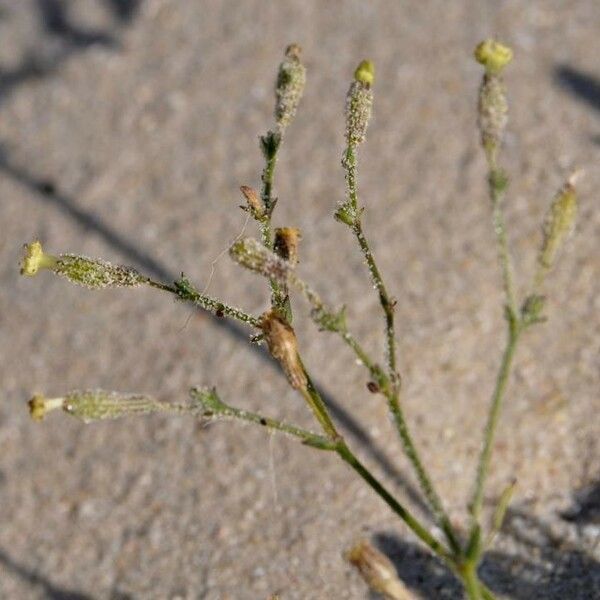
Plant Overview
Known commonly as the Nice Catchfly, this resilient coastal beauty hails from the sun-drenched shores of the Mediterranean. It earns its evocative name from the sticky, glandular hairs covering its stems, which act like natural flypaper to trap small crawling insects. A master of the dunes, it is often found dancing in the sea breeze where few other plants can survive.
🔍 How to Identify
- 🌸 Notched Petals: The flowers feature five delicate petals, often deeply lobed or notched at the tips, giving them a fringed, star-like appearance in shades of white or pale pink.
- 🍯 The "Sticky" Factor: The stems and calyx (the base of the flower) are covered in tiny, glue-tipped hairs that feel tacky to the touch—a clever defense against nectar thieves.
- 🍃 Hairy Foliage: The leaves are narrow and covered in a fine downy fuzz, which gives the plant a soft, greyish-green hue and helps it retain moisture in salty air.
🏡 In Your Garden
- 🏖️ Sand Specialist: This plant is a "psammophile," meaning it is a lover of sand. In a garden setting, it demands exceptionally well-draining soil and is a perfect candidate for rock gardens or coastal landscapes where other plants might wither.
- 💨 Rugged Resilience: Evolution has made the Nice Catchfly incredibly tough against salt spray and high winds. It prefers "lean" soil—if the ground is too rich or fertilized, the plant may become leggy and lose its compact, charming shape.
⚠️ Safety & Toxicity
- ✅ Non-Toxic: Silene nicaeensis is generally considered safe and is not known to be poisonous to humans, cats, or dogs.
- 🧤 Tactile Sensitivity: While not toxic, the sticky secretions can be a bit messy and may collect dust or small debris. If you have very sensitive skin, the tiny hairs might cause mild mechanical irritation, so light gardening gloves are a good idea.
✨ Fun Fact
Despite the name "Catchfly," this plant is not carnivorous! It doesn't eat the bugs it traps. Instead, it uses its sticky stems as a biological barrier to stop ants and other "crawlers" from reaching its nectar, saving the sweet rewards specifically for flying pollinators like bees and butterflies.

Detailed Care Instructions
To grow Silene nicaeensis, follow these steps:
- Seed collection: Look for mature seed capsules on existing plants. Harvest the capsules when they turn brown and dry. Collect and store the seeds in a cool, dry place until ready for planting.
- Preparing the soil: Silene nicaeensis prefers well-draining soil rich in organic matter. Prepare the planting area by removing any weeds or grass and loosening the soil with a garden fork or tiller. Add compost or well-rotted manure to improve fertility.
- Planting: Sow the seeds directly into the prepared soil in early spring or fall, as these are the optimal times for germination. Scatter the seeds evenly on the soil surface and lightly cover them with a thin layer of soil or sand.
- Watering: Keep the soil consistently moist but avoid overwatering. Use a gentle spray or mist setting when watering to prevent displacing the seeds. Once the plants establish, reduce the frequency of watering, allowing the soil to dry slightly between watering sessions.
- Sunlight: Silene nicaeensis thrives in full sun to partial shade. Ensure the plants receive at least 6 hours of direct sunlight per day for healthy growth.
- Maintenance: Remove any weeds that compete with the young Silene nicaeensis plants for nutrients and space. Mulching around the plants can help suppress weed growth and retain soil moisture.
- Fertilization: Silene nicaeensis generally does not require heavy fertilization. However, if the soil is poor in nutrients, you can apply a balanced organic fertilizer during the growing season to promote healthy growth.
- Pruning and Deadheading: Silene nicaeensis does not require regular pruning but remove any dead or damaged stems or flowers during the growing season. Deadheading (removing spent flowers) can encourage further blooming.
- Propagation: Silene nicaeensis can also be propagated through division. Divide mature clumps of the plant in early spring or fall, ensuring each division has adequate roots and stems. Replant the divisions at the same depth as the original plant.
- Winter care: Silene nicaeensis is hardy and can withstand moderate frosts. However, to protect the plant in areas with severe winters, you can apply a layer of mulch around the base to insulate the roots.
By following these steps, you should be able to successfully grow Silene nicaeensis and enjoy its beautiful blooms.

Place in a bright room that is sun drenched almost all day. Or directly in a south-facing window.

Silene Nicaeensis is a species of plant that requires proper watering to thrive. To water this plant, you should first ensure that the soil is dry to a depth of about one inch before you begin watering. This will help prevent over-watering and waterlogging, which can damage the plant.
When watering the Silene Nicaeensis, use a watering can or hose with a gentle spray nozzle to avoid damaging the plant or disturbing the soil. Water the plant at the base, directing the water towards the root zone, rather than spraying water over the leaves. This will minimize the risk of fungal diseases and also help the plant soak up as much water as it needs.
Water the plant slowly and deeply to allow the water to soak into the soil and reach the roots. Be careful not to get water on the plant's foliage or flowers, as this can cause damage or disease. After watering, allow the soil to drain and do not let the plant sit in excess water.
During hot summer months, Silene Nicaeensis may require more frequent watering to prevent the soil from drying out completely. However, in the cooler months or during periods of rainfall, water the plant less frequently to avoid over-watering.
In general, it's best to water Silene Nicaeensis moderately and consistently, avoiding both drought and waterlogging to ensure optimal growth and flowering.
To fertilize this plant, use a balanced fertilizer with a 10-10-10 or 20-20-20 NPK ratio, applying it every four weeks during the growing season. Avoid over-fertilization as it can harm the roots. Water the plant thoroughly after fertilizing.
The ideal soil for Silene Nicaeensis is a loamy, well-draining soil with a pH between 6.5 and 7.5. It should also be rich in organic matter and have good water retention capabilities. The plant prefers soil that is slightly moist but not waterlogged or soggy. It is important to avoid using heavy clay soils or soils that are too sandy, as they may not provide the necessary nutrients and moisture for proper growth. In general, the soil should be fertile and able to support healthy root development and plant growth.
Silene Nicaeensis is a plant that can be propagated through various methods. One of the most common ways to propagate Silene Nicaeensis is through seed. To propagate through seed, you should collect mature seeds from the plant and sow them onto well-draining soil. It is important to moisten the soil and keep it consistently moist until germination occurs, typically within 2-3 weeks.
Another way to propagate Silene Nicaeensis is through stem cuttings. Select a healthy stem from the plant and cut it into 4-6 inch pieces, making sure that each cutting has at least one node and a few healthy leaves. Plant the cuttings in a well-draining soil mix, making sure that the soil is moist but not overly wet. Cover the pot with a plastic bag or dome to retain moisture and put it in a warm location with indirect sunlight. After roots have formed, remove the covering and gradually introduce the plant to the conditions of its new environment.
Silene Nicaeensis can also be propagated through division, especially if the plant has established a clump of multiple stems. In this method, the plant is dug up and divided into smaller sections, with each section having its own roots and stem. These sections are then replanted in their own pots or in the ground. Make sure to water the transplanted sections well and keep them in a shaded location until they establish new growth.








