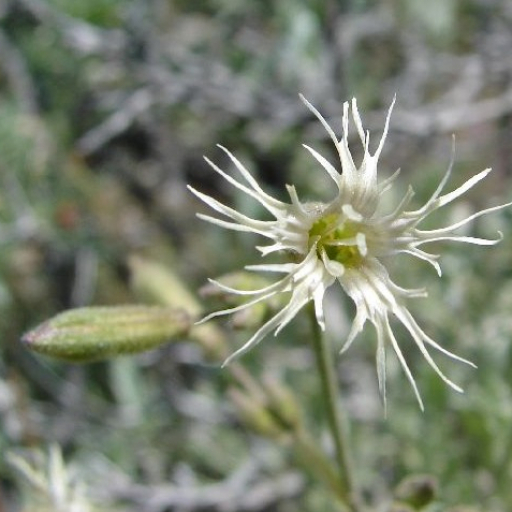
Plant Overview
Known as the Oregon Catchfly, this delicate wildflower is a hidden gem of the Pacific Northwest and the Intermountain West. Its petals look as though they have been carefully snipped by a pair of tiny craft scissors, giving the plant a whimsical, ragged appearance. Despite its fragile look, it is a hardy survivor of dry, rocky slopes and sun-drenched mountain meadows.
🔍 How to Identify
- 🌸 Fringed Petals: The most striking feature is the bloom, which features five petals that are each deeply divided into four or more narrow, ribbon-like lobes.
- 🍯 Sticky Calyx: The base of the flower (the tube) and the upper stems are covered in glandular hairs that feel "tacky" or sticky to the touch.
- 🍃 Lance-shaped Foliage: The leaves are narrow, grayish-green, and pointed, mostly clustered at the base of the plant with smaller pairs climbing up the flowering stem.
🏡 In Your Garden
- 🏔️ Natural Drainage: This plant craves the rocky, airy conditions of its native habitat. It is an excellent choice for rock gardens but will struggle and rot if left in heavy, waterlogged clay.
- ⚓ Deep Taproot: Silene oregana develops a long, sturdy taproot to find water deep underground. Because of this, it is notoriously difficult to transplant; it is best to sow seeds directly where you want them to stay.
- 🦋 Twilight Visitors: The pale colors and nectar-rich tubes are designed to attract moths and long-tongued pollinators, often becoming more fragrant as evening approaches.
⚠️ Safety & Toxicity
- 🐾 Mild Saponins: Like many members of the Pink family (Caryophyllaceae), this plant contains saponins. While these are not highly toxic, they can cause mild digestive upset if eaten.
- 👶 Low Risk: It is generally considered safe to have in a yard, though it is always wise to discourage children or pets from browsing on the leaves or flowers to avoid potential nausea or skin irritation.
✨ Fun Fact
The common name "Catchfly" is literal! The sticky substance on the stem and calyx acts as a natural "flypaper" defense. It traps small, non-pollinating insects like ants, preventing them from crawling up and stealing nectar without helping the plant reproduce.

Detailed Care Instructions

Place in a bright room that is sun drenched almost all day. Or directly in a south-facing window.

Some plants require more regular watering than others, which should be done every few days. It's critical to maintain the soil moist all of the time. The water requirements of the same plant placed in pots with varying sizes will differ. Because the water in the smaller pot evaporates faster than the water in the larger pot, it will require more watering. Regardless of pot size, the surface should constantly be maintained moist.








