Plant Overview
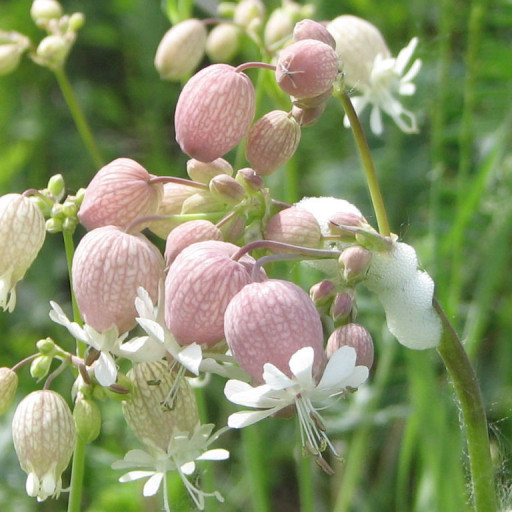
Known affectionately as the Bladder Campion or Maidenstears, this charming wildflower is a staple of European meadows and roadsides. It is most famous for its unique, lantern-shaped blooms that look like tiny, inflated balloons waiting to be popped. While it may look like a delicate garden escapee, it is actually a resilient survivor that has traveled across the globe, bringing a touch of whimsical folklore wherever it grows.
🔍 How to Identify
- 🎈 The "Bladder": The most distinct feature is the large, swollen calyx (the base of the flower). It is pale green or purplish, intricately veined like a marble, and looks completely hollow.
- ✂️ Split Petals: Five white petals emerge from the "bladder," each deeply notched down the center, making it look like there are actually ten petals.
- 🌿 Waxy Foliage: The leaves are lance-shaped and have a distinct "glaucous" coating—a waxy, blue-green film that rubs off if you touch it.
- 🌱 Growth Habit: It typically grows in loose clumps, reaching about 1 to 2 feet tall, often sprawling slightly if not supported by neighboring plants.
🏡 In Your Garden
- 🧱 The Taproot Secret: This plant develops a deep, sturdy taproot, which makes it incredibly drought-tolerant once established. However, this means it absolutely hates being moved; choose its "forever home" in your garden carefully to avoid transplant shock.
- 🦋 Nighttime Visitors: While bees visit during the day, the Bladder Campion is a specialist at attracting long-tongued moths at night. Its flowers often emit a subtle, clove-like scent in the evening to guide these nocturnal pollinators.
- ☀️ Loves the Lean Life: It thrives in poor, gravelly, or alkaline soils. If you give it too much fertilizer or rich compost, it may grow "floppy" and lose its neat, upright shape.
⚠️ Safety & Toxicity
- 🟢 Generally Safe: Bladder Campion is not considered highly toxic to humans or common household pets.
- 🧼 Saponin Content: Like many members of the Pink family (Caryophyllaceae), it contains saponins. While these are poorly absorbed by the body, eating large quantities of the raw leaves might cause a mild stomach upset for curious dogs or cats.
- 🥗 Culinary Note: In some cultures, particularly in Italy (where it is known as Sclopit), the very young, tender shoots are harvested before the plant flowers and used in risottos or omelets.
✨ Fun Fact
Children (and the young at heart) often enjoy "popping" the flowers. If you close the end of the flower with your fingers and strike the "bladder" against the back of your hand, it emits a satisfying pop sound, leading to its other folk name: "Snappers."

Detailed Care Instructions
| Humidity | High |
| Lighting | Full Sun |
| Toxicity | Poisonous |
| Difficulty | Easy |
| Hibernation | Cold Period |
| Hardiness Zones | 5 - 9 |
To grow Silene vulgaris (also known as bladder campion or maidenstears), follow these steps:
- Select the right planting time: Silene vulgaris is a cool season perennial plant that thrives in full sun to partial shade. The best time to plant seeds is in early spring or early fall.
- Prepare the soil: Silene vulgaris prefers well-drained soil with a pH level between 6 to 7. Amend the soil with compost or well-rotted manure to improve fertility and drainage.
- Sow the seeds: Sprinkle the Silene vulgaris seeds on the soil surface and lightly press them into the soil, or you can start them indoors by sowing them in seed trays and transplanting them later. Maintain a seed spacing of about 1 to 2 feet to allow the plants to spread.
- Watering and care: Regularly water the seeds or transplants to keep the soil moist but not waterlogged. Once established, Silene vulgaris is moderately drought-tolerant but benefits from occasional deep watering during dry spells. Avoid watering the foliage to prevent fungal diseases.
- Mulching and fertilizing: Apply a layer of organic mulch, such as wood chips or straw, around the plants to help retain soil moisture and suppress weeds. Additionally, you can feed the plants with a slow-release balanced fertilizer in spring and mid-summer.
- Pruning: Remove spent flower stalks to encourage continuous blooming and prevent self-seeding. Trim back any dead or damaged foliage to maintain a tidy appearance.
- Pest and disease control: Silene vulgaris is generally resilient to pests and diseases. However, watch out for aphids, snails, slugs, or powdery mildew. Use organic pest control methods or insecticidal soap if needed.
- Propagation: Silene vulgaris can be propagated by division in spring or fall. Dig up the plants, carefully separate the sections, and replant them in prepared beds or pots.
Silene vulgaris should start blooming in early summer, producing delicate white or pink flowers that attract pollinators. Enjoy its beauty and provide the necessary care, and your plants should thrive.

Place in a bright room that is sun drenched almost all day. Or directly in a south-facing window.

Silene Vulgaris is a plant that requires regular watering to thrive in its environment. It is important to ensure that the soil is moist but not waterlogged, as the roots can easily rot if the plant is overwatered.
To water the plant, it is best to use a watering can or hose with a gentle spray attachment. The water should be poured directly onto the soil around the base of the plant, avoiding getting water on the leaves or stem, as this can cause damage.
The frequency of watering depends on factors such as the temperature and humidity of the surrounding environment, the size of the plant, and the type of soil it is planted in. It is recommended to check the soil moisture level by sticking a finger into the soil and watering when the top inch feels dry.
During the summer months or in hot weather conditions, it may be necessary to water the plant more frequently to prevent it from drying out. It is important to avoid watering the plant during the hottest part of the day, as this can cause the water to evaporate too quickly and not be absorbed by the soil properly.
Overall, consistent and moderate watering is key to keeping Silene Vulgaris healthy and thriving in its surroundings.
To fertilize this flowering plant, use a balanced fertilizer with equal parts nitrogen, phosphorus, and potassium. Apply the fertilizer in early spring before new growth appears and again in mid-summer. Be sure to follow instructions on the product label for application rate and timing. Avoid fertilizing too much as it can cause excessive growth and reduce flower production. Water the plant thoroughly after fertilization to help nutrients reach the roots.
The recommended soil for this particular plant is a well-draining, loamy soil that is slightly acidic. It should be rich in organic matter and have good moisture retention capacity. The soil should have a pH range of 5.5 to 7.5, with a preference for slightly acidic conditions. The plant prefers to grow in soil that is not compacted and has good aeration. It can tolerate some drought and waterlogging, but does better in consistently moist soil. The soil should be fertile and have sufficient nutrients, especially nitrogen and phosphorus. Avoid using heavy clay soils that do not drain well, as they may cause root rot. To improve the soil, you can add organic matter, such as compost, leaf mold, or well-rotted manure.
Silene vulgaris can be propagated using several methods. One method is by collecting the seeds from mature plants. The seeds should be collected when they turn brown or black, and when the capsule that contains them starts to split. Once collected, the seeds should be sown in a well-draining soil mix, and kept moist until they germinate.
Another method is by taking stem cuttings. Select a healthy stem with several leaves and make a clean cut just below a node. Remove the lower leaves and dip the cut end into rooting hormone. Plant the cutting in a well-draining soil mix, and keep it moist until it roots.
Silene vulgaris can also be propagated through division. This method involves digging up the plant and separating the root ball into sections, each with an equal number of stems and roots. Each division should be replanted in a well-draining soil mix and kept moist until it establishes itself.
Overall, Silene vulgaris is a hardy plant that can be easily propagated by either seeds, stem cuttings, or division. These methods will ensure a healthy and vibrant population of these lovely plants in your garden.
Common pests of the bladder campion include Spider mites, aphids, thrips. Make a habit of checking your bladder campion frequently for pests so that any infestations can be caught and managed early.








