Plant Overview
Known as the Ivory Milk Thistle, Silybum eburneum is the "high-fashion" cousin of the common field thistle. Native to the Mediterranean, this plant is a striking architectural marvel that looks like a living gothic sculpture. It is beloved by "dry garden" enthusiasts for its ability to look majestic even in the harshest heat, provided you don't mind its prickly personality.
🔍 How to Identify
- ⚪ The Foliage: The leaves are large, glossy, and deeply lobed. They feature a dramatic "marbled" pattern of milky-white veins that contrast sharply against the dark green leaf surface.
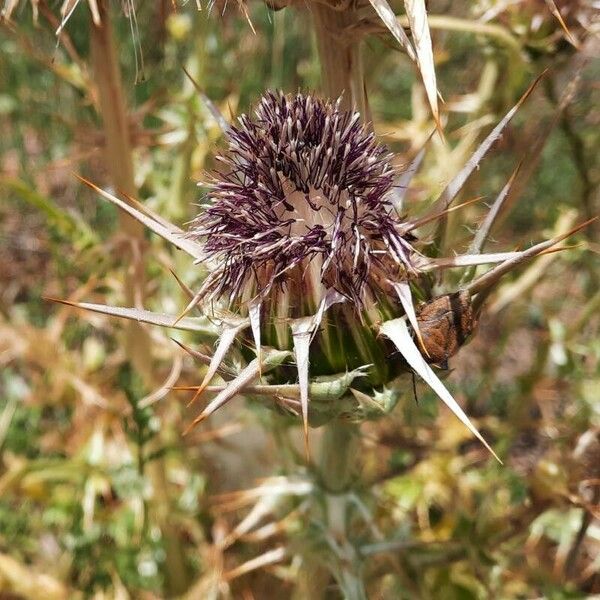
- 🦴 Ivory Spines: True to its name (eburneum means "ivory" in Latin), the plant is armed with sharp, pale-colored spines along the leaf margins and around the base of the flower heads.
- 🌸 The Bloom: In late spring and summer, it produces large, vibrant pink-to-purple thistle-heads that sit atop tall, sturdy stems, acting as a magnet for local pollinators.
🏡 In Your Garden
- ☀️ Thrives on Neglect: This is a plant for the "set it and forget it" gardener. It craves full sun and actually prefers poor, well-draining soil. Giving it too much fertilizer or water can often result in a plant that is too tall and prone to falling over.
- ⚓ The Taproot Rule: Like many thistles, it develops a long, stubborn taproot. This makes it incredibly drought-tolerant but also means it hates being moved. Once you plant it, it’s best to let it stay there for life.
⚠️ Safety & Toxicity
- ⚔️ Physical Hazard: The most immediate danger is the spines. They are sharp enough to pierce standard gardening gloves, so heavy-duty leather protection is a must when pruning or clearing old stalks.
- 🐾 Pet Safety: While not typically considered highly toxic to cats or dogs, the sharp prickles can cause significant oral irritation or physical injury if a curious pet tries to chew on the leaves.
- 🐄 Livestock Warning: Like its relatives, it can accumulate nitrates from the soil, which can be harmful to cattle and sheep if grazed in large quantities.
✨ Fun Fact
The genus name Silybum was first used by the ancient Greek physician Dioscorides. Legend says the white veins in the leaves of Milk Thistles were created by a drop of the Virgin Mary’s milk—hence the common name used for the entire family of plants!

Detailed Care Instructions
To grow Silybum eburneum (White Silybum) plant, follow these steps:
- Choose a suitable location: The plant prefers a full sun to partial shade area with well-draining soil. Make sure the selected spot receives at least 6 hours of direct sunlight per day.
- Prepare the soil: Ensure the soil is loose and well-draining. Mix in organic matter like compost or well-rotted manure to improve fertility and drainage.
- Sow the seeds: Silybum eburneum can be grown from seeds. Plant the seeds directly into the soil in early spring, as soon as the last frost has passed. Sow the seeds 1/4 inch deep and space them about 12 inches apart.
- Watering: Keep the soil slightly moist during the germination period, typically 2-3 weeks. After that, reduce watering to allow the soil to dry out slightly between watering sessions. Overwatering can cause root rot.
- Mulching: Apply a layer of organic mulch, such as straw or wood chips, around the plant to help conserve moisture and suppress weed growth. This will also help keep the roots cool during hot summer months.
- Fertilizing: Silybum eburneum doesn't require heavy fertilization. However, you can apply a balanced fertilizer, such as a general-purpose slow-release granular fertilizer, in early spring to provide necessary nutrients.
- Pruning: Silybum eburneum doesn't usually require pruning. However, you can remove any dead or damaged foliage or spent flower heads to maintain a tidy appearance.
- Pests and diseases: The plant is relatively resistant to pests and diseases, but keep an eye out for aphids or powdery mildew. If necessary, use organic insecticidal soap or a neem oil solution to control pests, and remove infected leaves if powdery mildew is present.
- Harvesting seeds: Silybum eburneum produces attractive seed heads. Allow the flowers to fully mature and the seed heads to dry out on the plant. Harvest the seed heads when they turn brown and the seeds are hard. Remove the seeds and store them in a cool, dry place for future use or propagation.
By following these steps, you should be able to successfully grow Silybum eburneum. Happy gardening!

Place in a bright room that is sun drenched almost all day. Or directly in a south-facing window.

When watering the Silybum Eburneum plant, it is important to avoid overwatering. This can lead to root rot and damage to the plant. Before watering, check the soil moisture level by sticking your finger two inches into the soil. If it feels dry, it is time to water.
When watering, use room temperature water and thoroughly soak the soil until water drains out of the drainage holes. Allow the soil to dry out partially before watering again, usually every 1-2 weeks. Be sure to empty the saucer under the plant after watering to prevent water from sitting in the soil.
During the summer months, it may be necessary to water more frequently, especially if the plant is in direct sunlight. In the winter, reduce watering to avoid waterlogged soil.
If the leaves of the Silybum Eburneum plant begin to droop, it may be a sign of over or under watering. Adjust watering accordingly and monitor the plant closely to ensure it recovers.
To fertilize this plant, apply a balanced, all-purpose fertilizer every 6-8 weeks during the growing season. Be sure to follow the manufacturer's instructions for application rates. Avoid fertilizing during the plant's dormant period. Water the fertilizer in thoroughly after application.
The best type of soil to use with this plant is a well-draining soil that has a slightly acidic pH level. The soil should be rich in organic matter, which will help to retain moisture and provide essential nutrients to the plant. It is important to avoid using heavy or compacted soils, as they can lead to root rot and other problems. A mixture of sand, perlite, and peat moss is a good option for this plant, as it will provide good drainage, aeration, and moisture retention. It is also important to ensure that the soil is free from any contaminants or chemicals, such as pesticides or herbicides, as these can be harmful to the plant. Regular watering and fertilization will also be necessary to ensure that the plant remains healthy and thrives in its chosen soil.
To propagate this plant, start by collecting the seeds from mature plants. Once you have the seeds, soak them in water for 24 hours to help loosen the hard outer coating. After soaking, place the seeds in moist potting soil and cover with a thin layer of soil.
Keep the soil consistently moist by misting with water every few days. The seeds should germinate within 2-3 weeks. Once the seedlings have grown a few inches tall, they can be transplanted into larger pots or directly into the garden.
If you prefer to propagate from cuttings, select healthy stem cuttings from mature plants. Remove the lower leaves and dip the cut end in rooting hormone. Plant the cutting in moist soil and keep it consistently moist. After a few weeks, the cutting should begin to grow roots and can be transplanted into a larger pot or the garden.
Propagation by division is another option. Carefully dig up a mature plant and separate the root ball into smaller sections. Each section should have its own set of leaves and a healthy root system. Replant the sections in new pots or directly into the garden.








