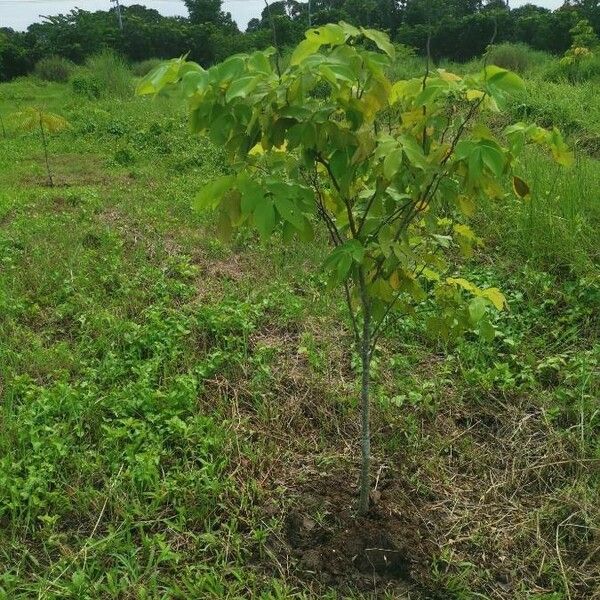
Plant Overview
Known throughout the Philippines and Southeast Asia as the "Supa" or "Manila Copal" tree, the Sindora supa is a majestic titan of the tropical forest. Often called the "Kerosene Tree" by locals, it is famous for the flammable oil found within its trunk, which was historically used to light lamps in rural villages. This slow-growing evergreen is a member of the legume family, but instead of soft beans, it produces some of the most unique, "armored" seed pods in the botanical world.
🔍 How to Identify
- 🌳 The Canopy: A massive hardwood tree that can reach heights of up to 30 meters. It features a straight, cylindrical trunk and a wide, spreading crown that provides deep shade.
- 🍃 Leaf Structure: It has even-pinnate leaves, meaning the leaflets grow in neat pairs along a central stalk, usually displaying a glossy, dark green finish.
- 🛡️ The Seed Pods: The most striking feature! The pods are flat, woody, and circular or broadly elliptical, covered entirely in sharp, stiff spines that look like a defensive shield.
- 🌸 Small Flowers: It produces clusters of small, yellowish-green flowers that are subtle in appearance but provide a delicate fragrance during the blooming season.
🏡 In Your Garden & Habitat
- 🌍 Natural Preference: This tree thrives in coastal forests and low-altitude rainforests, specifically in areas with distinct dry and wet seasons. It prefers well-drained, sandy-clay soils.
- 🌱 Growth Nuance: Because it has a deep, sensitive taproot, the Sindora supa is notoriously difficult to transplant once established. If you are growing one, choose its permanent "forever home" very carefully while it is still a sapling.
- 🪵 Timber Value: It is highly prized for its "Supa Wood," which is naturally oily and develops a beautiful dark bronze patina over time, making it a favorite for high-end furniture and flooring.
⚠️ Safety & Toxicity
- 🟢 Status: Non-toxic and safe for humans and pets in terms of chemical ingestion.
- 🌵 Physical Hazard: The primary danger lies in the seed pods. The spines are incredibly sharp and can easily puncture skin or paws if stepped on.
- 💧 Resin Sensitivity: While the wood oil (oil-resin) is used commercially, some individuals with sensitive skin may experience mild contact dermatitis if exposed to raw resin for extended periods.
✨ Fun Fact
The oil extracted from the trunk is so rich in hydrocarbons that it can be poured directly into a lamp and burned without any refining! In the past, it wasn't just used for light; the oil was also a popular traditional treatment for skin ailments and even used to make high-quality "copal" varnish for painting.

Detailed Care Instructions








