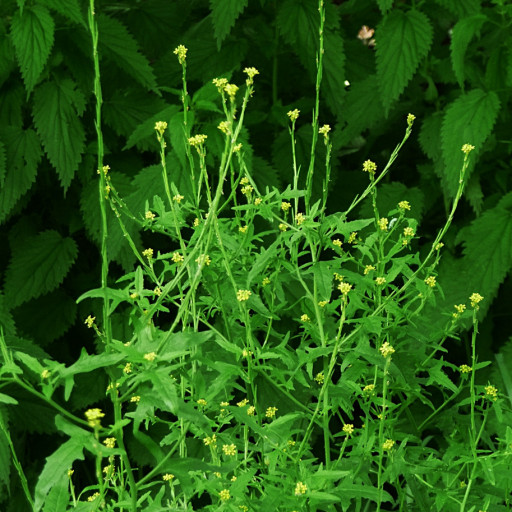
Plant Overview
Known as the "Singer's Plant" or "Hedge Mustard," Sisymbrium officinale has been a roadside companion for centuries. Legend has it that famous orators and opera singers once relied on this humble herb to clear their voices and soothe their throats before a big performance. While often dismissed as a common weed, it carries a storied history of folk medicine and culinary use across Europe and North Africa.
🔍 How to Identify
- 🌼 Flowers: Look for tiny, pale yellow blossoms with four petals arranged in a cross shape, typically clustered at the very tips of long, wiry branches.
- 🌿 Leaves: The plant features deeply lobed, almost feathery leaves at the base, which transition into smaller, arrow-shaped leaves as they move up the stem.
- 🌱 Seed Pods: One of the easiest ways to spot it is by its seed pods; they are long, thin, and pressed tightly against the stem, pointing straight upward like tiny needles.
🏡 In Your Garden
- 🪵 The "Pioneer" Habit: This plant is a specialist in disturbed soil. It often "volunteers" in garden edges, gravel paths, or neglected corners, flourishing where other plants might struggle with poor nutrients.
- ⛏️ Taproot Tension: Hedge Mustard is an annual that invests early in a deep taproot. Because of this, it is notoriously difficult to transplant; if you want it in a specific spot, it is best to sow seeds directly rather than moving a wild specimen.
⚠️ Safety & Toxicity
- 🍃 Safe for Consumption: It is generally considered non-toxic and is historically edible. The young, tender leaves offer a sharp, peppery "mustard" kick to salads or pestos.
- 🐾 Pet Caution: While not listed as a dangerous toxin for pets, the plant contains glucosinolates (which provide the spicy flavor). If consumed in very large quantities, it may cause mild stomach irritation in curious cats or dogs.
✨ Fun Fact
🎶 The Royal Remedy: In 17th-century France, Jean-Baptiste Lully, the court composer for King Louis XIV, reportedly swore by Hedge Mustard syrup to cure the hoarseness of his choir singers, cementing its reputation as the ultimate herbal lozenge for the elite.

Detailed Care Instructions
To grow Sisymbrium officinale, also known as the hedge mustard or wild mustard, follow these steps:
- Obtain seeds: Purchase Sisymbrium officinale seeds from a reputable nursery or online seed supplier.
- Timing: Sow the seeds in early spring or fall, as these are the ideal times for germination.
- Site selection: Choose a sunny or partially shaded spot in your garden that has well-draining soil.
- Soil preparation: Prepare the soil by removing any weeds or debris. Loosen the soil to a depth of a few inches using a garden fork or tiller. Add organic matter, such as compost, to improve soil fertility and drainage.
- Sowing seeds: Scatter the Sisymbrium officinale seeds evenly over the prepared soil. Lightly press the seeds into the soil, ensuring good seed-to-soil contact.
- Watering: Gently water the area immediately after sowing the seeds. Keep the soil consistently moist but not overly saturated throughout the growing season.
- Thin the seedlings: Once the seedlings have grown a few inches tall, thin them out to enhance air circulation and prevent overcrowding. Space the remaining seedlings about 6-10 inches apart.
- Maintenance: Regularly water the plants to keep the soil moist. Remove any weeds that compete with the hedge mustard for nutrients and space. Mulching around the plants can help suppress weed growth and conserve moisture.
- Harvesting: You can start harvesting the leaves and flowers of Sisymbrium officinale when they are young and tender. Simply snip off the desired parts close to the stem. Avoid harvesting from plants growing in contaminated areas.
- Storage: If you want to save seeds for future planting, allow some flowers to mature and dry on the plant. Collect the seeds by gently crushing the dried pods and storing them in a cool, dry place in an airtight container.
Remember to check your specific geographical region and local regulations to ensure Sisymbrium officinale is not considered an invasive species in your area before planting.

Place in a bright room that is sun drenched almost all day. Or directly in a south-facing window.

To properly water this particular plant, one should ensure the soil is moist but not completely saturated. It is recommended to water the plant deeply once a week or as needed, depending on the humidity and temperature of the environment. It is important to avoid watering the leaves, as this can cause damage or disease. Instead, water directly at the base of the plant. Additionally, one should monitor the drainage of the pot or soil to prevent water from accumulating and causing root rot.
To fertilize the plant, ensure that the soil is moist before application. Use a balanced fertilizer with equal amounts of nitrogen, phosphorus, and potassium. Apply the fertilizer at a rate of one teaspoon per square foot of soil twice a month during the growing season. Spread the fertilizer around the base of the plant and water it in well. Avoid over-fertilizing, as this can lead to excessive growth and weaken the plant.
For Sisymbrium Officinale plant, it is recommended to use a well-draining soil with a pH level of neutral to slightly alkaline. The soil should be rich in organic matter and nutrients, while also providing good aeration and moisture retention. A blend of equal parts compost, topsoil and perlite or sand can create a suitable mix for growing Sisymbrium Officinale plant. Additionally, adding a slow-release fertilizer can help with growth and development of the plant. It is important to avoid using heavy or clay soils, which can hinder proper drainage and lead to root rot.
To propagate this plant, a gardener would need to collect the seeds from mature plants or take basal stem cuttings during the growing season. The seeds would need to be sown in well-draining soil in a sunny location and kept moist until they germinate. The stem cuttings would need to be placed in a rooting hormone and then planted in moist soil until new roots form. Both methods of propagation require diligence and appropriate environmental conditions to ensure successful growth.








