Plant Overview
The Mediterranean Rocket, scientifically known as Sisymbrium runcinatum, is a resilient traveler that has spread from the sun-drenched coasts of Southern Europe and North Africa to various parts of the globe. Often found tucked into the cracks of ancient stone walls or lining dusty roadsides, this member of the mustard family carries a spicy, peppery legacy in its DNA. While it might look like a simple weed to the untrained eye, it is a master of survival in disturbed soils.
🔍 How to Identify
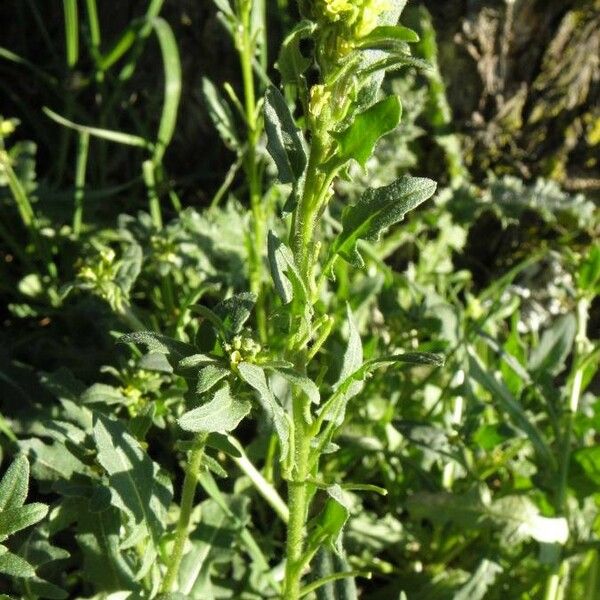
- 🌿 Runcinate Leaves: The plant gets its name from its "runcinate" leaves—deeply lobed foliage where the lobes point backward toward the base, resembling the teeth of a saw.
- 🌼 Cross-Shaped Blooms: Like all members of the Brassicaceae family, it produces tiny, pale yellow flowers with four petals arranged in the shape of a cross.
- Seed Curved Seed Pods: Its most distinct feature is the "silique" (seed pod), which is long, thin, and often curves slightly, pressing closely against the stem as it matures.
🏡 In Your Garden
- 🌱 Disturbed Soil Specialist: This plant loves "pioneer" conditions. If you have a patch of ground that has recently been tilled or cleared, the Mediterranean Rocket will likely be the first to claim the territory.
- 🐝 Pollinator Pit-stop: Despite its humble appearance, its nectar-rich flowers are a favorite for small solitary bees, hoverflies, and cabbage white butterflies looking for a quick energy boost.
- ☀️ Sun Seeker: It thrives in full sun and well-draining soil. It isn't picky about nutrients, making it a common sight in rocky terrain or neglected urban corners.
⚠️ Safety & Toxicity
- 🟢 Generally Safe: There are no records of Sisymbrium runcinatum being highly toxic to humans or common household pets like cats and dogs.
- 👅 Bitter Defense: While some wild mustards are edible, this species can accumulate high levels of nitrates if grown in fertilized agricultural runoff. The high concentration of mustard oils can also cause mild digestive upset in sensitive individuals or livestock if consumed in large quantities.
✨ Fun Fact
The specific epithet runcinatum comes from the Latin word runcina, which refers to a carpenter's plane. Botanists chose this name because the jagged, backward-pointing lobes of the leaves look as though they were precisely carved or "planed" by a craftsman.

Detailed Care Instructions
To properly water the plant, first determine the soil moisture level by inserting a finger into the soil. If the top inch of soil is dry, it's time to water the plant. Slowly pour water into the soil at the base of the plant until it begins to drain out the bottom of the pot. Avoid getting water on the leaves or stem as this can lead to fungal problems. Wait until the soil has dried out slightly before watering again. The frequency of watering will depend on the temperature, humidity, and size of the pot. Ideally, the soil should be kept evenly moist, but not waterlogged or completely dry.
Sisymbrium runcinatum is a type of plant that belongs to the Brassicaceae family. When planting this plant, it is recommended to use a soil that is well-draining and fertile. The soil should be slightly acidic with a pH range between 5.5 to 7.5. The ideal soil type for this plant is loamy soil, which is a mixture of sand, silt, and clay in equal parts. The soil should also be rich in organic matter to provide the plant with essential nutrients. The plant prefers moist soil that is not waterlogged, so it is recommended to plant it in an area with good drainage. The soil should be prepared by removing any weeds and debris from the planting area before planting the Sisymbrium runcinatum.








