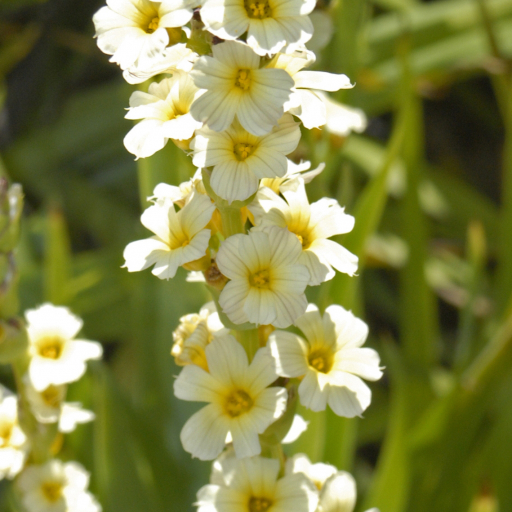
Plant Overview
Commonly known as Pale Yellow-eyed Grass or the Satin Flower, this Chilean native is a master of disguise. While its stiff, upright foliage looks exactly like a clump of sturdy garden grass or a miniature Iris, it surprises onlookers in early summer with towering wands of buttery, cream-colored blossoms. It is a favorite for cottage gardens because of its "architectural" silhouette and its ability to bridge the gap between structural greenery and delicate blooms.
🔍 How to Identify
- ⚔️ The Foliage: Semi-evergreen, grayish-green leaves that grow in flat, fan-like clumps. They are sword-shaped and leathery to the touch.
- ⭐ The Flowers: Small, six-petaled stars that are pale yellow or cream. If you look closely at the back of the petals, you’ll see distinct purple-brown "striations" or stripes.
- 📏 The Spikes: Rigid, flattened flower stalks that can reach up to 2-3 feet tall, with clusters of flowers arranged in "whorls" along the upper half.
🏡 In Your Garden
- ☀️ Sun-Seeker: This plant thrives in full sun and well-drained soil. It is particularly useful for "gravel gardens" or Mediterranean-style landscapes where it can bask in the heat.
- 🌱 The Self-Seeder: Be aware that the Satin Flower is a prolific parent. If you don't want a colony of yellow-eyed grass appearing in every crack of your patio next year, be sure to cut the flower spikes down before they turn into dark, round seed pods.
- 🧤 Low Maintenance: It is incredibly hardy and rarely suffers from pests or diseases. It "hates" soggy winter soil, so ensure your ground doesn't stay waterlogged during the dormant season.
⚠️ Safety & Toxicity
- ✅ General Safety: Sisyrinchium striatum is generally considered non-toxic to humans, cats, and dogs. It is a safe choice for family-friendly gardens.
- 🧪 Mild Irritant: Like many members of the Iris family, the sap contains compounds that might cause very mild skin irritation or an upset stomach if large quantities of the leaves are ingested. It’s best to keep it as a feast for the eyes only!
✨ Fun Fact
The Satin Flower is a natural "sun-dial." Its blossoms are highly sensitive to light; they typically only unfurl during the brightest hours of a sunny day and will remain tightly closed if the sky is overcast or once the sun begins to set.

Detailed Care Instructions
| Humidity | High |
| Difficulty | Medium |
| Hardiness Zones | 7 - 10 |
To grow Sisyrinchium striatum, also known as yellow-eyed grass, you can follow these steps:
- Select a suitable location: Choose a sunny or partially shaded spot in your garden or balcony to plant your Sisyrinchium striatum. It prefers well-drained soil.
- Prepare the soil: Dig the soil and incorporate organic matter like compost or well-rotted manure to enhance its fertility and drainage. This will provide a good growing environment for the plant.
- Planting: Sow the seeds directly into the prepared soil, or you can start them indoors in seed trays. When planting, space the seeds or seedlings about 4-6 inches apart to ensure adequate room for growth.
- Watering: Sisyrinchium striatum prefers slightly moist soil, so water regularly to keep the soil evenly moist but not waterlogged. Avoid overwatering, as it can lead to root rot.
- Mulching: Apply a layer of organic mulch, such as wood chips or straw, around the plant to help retain moisture, suppress weeds, and provide insulation for the roots.
- Fertilizing: Once every two to three weeks during the growing season, use a balanced, water-soluble fertilizer to provide essential nutrients to the plant. Follow the instructions on the fertilizer package for proper application.
- Pruning: Sisyrinchium striatum doesn't typically require pruning, but you can remove any dead or damaged foliage to maintain its appearance and promote healthy growth.
- Pest and disease control: Monitor the plant regularly for pests like aphids or snails. If an infestation occurs, use appropriate organic or chemical pest control methods. Watch out for fungal diseases, such as root rot, and ensure proper drainage to prevent their occurrence.
- Mulch for winter: In colder climates, adding a layer of mulch around the plant in late fall can help protect it from frost and ensure its survival during winter.
- Propagation: Sisyrinchium striatum can be propagated by dividing mature clumps of plants in early spring or fall. Lift the plant, separate the clumps into smaller sections, and replant them at the appropriate spacing.
Remember to research any specific details about Sisyrinchium striatum cultivation in your area, as conditions might vary. It's always best to consider the specific needs and requirements of the plant for optimal growth and success.

Place in a window with dappled sun or a spot in the middle of a room. Or directly in a window facing west or east.

When it comes to watering this plant, it is important to ensure that the soil is consistently moist but not waterlogged. This can be achieved by watering deeply and infrequently, allowing the top layer of soil to dry out between each watering session. It is also important to avoid getting the foliage wet, as this can lead to disease or other issues. Instead, aim to water at the base of the plant, taking care not to wash away any mulch or other organic matter that may be protecting the roots. Additionally, it may be helpful to use a watering can or other gentle watering tool, as this will allow for more precise control and less chance of overwatering. With proper watering, this plant should thrive and produce beautiful blooms for years to come.
To fertilize the Sisyrinchium striatum plant, you can follow these instructions:
- Choose a well-balanced fertilizer with an N-P-K ratio of 10-10-10 or similar.
- Dilute the fertilizer according to the packaging instructions, usually mixing it with water.
- Apply the fertilizer to the plant's soil during the active growing season, typically spring and summer.
- Prior to fertilizing, ensure that the soil is moist but not waterlogged.
- Use a watering can or sprayer to evenly distribute the diluted fertilizer solution around the base of the plant.
- Avoid getting the fertilizer directly on the plant's leaves as it may cause burns or damage.
- Repeat the fertilization process according to the manufacturer's recommendations, typically every 4-6 weeks during the active growth period.
- Monitor the plant's response to the fertilizer, adjusting the dosage or frequency if necessary.
- Remember to always follow safety guidelines provided by the fertilizer manufacturer when handling and applying the product.
- Regularly water the plant with plain water between fertilizer applications to maintain overall soil moisture.
When planting Sisyrinchium Striatum, it is important to use a well-draining soil that is rich in organic matter. The soil should be slightly acidic with a pH level between 5.5 and 6.5. A soil mix consisting of equal parts of peat moss, perlite, and coarse sand is recommended. This will provide adequate drainage and aeration for the plant's roots, as well as the necessary nutrients for healthy growth. It is important to avoid using heavy clay soils, as they can cause waterlogging and root rot. Additionally, the plant prefers full sun to partial shade, so choose a location that provides ample sunlight for optimal growth.
To propagate the Sisyrinchium striatum plant, you can use the following methods:
- Division: This is the easiest and most common method of propagation for Sisyrinchium striatum. Start by lifting the plant from the ground carefully, taking care not to damage the roots. Gently separate the plant into smaller clumps, making sure each clump has a healthy root system and a few leaves. Replant the divided clumps in well-draining soil, spacing them at appropriate intervals.
- Seeds: Another method of propagation is from seeds. Harvest the seeds from mature Sisyrinchium striatum plants once the seedpods have turned brown and dried on the plant. Remove the seeds from the pods and let them air dry for a few days. Fill a seed tray or pots with a well-draining soil mix. Sow the seeds on the surface of the soil, lightly pressing them down but not covering them entirely. Place the tray or pots in a warm and bright location, ensuring the soil remains consistently moist. Germination usually occurs within a few weeks. Once the seedlings have developed enough, transplant them into individual pots or into the garden.
- Rhizomes: Another method is by using the plant's rhizomes. Start by carefully digging up the plant from the ground. Locate the rhizomes, which are thick, horizontal stems under the soil surface. Using a knife or garden shears, carefully separate healthy-looking rhizome sections with a few growing points. Plant the rhizome sections in a well-draining pot or garden bed, ensuring they are covered with a thin layer of soil. Keep the soil consistently moist and place them in a warm location. In time, new plants will emerge from the rhizomes.
- Rooted offsets: Sisyrinchium striatum occasionally produces offsets, which are small plants that develop adjacent to the parent plant. When these offsets have developed a healthy root system, you can carefully separate them from the parent plant using a clean knife or garden shears. Plant the offsets in pots or directly in the garden, ensuring they have adequate access to water and sunlight.
Regardless of the propagation method you choose, it is essential to provide the new plants with proper care and maintenance, including regular watering, well-draining soil, and adequate sunlight. This will facilitate healthy growth and establishment of the propagated Sisyrinchium striatum plants.
Common pests of the pale yellow-eyed-grass include Aphids, larvae, snails. Make a habit of checking your pale yellow-eyed-grass frequently for pests so that any infestations can be caught and managed early.








