Plant Overview
Often called the Cat Greenbrier or Sawbrier, Smilax glauca is the silvery ghost of the eastern North American thicket. This perennial vine earns its name from the "glaucous" (waxy and white) coating on the undersides of its leaves, which makes the plant appear to shimmer when the wind blows. While hikers often curse it for its "wait-a-minute" thorns, it is a fascinating survivor with deep roots in natural history.
🔍 How to Identify
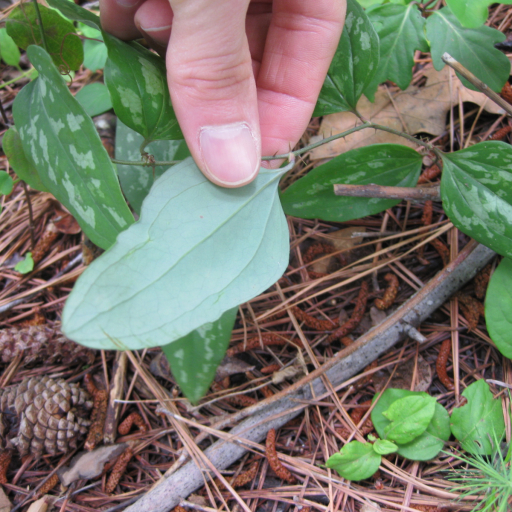
- 🍃 The Silver Lining: The most distinctive feature is the leaf underside. While the top is green, the bottom is coated in a powdery, white wax that can be rubbed off with your finger.
- 🪝 Prickly Defense: The lower stems are armed with small, sharp prickles (stiff thorns) that help the vine "climb" by snagging onto nearby bark or clothes.
- 🍇 Frosted Berries: In late summer and fall, it produces clusters of small, round berries that transition from green to a deep blue-black, often covered in the same waxy "bloom" as the leaves.
🏡 In Your Garden
- 🌱 Tenacious Tubers: If this plant appears in your landscape, be aware that it grows from deep, woody underground tubers. These "knots" store immense energy, meaning if you only cut the vine at the surface, it will likely sprout back with a vengeance the following spring.
- 🐦 Habitat Hero: While it may be a "weed" in a manicured garden, it is an ecological powerhouse. Its dense, thorny tangles provide a safe fortress for songbirds to nest away from predators, and its berries provide a critical winter food source for cardinals and thrashers.
⚠️ Safety & Toxicity
- 🩹 Physical Hazard: The primary danger is mechanical. The "saw-like" thorns can easily snag skin and clothing, leading to scratches. Wear thick gloves if you are attempting to prune or remove it.
- 🐾 Pet Safety: Smilax glauca is generally considered non-toxic to dogs and cats. However, the thorny stems can cause mouth or eye injuries if a pet tries to run through or chew on the vine.
- 🍴 Foraging Note: The tender young shoots and tendrils are technically edible and often likened to asparagus by wild foragers, but they should only be consumed if you are 100% certain of the identification and the area hasn't been sprayed with herbicides.
✨ Fun Fact
- 🥤 Root Beer Roots: This plant is a close cousin to the tropical Smilax species used to flavor the original Sarsaparilla soda. While our local Greenbrier isn't as aromatic, its starchy roots were historically ground into a flour or used to thicken jellies and soups by Native American tribes.

Detailed Care Instructions
To successfully grow Smilax Glauca, also known as deerberry, you will need to provide the right conditions and care. Here are some steps to help you grow this plant:
- Choose a suitable location: Smilax Glauca prefers partial shade to full sun. Ensure that the spot you choose receives at least 4-6 hours of sunlight daily.
- Prepare the soil: Smilax Glauca thrives in well-draining soil. Add organic matter like compost or aged manure to improve soil fertility and drainage. The pH level should be slightly acidic to neutral, around 5.5-6.5.
- Plant the Smilax Glauca: Dig a hole slightly larger than the container your plant comes in. Loosen the roots gently and place the plant in the hole at the same depth it was in the container. Backfill the hole with soil and firm it around the base of the plant.
- Watering: Regular watering is essential for Smilax Glauca. Keep the soil consistently moist, but not waterlogged. Water deeply when the top layer of soil feels dry. During hot and dry periods, you may need to increase the frequency of watering.
- Mulching: Applying a layer of organic mulch around the base of the plant will help conserve moisture, suppress weed growth, and regulate soil temperature. Mulch with materials like wood chips, straw, or compost, leaving some space around the stem to prevent rotting.
- Pruning: Prune Smilax Glauca to shape and remove any dead or damaged branches. After the plant finishes flowering, you can also prune it to control its size and promote bushier growth.
- Fertilizing: Apply a balanced slow-release fertilizer in the spring to provide necessary nutrients for healthy growth. Follow the instructions on the fertilizer packaging for appropriate dosage.
- Pest and disease control: Smilax Glauca is generally resistant to pests and diseases. However, occasional issues like aphids or powdery mildew may occur. Monitor the plant regularly and take appropriate measures if necessary, such as using organic insecticidal soap or mildew treatments.
- Propagation: Smilax Glauca can be propagated by collecting and planting its seeds or by taking stem cuttings. Seeds should be stratified (subjected to a cold period) before sowing. Cuttings should be taken from semi-hardwood and rooted in a well-draining medium.
With proper care, your Smilax Glauca plant should grow well and provide you with its attractive foliage and berries. Always consult local gardening resources or professionals for specific advice tailored to your region and climate.

Place in a bright room that is sun drenched almost all day. Or directly in a south-facing window.

To properly water this plant, it is important to first determine the moisture level of the soil. You can do this by inserting your finger into the soil up to the first knuckle. If the soil feels dry, the plant needs to be watered.
When watering, it is best to use room temperature water that has been allowed to sit for at least 24 hours to allow any chlorine or fluoride to dissipate. Water the plant slowly and evenly, making sure not to let water pool on the surface or run off.
It is important to not let the soil dry out completely between waterings, as this can stress the plant and cause it to wilt. On the other hand, overwatering can lead to root rot and other fungal diseases.
In general, it is best to water this plant when the top inch of the soil feels dry to the touch. However, it is important to also consider factors such as temperature, humidity, and the plant's age and size when determining watering frequency.
For optimal growth and health, the plant should be fertilized every two to three weeks during the growing season from spring to early fall. A balanced fertilizer with equal amounts of nitrogen, phosphorus, and potassium is recommended. Apply the fertilizer at a rate of 1 tablespoon per gallon of water and water the plant thoroughly after application. Avoid over-fertilizing, as this can lead to excessive growth and weakened stems. Symptoms of over-fertilization include yellow or brown leaves, stunted growth, and wilting.
Smilax Glauca plant, also known by its scientific name, requires a well-draining, nutrient-rich soil that is moist but not waterlogged. It prefers a slightly acidic soil with a pH range of 5.5 to 6.5. The ideal soil for Smilax Glauca plant is a mixture of loam, sand, and organic matter, such as compost or leaf mold. It is recommended to add perlite or vermiculite to the soil mix to improve drainage. The soil should be loose and friable to allow for good root development, and it should be kept consistently moist during the growing season. Additionally, this plant prefers growing in partial shade to avoid direct sun exposure, which can cause the leaves to turn yellow.
To propagate this plant, select a healthy stem from the parent plant that has at least two nodes. Nodes are the points on the stem where leaves or shoots emerge. Cut the stem just below the second node using a sharp and clean scissors or garden pruner.
Remove the lower leaves on the cutting, leaving only a few on top. If any flower buds are present, cut them off too. Dip the cut end of the stem in rooting hormone powder to encourage root growth.
Fill a small pot with a well-draining soil mix and make a hole in the center. Insert the stem into the hole, making sure the bottom node is at least an inch deep in the soil. Firmly press the soil around the stem to secure it.
Water the cutting thoroughly and cover it with a clear plastic bag to create a mini-greenhouse. Place the pot in a bright but indirect light and maintain a humid environment by misting the plant daily.
Check the cutting after a few weeks for new growth and roots. Once roots have developed, remove the plastic bag and gradually acclimate the plant to room temperature and humidity. Transplant to a bigger pot when the plant has outgrown its container.








