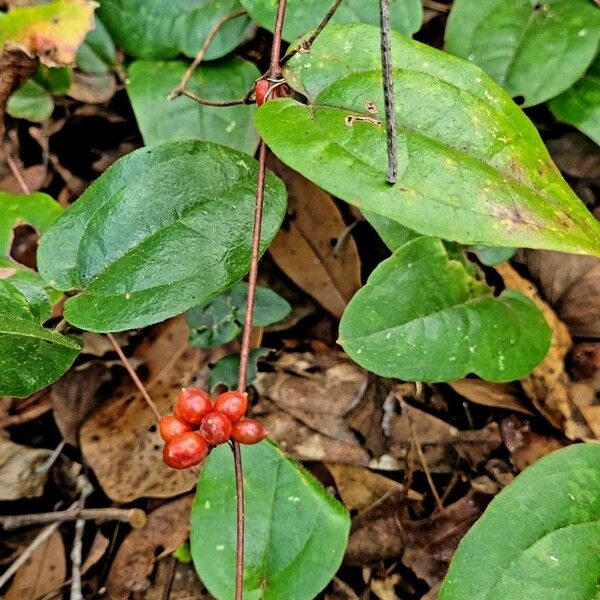
Plant Overview
Often called the Sarsaparilla Vine or Dwarf Smilax, this plant is a gentle, velvet-leaved relative of the more aggressive, thorny greenbriers. Native to the southeastern United States, it behaves more like a polite groundcover than a climbing nuisance. It is a favorite among native plant enthusiasts for its beautiful variegated foliage and its ability to thrive in the deep shade of oak and pine forests.
🔍 How to Identify
- 🍃 Velvety Foliage: The most striking feature is the soft, downy texture on the underside of the leaves. The top surface is often a deep green with beautiful silvery-white "water stains" or mottling.
- 🚫 Thornless Stems: Unlike its prickly cousins that snag your clothes, Smilax pumila is usually "unarmed," meaning it lacks the sharp thorns typical of the Smilax family.
- 🍒 Winter Berries: In late fall and winter, the plant produces clusters of bright, teardrop-shaped red berries that stand out vividly against the forest floor.
🏡 In Your Garden
- 🌱 The King of Dry Shade: This plant is a "problem solver" for those difficult, sandy patches under large trees where grass won't grow. It is highly drought-tolerant once its deep root system is established.
- 🦋 Wildlife Support: It serves as an important larval host for various moth species and provides high-energy berries for songbirds during the lean winter months. Because it stays low to the ground, it also offers excellent cover for small garden residents like toads and lizards.
⚠️ Safety & Toxicity
- 🟢 Generally Safe: Smilax pumila is not known to be a high-risk plant. It lacks the "stabbing" thorns of other briars, making it much safer for high-traffic areas.
- 🤢 Mild Irritant: While the roots of some Smilax species were historically used in sodas, the raw berries of the Dwarf Smilax are not for human consumption. Ingesting them may cause mild stomach upset or nausea in humans and pets.
✨ Fun Fact
The name "Sarsaparilla" comes from the Spanish words zarza (bramble), parra (vine), and illa (small). While the famous old-fashioned soda was originally flavored using tropical relatives of this plant, early settlers in the South used this local version to create herbal tonics!

Detailed Care Instructions
To grow Smilax pumila plant, also known as catbrier or greenbrier, you can follow these steps:
- Location: Choose a suitable location for planting the Smilax pumila. It grows best in partial shade to full shade. The soil should be well-drained and slightly acidic.
- Soil preparation: Prepare the soil by loosening it with a garden fork or tiller. Remove any weeds or grass from the area. If the soil is heavy clay or compacted, consider adding organic matter like compost or leaf mold to improve drainage and fertility.
- Planting: Dig a hole that is slightly wider and deeper than the root ball of the Smilax pumila plant. Place the plant in the hole, making sure that the top of the root ball is level with or slightly above the soil surface. Backfill the hole with soil, gently firming it around the plant.
- Watering: Water the newly planted Smilax pumila thoroughly to settle the soil around the roots. Keep the soil consistently moist but not waterlogged. During hot and dry periods, regular watering may be necessary.
- Mulching: Apply a layer of organic mulch around the base of the plant. This helps to conserve moisture, suppress weed growth, and insulate the roots from extreme temperatures.
- Pruning: Prune any dead or damaged stems as needed to maintain the plant's health and shape. Smilax pumila is a climbing vine, so you may need to provide a trellis, fence, or other support for it to grow vertically.
- Fertilizing: Smilax pumila generally doesn't require much fertilization, especially if the soil is already fertile. However, you can apply a balanced slow-release fertilizer in early spring to promote healthy growth. Follow the manufacturer's instructions regarding dosage and application methods.
- Monitoring and maintenance: Regularly monitor the plant for any signs of pests or diseases, such as leaf spot or aphids. Treat any issues promptly to prevent them from spreading. Keep the surrounding area weed-free to reduce competition for nutrients and moisture.
By following these steps, you should be able to successfully grow Smilax pumila plant in your garden or landscape.

Place in a bright room that is sun drenched almost all day. Or directly in a south-facing window.

The plant requires regular watering in order to maintain its health. The amount of water it needs depends on factors such as the temperature, humidity, and soil moisture level. When watering, it is important to avoid overwatering as this can lead to root rot. It is recommended to keep the soil slightly moist but never waterlogged. One way to determine if the plant needs water is to check the top layer of soil with your finger. If it feels dry to the touch, it is time to water. It is best to water in the morning or evening when the temperature is cooler and the sun is not as intense. Avoid watering during the middle of the day as this can cause the water to evaporate too quickly and not adequately penetrate the soil. Water the plant at the base, near the soil, rather than from above, as getting the leaves too wet can cause fungal diseases.
- Choose a well-draining potting mix or soil.
- Add organic matter to the soil to improve fertility and texture.
- Fertilize with a balanced, slow-release fertilizer in early spring before new growth appears.
- Apply a second round of fertilizer in midsummer to support continued growth.
- Water the plant deeply after fertilization to help the nutrients get absorbed.
- Avoid fertilizing in late summer or fall as the plant starts to slow down.
Smilax Pumila is a type of plant that generally prefers well-draining soil that is rich in organic matter. A suitable soil mix for this plant should include a combination of peat moss, perlite, and compost to improve drainage and aeration while retaining necessary moisture. It is also important to maintain a slightly acidic soil pH of around 6.0-6.5 for optimal growth. Adding a slow-release fertilizer to the soil mix can also provide essential nutrients for the plant. Overall, a well-draining, nutrient-rich soil mix with slightly acidic pH is essential for the healthy growth of Smilax Pumila.
There are several methods to propagate the Smilax Pumila plant, including seeds, stem cuttings, and root division.
To propagate the plant using seeds, collect mature seeds from the plant and place them in a planting medium that is well-draining and moist. Keep the seeds in a warm environment, such as a greenhouse, until they germinate.
Another method is to take stem cuttings from the plant. Cut a section of stem that is about 4-6 inches long and remove all leaves except for the top two. Dip the cut end of the stem into rooting hormone and plant it in a well-draining, moist soil mix. Keep the soil consistently moist and in partial shade until new growth appears.
Lastly, the Smilax Pumila plant can also be propagated through root division. Carefully dig up the plant and separate the roots into smaller sections, making sure each section has its own root system and at least one stem. Replant the divisions in a well-draining soil mix and keep them consistently moist until new growth appears.








