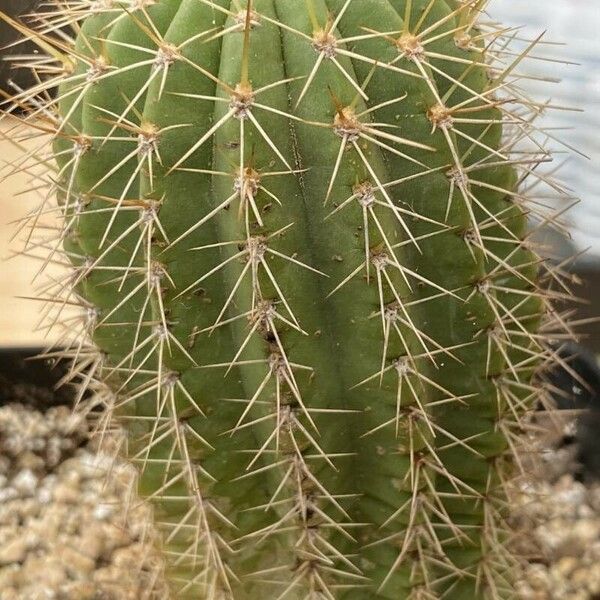
Plant Overview
Commonly known as the Red Torch Cactus, this Argentine native is a showstopper that earns its name through its "stop-you-in-your-tracks" floral display. It is a hardy, low-growing cactus that prefers to sprawl and clump into impressive colonies rather than reach for the stars like its taller cousins. In its native habitat of the Monte desert, it paints the rocky landscape with splashes of fiery crimson every spring.
🔍 How to Identify
- 🌵 The Stem: Cylindrical, light green stems that grow either upright or slightly prostrate (leaning), featuring 12 to 18 distinct vertical ribs.
- 🦔 The Spines: Clustered groups of needle-like, yellowish to brownish spines that give the plant a fuzzy but prickly "halo" when backlit by the sun.
- 🌺 The Bloom: Massive, funnel-shaped flowers—usually a brilliant scarlet or deep orange—that can reach up to 4 inches in diameter and emerge near the tips of the stems.
🏡 In Your Garden
- ☀️ Sun-Worshipper: This cactus thrives on intensity. To get those legendary red blooms, it needs as much direct sunlight as possible. Without enough light, the stems will grow thin and "leggy" as they reach for a window.
- 🏜️ Drainage Nuance: Its biggest enemy is "wet feet." Because it originates from high-altitude, arid regions, it requires a very gritty, mineral-heavy soil. It is particularly sensitive to rot during the winter months if the soil remains damp and cold.
⚠️ Safety & Toxicity
- 🌵 Physical Hazard: While the plant is not chemically toxic or poisonous, it is heavily armed. The spines are sharp and can easily puncture skin or get stuck in clothing.
- 🐾 Pets & Kids: It is generally considered non-toxic to dogs and cats if accidentally nibbled, but the spines pose a significant risk of mechanical injury to paws, noses, and curious hands. Keep it out of high-traffic areas.
✨ Fun Fact
The Soehrensia grandiflora is a favorite for pollinators; its flowers are so rich in pollen that bees and hummingbirds often emerge from the petals completely dusted in yellow, looking like tiny "flying Cheetos."

Detailed Care Instructions
Soehrensia grandiflora, formerly known as Echinopsis grandiflora, is a type of cactus that is known for its large, beautiful flowers that bloom primarily at night. Here are some tips on how to care for and successfully grow Soehrensia grandiflora:
- Lighting: Soehrensia grandiflora requires a lot of sunlight. Ensure it gets at least 6 hours of direct sunlight daily, which is crucial for its growth and flowering. In extremely hot climates, some afternoon shade may be necessary to prevent sunburn.
- Soil: Use a well-draining cactus mix. Good drainage is essential to prevent root rot. You can either buy a commercial cactus potting mix or make your own by mixing potting soil with sand and perlite or pumice in a ratio of about 1:1:1.
- Watering: Water the plant thoroughly, allowing water to drain freely from the pot's bottom. Let the soil dry out completely between watering sessions. The frequency of watering will depend on the climate and season, being more frequent in the hot summer months and sparse during the cooler winter.
- Fertilizing: During the growing season (spring and summer), you can fertilize the plant every 4-6 weeks using a balanced, water-soluble fertilizer diluted to half the recommended strength. Do not fertilize during the dormant winter period.
- Temperature: Soehrensia grandiflora prefers warm conditions and is not frost-tolerant. In regions where temperatures fall below freezing, it is best to grow the cactus in a pot that can be moved indoors during colder spells. Typically, they thrive in temperatures ranging from 70°F to 90°F (21°C to 32°C) during the day.
- Repotting: Repot the cactus every few years or when it has outgrown its pot. It’s best done in the warmer season. Use fresh cactus mix and ensure the new pot has ample drainage holes.
- Pest Management: Keep an eye out for pests such as spider mites and mealybugs. Treat infestations early with appropriate insecticides or natural remedies like neem oil.
- Pruning: Though typically not necessary, any dead or damaged parts of the cactus should be pruned to keep the plant healthy. Use sterilized cutting tools to prevent infection.
- Flowering: Flowering generally occurs when the plant is mature and well-cared for. Flowers are large and appear primarily at night, lasting just one night. Ensuring optimal care and conditions can encourage the plant to flower.
By following these care requirements, your Soehrensia grandiflora should thrive and grace you with its stunning flowers. Remember that patience is key when it comes to cactus care, as many species grow slowly and take time to flourish.
To water Soehrensia grandiflora effectively, you need to consider several factors that influence its moisture needs: climate, season, and the plant's growth cycle. Here’s a detailed guide on how to water this cactus:
- Check the soil moisture: Before watering, ensure the top inch of soil is completely dry. Over-watering can cause root rot, which is harmful to this desert plant. A simple way to check soil dryness is to stick your finger into the soil up to the first knuckle.
- Water thoroughly: When you water, do so deeply. This means watering until water runs out of the drainage holes of the pot. This ensures that the water reaches the entire root system, which is essential for healthy growth.
- Allow proper drainage: The pot should have adequate drainage holes to prevent excess water from sitting at the bottom, which can lead to fungal diseases and root rot. Use a well-draining soil mix, typically used for cacti, which usually contains perlite, sand, and compost.
- Adjust frequency according to season: Watering frequency should be adjusted according to the season. During the growing season (spring and summer), the plant may need watering once every week or two, depending on the environmental conditions like temperature and humidity. During the dormant season (fall and winter), reduce watering to once a month or less, depending on the dryness of the soil.
- Consider environmental factors: If your plant is outdoors and it’s a particularly hot and dry weather, you may need to water more frequently. Conversely, in colder or cloudy conditions, the soil will retain moisture longer, and you should reduce the watering frequency.
- Morning watering: It's best to water in the morning; this allows any moisture on the plant itself to dry off throughout the day, which helps prevent fungal infections and sunscald.
- Use room temperature water: Avoid using very cold water as it can shock the plant's roots. Room temperature water is preferable and less likely to cause any temperature related stress to the plant.
By following these guidelines, you can ensure that your Soehrensia grandiflora receives the proper amount of water it needs to thrive without risking over-watering or under-watering issues.
Soehrensia grandiflora, a cactus native to South America, thrives in environments similar to its natural habitat. Here are detailed steps to fertilize this plant properly:
- Fertilizer Type: Opt for a balanced, water-soluble fertilizer, ideally with a formulation like 10-10-10 (nitrogen-phosphorus-potassium). The plant benefits from a fertilizer lower in nitrogen to avoid rapid, weak growth that can occur with too high nitrogen levels.
- Frequency: During the growing season (spring to late summer), fertilize Soehrensia grandiflora about once every 4-6 weeks. Cease fertilization in the fall and winter months, as the plant enters a dormant period and requires less nutritional support.
- Application Process:
- Dilution: Dilute the fertilizer to half the strength recommended on the package to avoid over-fertilizing, which could harm the plant.
- Watering: Before applying fertilizer, water the plant thoroughly. This ensures that the roots are moist and can absorb the fertilizer more effectively, and it helps prevent root burn.
- Applying Fertilizer: Pour the diluted fertilizer solution directly onto the soil, avoiding the plant's body. This method helps to reach the roots without risking stains or damage to the plant’s surface.
- Dilution: Dilute the fertilizer to half the strength recommended on the package to avoid over-fertilizing, which could harm the plant.
- Monitoring and Adjustment: Observe your plant’s response after fertilizing. Signs of over-fertilization include salt buildup in the soil and a sudden drop of leaves or flowers. If these symptoms appear, leach the soil by watering thoroughly and deeply several times without adding more fertilizer. Adjust the frequency and concentration as necessary based on the plant's response.
- Soil Health: Regularly check the soil quality. Soehrensia grandiflora requires well-draining soil, and the accumulation of fertilizer can affect soil structure and pH. Every few years, consider repotting the plant with fresh cactus-specific or well-draining soil mix to maintain healthy growth conditions.
By following these fertilizing guidelines, your Soehrensia grandiflora should maintain vigor and potentially flower, reflecting healthy growth and optimal care conditions. Remember, each plant has unique needs; adjust care routines as needed based on specific conditions like lighting, temperature, and natural growth cycles.
Soehrensia grandiflora, a member of the Cactaceae family, thrives best in soil that mimics its native arid conditions. To create an optimal environment for this plant, it's important to use a soil mix that provides excellent drainage and some organic matter to support growth. Here’s a guide to preparing the ideal soil mix for Soehrensia grandiflora:
Components of the Soil Mix:
- Sharp Sand or Grit: This improves drainage, which is crucial as this species is prone to root rot if the soil remains wet for too long. About 30-40% of the soil mix should consist of sharp sand or fine gravel.
- Pumice or Perlite: Either of these materials will enhance aeration and drainage. They help maintain an airy soil structure which is essential for the roots’ health. About 20-30% of the mix should be pumice or perlite.
- Loam or Potting Soil: Use a high-quality potting soil that includes some loam. Loam supports nutrient retention and provides a stable structure for the roots. This should make up about 20-30% of the mix.
- Coconut Coir or Peat Moss: Adding about 10-20% of coconut coir or peat moss will help with moisture retention while still allowing the soil to drain well. This is crucial in maintaining a balance between moisture and drainage.
- Organic Compost: Including a small amount (about 5-10%) of compost can enrich the soil with nutrients that are beneficial for the plant’s growth. Be careful not to overdo it, as excessive nutrients can harm this species.
Additional Recommendations:
- PH Level: Aim for a slightly acidic to neutral pH (around 6.0 to 7.5). This plant isn’t overly sensitive to pH but keeping within this range can aid in optimum growth conditions.
- Avoid Heavy Soils: Clay-heavy soils should be avoided as they tend to retain water and do not provide the necessary drainage.
- Repotting: Regular repotting (every 2-3 years) helps refresh the soil mix and prevent compaction, which can negatively affect drainage and root health.
Final Notes:
When preparing the soil mix, wear gloves and a mask if necessary to avoid inhaling fine particles. Ensure all components are well mixed for uniformity. Proper soil preparation not only fosters healthy growth but also reduces the risk of diseases and pests common in poorly drained and improperly suited soils.
To successfully propagate Soehrensia grandiflora, which is a type of cactus native to South America, you can either use seeds or division methods. Each method has its own requirements and steps that should be followed carefully to ensure successful propagation. Here’s how you can do it:
Propagation by Seeds:
- Seed Collection:
- If you already have the plant, you can collect seeds from the fruit once it dries out. Otherwise, purchase seeds from a reputable supplier.
- If you already have the plant, you can collect seeds from the fruit once it dries out. Otherwise, purchase seeds from a reputable supplier.
- Sowing Seeds:
- Prepare a shallow tray or pot with a well-draining cactus mix. You can make your own by mixing perlite, sand, and potting soil in equal parts.
- Scatter the seeds over the surface of the soil. Lightly press them into the soil but do not bury them deeply, as they need light to germinate.
- Water gently using a spray bottle to avoid displacing the seeds. The soil should be kept slightly moist but not waterlogged.
- Prepare a shallow tray or pot with a well-draining cactus mix. You can make your own by mixing perlite, sand, and potting soil in equal parts.
- Germination:
- Cover the tray or pot with a clear plastic lid or plastic wrap to maintain humidity.
- Place the setup in a warm, well-lit area but out of direct sunlight which can scorch the seeds.
- Seeds may take anywhere from a few weeks to several months to germinate, depending on their viability and environmental conditions.
- Cover the tray or pot with a clear plastic lid or plastic wrap to maintain humidity.
- Seedling Care:
- Once seedlings appear, gradually expose them to more light. Be cautious of intense sunlight, which can harm young plants.
- Remove the cover gradually to reduce humidity and acclimatize the seedlings to normal air conditions.
- Keep the soil slightly moist and provide good air circulation to prevent fungal diseases.
Propagation by Offsets (Pups):
- Once seedlings appear, gradually expose them to more light. Be cautious of intense sunlight, which can harm young plants.
- Offset Removal:
- Wait until the offsets from the base of the parent plant are well-formed. They should have their own roots or be large enough to potentially develop them once separated.
- Gently separate the offset using a clean, sharp knife. Ensure each offset has some roots attached if possible.
- Wait until the offsets from the base of the parent plant are well-formed. They should have their own roots or be large enough to potentially develop them once separated.
- Rooting the Offsets:
- Allow the offsets to dry for a few days in a shaded area to form a callus over the cuts. This helps prevent rot.
- Plant each offset in a small pot filled with a cactus potting mix similar to the seeding mix mentioned above.
- Water lightly to establish the roots, maintaining a balance between moisture and well-drained conditions.
- Allow the offsets to dry for a few days in a shaded area to form a callus over the cuts. This helps prevent rot.
- Care for New Plants:
- Place the pots in an area with bright, indirect light. Gradually acclimatize the plants to more direct sunlight.
- Water sparingly until the plants show signs of growth, which indicates that they have established roots.
General Tips:
- Place the pots in an area with bright, indirect light. Gradually acclimatize the plants to more direct sunlight.
- Maintain moderate temperatures ideally between 50°F (10°C) and 75°F (24°C), avoiding frost.
- During the growing season, fertilize with a diluted low-nitrogen cactus fertilizer to encourage growth without risking the health of the plant.
- Avoid overwatering, as this can lead to root rot, a common issue in cactus propagation.
Propagating Soehrensia grandiflora requires patience, especially if using seeds. Proper care during the initial stages of growth can yield beautiful and thriving plants over time.








