Plant Overview
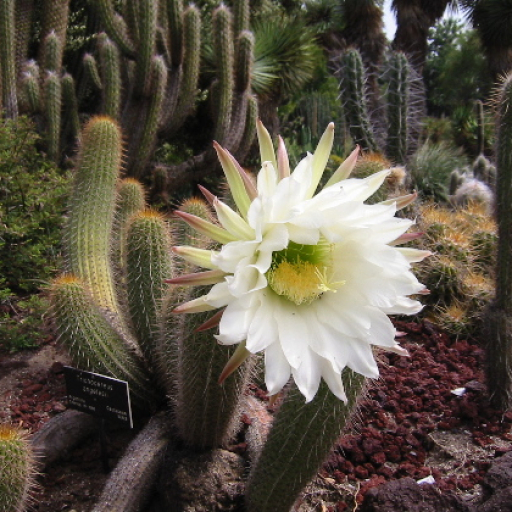
Known as the Golden Torch Cactus, this Argentine native is a favorite for its architectural beauty and spectacular, dinner-plate-sized flowers. In its homeland, it is a rugged survivor of rocky slopes, but in the home garden, it is celebrated as a reliable "beginner cactus" that adds vertical drama to any collection. Its resilience and fast growth have made it a staple in desert landscaping and indoor sun-rooms alike.
🔍 How to Identify
- 🌵 The Stem: Vibrant lime-green cylindrical columns that grow strictly upright, eventually branching from the base to form a striking candelabra-like cluster.
- ✨ The Spines: Short, needle-sharp, golden-yellow spines that radiate from fuzzy circular areoles, giving the plant its distinct "golden" glow when caught in the sunlight.
- 🌸 The Bloom: Massive, trumpet-shaped white flowers (up to 8 inches long) that open during the night and emit a sweet fragrance to attract nocturnal pollinators.
🏡 In Your Garden
- ☀️ Light & Form: This cactus is a true sun-worshipper. If kept in low light, the "torch" will begin to stretch and become thin and weak (etiolation), losing its iconic upright symmetry.
- 🛠️ The Grafting King: In the hobbyist world, this species is nicknamed the "Mother of Grafts." Because it is incredibly hardy and grows much faster than other species, collectors often use it as a base to support rarer, more delicate cacti that struggle on their own roots.
- 🏜️ Drainage Nuance: While it is more rot-resistant than many desert dwellers, it hates "wet feet." It prefers a gritty, porous soil that mimics the rocky outcrops of the Andes mountains.
⚠️ Safety & Toxicity
- 🩹 Physical Hazard: The Golden Torch is not chemically toxic to humans or animals. However, its spines are very sharp and can easily puncture skin or snag on clothing.
- 🐾 Pets & Kids: Due to the density of the spines, this plant should be kept away from high-traffic areas or low floors where pets and children might accidentally bump into it.
✨ Fun Fact
Because the flowers bloom exclusively at night and usually wither by the next morning, many owners miss the bloom entirely! You have to be a "night owl" to witness the massive white trumpets at their peak.

Detailed Care Instructions
To grow Soehrensia Spachiana, also known as the Peruvian Old Man Cactus, follow these steps:
- Choose a suitable location: Soehrensia Spachiana prefers bright, indirect sunlight. Place it near a south or east-facing window where it can receive at least 4-6 hours of sunlight per day.
- Temperature and humidity: This cactus thrives in warm temperatures, ideally between 70-85°F (21-29°C). It prefers low to moderate humidity, so avoid excessively damp areas.
- Soil: Use a well-draining cactus potting mix or create your own by combining equal parts of potting soil, sand, and perlite. Good drainage is crucial to prevent root rot.
- Planting: Select a pot with drainage holes that is slightly larger than the root ball of your Soehrensia Spachiana. Place a layer of small rocks or broken pottery at the bottom for additional drainage. Gently place the cactus in the pot and fill in the gaps with the potting mix, ensuring the plant is firmly rooted.
- Watering: Water the plant sparingly, allowing the soil to dry completely between waterings. Overwatering can lead to rot, so it's better to underwater than overwater. During winter, reduce watering frequency as the plant goes into a dormant state.
- Fertilization: Feed your Soehrensia Spachiana with a balanced cactus fertilizer diluted to half-strength once a month during the growing season (spring and summer). Avoid fertilizing during winter.
- Pruning: Only prune dead or damaged parts of the plant. Use sterilized pruning shears or a sharp knife to carefully remove any unhealthy sections.
- Propagation: Soehrensia Spachiana can be propagated through stem cuttings. Allow the cuttings to dry for a few days before planting them in a moist cactus mix. It's recommended to keep the newly planted cuttings slightly shaded until they establish roots.
- Pests and diseases: These cacti are generally resistant to pests and diseases. However, occasionally, they may be susceptible to common cactus problems such as mealybugs or scale. Regularly inspect your plant for any signs of infestation and treat using appropriate insecticides if necessary.
Remember, cacti are slow-growing plants, so patience is key. With proper care and attention, your Soehrensia Spachiana will gradually grow into a beautiful and healthy specimen.

Place in a bright room that is sun drenched almost all day. Or directly in a south-facing window.

When watering the Soehrensia Spachiana plant, it is crucial to follow the appropriate watering techniques to ensure its optimal growth and health. Here are the steps to effectively water this plant:
1. Evaluate the soil: Before watering, check the moisture level of the soil. Stick your finger about one inch deep into the soil, or use a moisture meter, to assess if it is dry.
2. Watering frequency: The watering frequency may vary depending on various factors such as the season, climate, and plant's growth stage. Generally, it is advisable to water the Soehrensia Spachiana when the top inch of the soil feels dry.
3. Watering method: Use a watering can or a hose with a gentle spray nozzle to water the plant. Slowly pour water at the base of the plant until the soil is evenly moist. Avoid getting water on the plant's foliage, as it may lead to fungal diseases or sunburn.
4. Adequate drainage: Ensure that the pot or container has proper drainage holes. This allows excess water to flow out, preventing waterlogging, which can cause root rot.
5. Deep watering: When watering, aim for deep penetration into the soil. This will encourage the plant's roots to grow deeper and develop a stronger root system. Deep watering also helps to avoid shallow root growth.
6. Watering amount: Adjust the amount of water based on the plant's needs. The goal is to provide sufficient moisture but avoid overwatering. Water thoroughly until excess water drains through the bottom, ensuring hydration reaches the plant's deeper roots.
7. Seasonal considerations: During the plant's active growing season, typically spring and summer, it may require more frequent watering. In contrast, during winter or dormancy periods, reduce watering to prevent potential water retention issues.
8. Environmental factors: Consider environmental conditions such as temperature, humidity, and sunlight levels. Higher temperatures and exposure to direct sunlight may increase the plant's water requirements due to evaporation.
Remember to monitor the plant's response to watering and adjust the frequency or amount if necessary. By providing appropriate water management, you will help the Soehrensia Spachiana plant thrive and maintain its health and vigor.
To fertilize the Soehrensia Spachiana plant, follow these instructions:
- Choose a balanced water-soluble fertilizer with an NPK ratio of 10-10-10 or similar. This means it contains equal proportions of nitrogen (N), phosphorus (P), and potassium (K), which are essential nutrients for plant growth.
- Dilute the fertilizer according to the package instructions, usually mixing 1 tablespoon of fertilizer per gallon of water.
- Slowly pour the diluted fertilizer solution around the base of the Soehrensia Spachiana plant, making sure to avoid getting it on the leaves or stems.
- Use the fertilizer solution to thoroughly moisten the soil, allowing it to penetrate the root zone.
- Avoid over-fertilizing, as excessive nutrients can harm the plant. It is advisable to fertilize once a month during the active growing season, typically from spring to fall.
- Monitor the plant's response to fertilization. If you notice signs of over-fertilizing, such as burnt or yellowing leaves, reduce the amount of fertilizer used or the frequency of application.
- Additionally, consider using organic fertilizers or supplements like compost or worm castings, which can provide slow-release nutrients to the soil.
- Remember to water the plant regularly and maintain adequate light conditions for optimal growth.
Note: Every plant has specific needs, so it's always important to research and understand the requirements of the particular plant species you are fertilizing.
Soil plays a crucial role in the proper growth and development of Soehrensia Spachiana plants. When choosing the ideal soil for this particular plant, it is essential to consider specific characteristics to provide the best environment for its well-being.
- Well-Draining: Soehrensia Spachiana plants prefer soil that is well-draining. This means that the soil should be able to retain the necessary moisture for the plant's roots, while also allowing excess water to properly drain away. This prevents waterlogging, which can lead to root rot and other issues.
- Sandy or Loamy Texture: Soehrensia Spachiana plants generally thrive in soil with a sandy or loamy texture. Sandy soil allows for improved drainage, preventing the roots from sitting in overly moist conditions. Loamy soil, on the other hand, provides a balanced mix of sand, silt, and clay, promoting optimal water retention while avoiding waterlogging.
- pH Level: It is essential to consider the pH level of the soil. Soehrensia Spachiana plants typically prefer slightly acidic to neutral soil conditions with a pH ranging from 6.0 to 7.0. This range allows for proper nutrient uptake and prevents issues associated with extreme acidity or alkalinity.
- Nutrient-Rich: To support healthy growth, the soil should be nutrient-rich. Incorporating organic matter, such as well-rotted compost or aged manure, can improve the soil's fertility and provide a steady supply of essential nutrients. This promotes robust foliage, vibrant flowers, and overall plant vitality.
- Aeration: Adequate aeration is crucial for Soehrensia Spachiana plants. This means that the soil should allow for the movement of air through the root zone. Proper aeration facilitates root respiration and helps prevent the accumulation of harmful gases or suffocating the roots.
Remember to regularly check the moisture levels within the soil, as overwatering or underwatering can be detrimental to the plant's health. Adjust watering practices accordingly to accommodate the needs of the Soehrensia Spachiana plant and ensure its overall well-being.
Soehrensia Spachiana is a species of cactus native to certain regions in South America. Propagating this plant can be done through a few different methods, including seeds, offsets, and stem cuttings. Here's a step-by-step guide on how to propagate Soehrensia Spachiana:
- Obtain seeds: If you want to start from seeds, you can either purchase them online or collect them from a mature Soehrensia Spachiana plant. Harvesting seeds from a mature cactus requires waiting for the plant to produce flowers and then fertilize them. After pollination, the plant will develop fruits containing the seeds.
- Prepare the soil: Soehrensia Spachiana prefers well-draining soil to prevent waterlogging, which can be detrimental to the young plant. Fill a pot or a seed tray with a cactus-specific potting mix or a blend of sand, perlite, and peat moss.
- Sow the seeds: Moisten the potting mix lightly before sowing the seeds. Place the seeds on top of the soil without burying them, as cactus seeds need light to germinate. Press them slightly into the soil, ensuring good seed-to-soil contact.
- Provide suitable conditions: Place the pot or tray in a warm and brightly lit area, preferably with indirect sunlight. Maintain a temperature around 70-80°F (21-27°C). Keep the soil lightly moistened but not waterlogged. In a few weeks, you should start to see tiny seedlings emerging.
- Care for the seedlings: Once the seedlings have grown a bit, you can transplant them into individual pots. Select a pot slightly larger than the seedling's size and fill it with a well-draining cactus mix. Gently remove the seedlings from the tray and transplant them, making sure not to damage their roots.
- Offset propagation: Soehrensia Spachiana also produces offsets, or "pups," which are small plants that grow alongside the main plant. To propagate using offsets, wait for them to develop their own root system and then carefully separate them from the parent plant. Plant the offsets in well-draining soil and follow similar care instructions as for seeds.
- Stem cutting propagation: Another option is propagating Soehrensia Spachiana through stem cuttings. Select a healthy stem and cut it off using a clean, sharp knife. Allow the cutting to callus over for a few days to prevent rotting, then plant it in a pot filled with cactus mix. Keep the soil barely moist and wait for roots to develop before following regular care practices.
Remember to be patient during the propagation process, as cacti generally have slow growth rates. With proper care, your propagated Soehrensia Spachiana plants can thrive and become mature specimens over time.
Common pests of the golden torch cactus include Scale insect, mealybugs, spider mites. Make a habit of checking your golden torch cactus frequently for pests so that any infestations can be caught and managed early.








