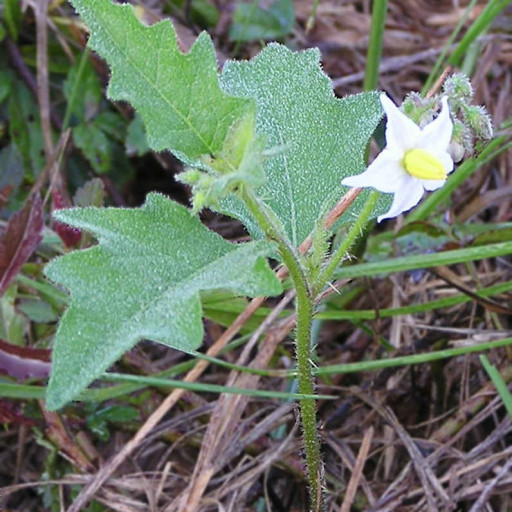
Plant Overview
Often called the "Devil’s Tomato" or "Carolina Horsenettle," this plant is the rebellious, prickly cousin of the common potato and tomato. While its delicate flowers look like they belong in a vegetable patch, this native North American perennial is a tough-as-nails survivor that thrives in disturbed soils. It is widely considered a "noble weed"—beautiful to look at, but fiercely protective of its space.
🔍 How to Identify
- 🌵 Armed Foliage: The most distinct feature is the presence of sharp, yellowish spines (prickles) running along the stems and even the midribs of the wavy-edged leaves.
- 🌸 Nightshade Blooms: It produces clusters of star-shaped flowers that range from snowy white to pale violet, each featuring a prominent "beak" of bright yellow anthers in the center.
- 🟡 Golden Berries: As the season progresses, it grows smooth, green berries that eventually turn a wrinkled, dull yellow, looking remarkably like tiny, unappetizing cherry tomatoes.
🏡 In Your Garden
- ⛏️ The Taproot Trap: If you find this in your garden, be careful when pulling it. It possesses an incredibly deep and extensive rhizomatous root system; leaving even a small fragment of the root in the soil can result in a new plant popping up weeks later.
- 🦋 Wildlife Role: While gardeners often fight it, the plant is a vital host for certain insects, including the Horsenettle Potato Beetle, and its flowers provide high-quality pollen for specialized bumblebees.
⚠️ Safety & Toxicity
- 🚫 Highly Toxic: Every part of the Carolina Horsenettle contains solanine, a potent glycoalkaloid. It should never be consumed.
- 🐾 Danger to Pets & Livestock: The plant is a significant concern in pastures, as it can be fatal to horses and cattle if grazed. In the home garden, keep children and pets away from the yellow berries, which may look deceptively like edible fruit.
✨ Fun Fact
- 🐝 Secret Vibration: This plant uses "buzz pollination." To release its pollen, a bee must grab the flower and vibrate its wings at a specific frequency, creating a sonic resonance that literally shakes the pollen out of the pores in the anthers!

Detailed Care Instructions
| Humidity | Dry |
| Lighting | Full Sun |
| Toxicity | Poisonous |
| Difficulty | Easy |
| Hibernation | Cold Period |
| Temperature | 23°C - 25°C |
| Hardiness Zones | 3 - 7 |
To grow Solanum Carolinense, commonly known as Carolina horsenettle, follow these steps:
- Seed collection: Collect ripe fruits from an existing Carolina horsenettle plant during the fall or early winter. Gently squeeze the fruits to extract the seeds.
- Seed preparation: Rinse the seeds thoroughly with water to remove any pulp. Then, air dry the seeds for a few days to ensure they are completely dry.
- Soil preparation: Carolina horsenettle prefers well-draining soil with a pH level between 5.5 and 7.5. Prepare the soil by removing any weeds and debris. Loosen the soil and mix in organic matter like compost for better drainage and nutrient content.
- Seed sowing: Sow the seeds directly into the prepared soil in early spring after the last frost. Plant the seeds about ¼ to ½ inch deep, and space them about 12 to 24 inches apart.
- Watering: Keep the soil consistently moist but not overly waterlogged. Water the seedbed regularly to ensure the soil remains damp.
- Sunlight: Carolina horsenettle requires full sun to thrive. Choose a location in your garden that receives at least six hours of direct sunlight each day.
- Weed control: Regularly weed the area around the Carolina horsenettle plants to prevent competition for nutrients and space. Be careful while weeding as the plant has spines and can be prickly.
- Mulching: Apply a layer of organic mulch, such as wood chips or straw, around the base of the plants to conserve moisture, suppress weeds, and regulate soil temperature.
- Fertilizer: Apply a balanced, slow-release fertilizer according to the product instructions once a month during the growing season to provide necessary nutrients.
- Pest control: Carolina horsenettle can be susceptible to various pests, such as aphids, hornworms, and flea beetles. Monitor your plants regularly and take appropriate measures to control any infestations. Organic pest control methods, such as using insecticidal soaps or neem oil, are often effective.
- Harvesting: Once the plants have matured, usually in late summer or early fall, you can harvest the fruits for propagation or to dry and preserve for future planting.
Remember that Carolina horsenettle is considered an invasive weed in some areas. Therefore, it is essential to check the local regulations and ensure it is appropriate to grow this plant in your region.

Place in a bright room that is sun drenched almost all day. Or directly in a south-facing window.

To water this plant, carefully pour water at the base of the stem, avoiding water directly on the leaves or flowers. The frequency of watering will depend on the individual plant's needs, but it is important to make sure the soil is moist but not overly saturated. You should monitor the moisture level of the soil by sticking your finger into the soil up to the knuckle; if it feels dry, it's time to water. Ensure that excess water is able to drain out of the pot or planter to prevent root rot.
To fertilize this plant, use a balanced fertilizer with equal amounts of nitrogen, phosphorus, and potassium. Apply the fertilizer in early spring before new growth emerges and again in late summer. Use a slow-release fertilizer to avoid burning the roots. Spread the fertilizer evenly around the base of the plant and water thoroughly after application. Avoid fertilizing during periods of drought or extreme heat to avoid stressing the plant.
In order to grow the plant, it is recommended to use a well-draining soil that is rich in organic matter. The pH level of the soil should be neutral to slightly acidic. The ideal soil composition should contain a mix of sand, silt, and clay. It is important to avoid soils that are too heavy or compacted, as they can lead to poor drainage and stunted plant growth. Fertilizer can be added to the soil to provide additional nutrients, but be careful not to over-fertilize as this can damage the plant. Regular watering is also important to keep the soil moist, but not waterlogged.
To propagate this particular plant, select a healthy cutting from the parent plant. With a sharp and clean cutting tool, cut a 4-6 inch section of the stem, ensuring that it has at least two leaves and a node.
Fill a small pot with moist potting soil and insert the stem cutting into the soil, pressing it in firmly. Water the soil to keep it moist, but not overly wet. Place the pot in a bright, but shady area.
In a few weeks, roots should start to appear from the node. Check regularly to make sure the soil remains moist and adjust the plant's location to ensure it receives sufficient light.
Once the plant has established itself in the pot and developed a strong root system, it can be transplanted to a larger pot or directly into the ground.








