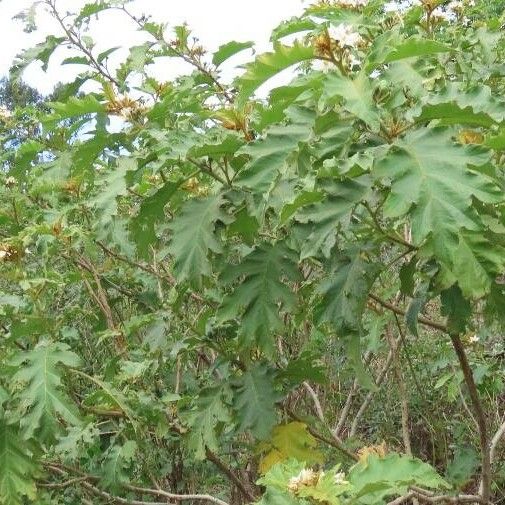
Plant Overview
Known as the Giant Devil's Fig, Solanum chrysotrichum is a bold, structural shrub that looks like it stepped straight out of a prehistoric jungle. Originally hailing from the highlands of Mexico and Central America, this member of the Nightshade family is famous for its massive, fuzzy leaves and star-shaped blooms. While it adds undeniable drama to a landscape, it’s a plant that demands respect—both for its rapid growth and its formidable, prickly defenses.
🔍 How to Identify
- 🌿 Velvety Foliage: The leaves are enormous (up to 12 inches long), deeply lobed, and covered in a dense layer of rusty, star-shaped hairs that give the plant a golden-bronze shimmer in certain lights.
- 🌸 Starry Blooms: It produces large clusters of bright white, five-pointed flowers with distinctive, protruding yellow centers (anthers), typical of the tomato and potato family.
- ⚔️ Prickly Stems: The stems and even the midribs of the leaves are armed with sharp, slightly curved prickles designed to deter any curious herbivores.
🏡 In Your Garden
- ☀️ Space Seeker: This isn't a plant for a tight corner; it grows rapidly into a large, multi-stemmed shrub or small tree. It thrives in full sun and loves the "pioneer life," often popping up in disturbed soils or forest edges.
- ✂️ Pruning Needs: Because it can become leggy and aggressive, regular pruning is necessary to keep it shaped. However, always wear thick gloves—those "devilish" thorns are no joke and can easily pierce standard gardening mitts.
⚠️ Safety & Toxicity
- 🚫 Toxic Ingestion: Like many wild Solanums, the plant contains glycoalkaloids (solanine). The yellow-orange berries and leaves are toxic if eaten and should be kept away from curious children and pets.
- 🌵 Physical Hazard: The thorns are sharp and persistent. It is generally not recommended for planting near walkways, play areas, or paths where skin contact is likely.
- 🐾 Pet Warning: Ingestion can cause severe gastrointestinal upset, drooling, and lethargy in dogs and cats.
✨ Fun Fact
The species name chrysotrichum translates literally to "golden hair" from Greek (chrysos for gold and thrix for hair). This refers to the microscopic, star-shaped golden hairs (trichomes) that cover the plant, providing a built-in "sunscreen" and defense against tiny insects!

Detailed Care Instructions
To grow Solanum chrysotrichum, also known as the Golden Fleece plant or Woolly Nightshade, you can follow these steps:
- Obtaining seeds or a plant: You can purchase seeds or a young plant from a local nursery or from reputable online seed vendors.
- Selecting the right location: Solanum chrysotrichum prefers a sunny location with well-draining soil. Make sure to choose a spot where the plant will receive at least six hours of direct sunlight daily.
- Planting seeds or transplanting the young plant: If starting from seeds, sow them in seed-starting trays or pots filled with well-draining potting mix. Cover the seeds lightly with soil and keep them moist. Once they have sprouted, thin out the seedlings, allowing the strongest one to grow. If you have a young plant, transplant it into a larger pot or directly into the ground, ensuring you provide enough space for growth.
- Watering: Keep the soil evenly moist but avoid overwatering. Allow the top layer of soil to dry out slightly before watering again. Avoid waterlogged conditions as it can lead to root rot.
- Fertilizing: Solanum chrysotrichum benefits from regular feeding. Apply a balanced, slow-release fertilizer or a liquid fertilizer once a month during the growing season. Be sure to follow the instructions on the fertilizer packaging.
- Pruning: Regularly pinch back or prune the plant to encourage bushier growth and prevent it from becoming leggy. This can be done by removing the growing tips or cutting back longer stems.
- Providing support: As the plant grows, it may require some support, especially if it starts to trail or if you want to train it upwards. Install a trellis, stakes, or a plant support structure to help the plant grow upright.
- Protecting from pests and diseases: Solanum chrysotrichum can be susceptible to pests like aphids, whiteflies, and spider mites. Inspect the plant regularly and treat any infestations promptly with organic insecticides or insecticidal soap. Watch out for signs of diseases like powdery mildew or leaf spot and take necessary measures to control them.
- Harvesting: Solanum chrysotrichum produces small, edible fruits. Harvest them when they turn golden yellow and are fully ripe. The fruits can be eaten fresh or used in cooking.
Remember to research and familiarize yourself with any specific care requirements for Solanum chrysotrichum, as they may vary depending on your specific region and climate.

Place in a bright room that is sun drenched almost all day. Or directly in a south-facing window.

To water this plant, it is important to regularly check the moisture level of the soil. This can be done by inserting a finger into the soil up to the second knuckle and feeling for dampness. If the soil is dry, water the plant thoroughly, allowing the water to soak down to the roots. It is important not to let the soil become waterlogged or saturated, as this can lead to root rot. Watering once or twice a week, depending on the humidity and temperature of the plant's environment, is usually sufficient. It is also important to provide good drainage in the pot or planting location to prevent water from accumulating around the roots.
To fertilize this plant, use a balanced fertilizer with equal amounts of nitrogen, phosphorus, and potassium. Apply the fertilizer every two weeks during the growing season, but reduce the frequency to once a month during the dormant season. Be cautious not to over-fertilize, as it can lead to burnt leaves and stunted growth. Water the plant well before and after fertilizing to avoid fertilizer burn.
The ideal soil for this plant should be well-draining and fertile with a pH level between 6.0 and 7.5. It should contain a proper balance of organic matter, minerals, and nutrients, including nitrogen, phosphorus, and potassium. This plant prefers soil that is slightly moist but not saturated, as excessive moisture can lead to root rot and other diseases. It is also important to avoid soil that is too compacted, as this may impede root growth and lead to nutrient deficiencies. Finally, it is recommended to occasionally add organic fertilizers to the soil to keep it properly nourished and to prevent deficiencies in the plant.
To propagate this plant, take stem cuttings from a healthy, mature plant. Cut a section of stem about 4-6 inches long, making sure to include a few leaves. Remove the leaves from the lower two-thirds of the stem, leaving only a few at the top. Dip the cut end of the stem in rooting hormone, and plant it in a pot filled with moist potting soil.
Water the cutting thoroughly, and make sure the soil stays moist but not waterlogged. Place the pot in a warm, bright location out of direct sunlight. You can cover the pot with a plastic bag to create a humid environment, but make sure to remove the bag occasionally to prevent mold growth.
After a few weeks, check for roots by gently tugging on the stem. If there is resistance, roots have formed and the cutting has successfully propagated. Gradually acclimate the plant to brighter light and less humidity until it is ready to be transplanted into its permanent home.








