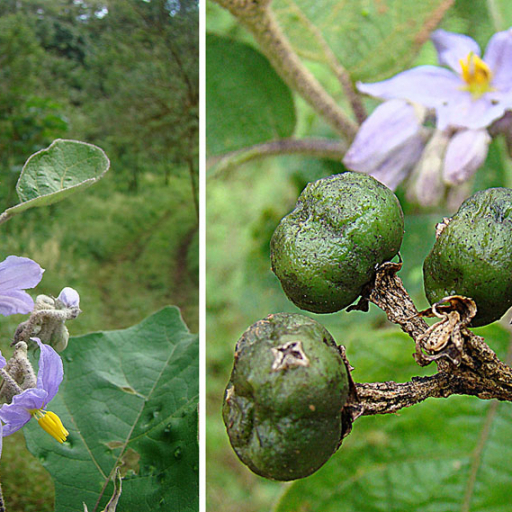
Plant Overview
Known as the Lance-leaf Nightshade, this striking evergreen shrub brings a splash of Mediterranean flair to any landscape with its dusty purple blooms and vibrant orange berries. Native to the highlands of Mexico and Central America, it is a hardy survivor that often finds its way into gardens as an ornamental, though its wild nature means it can sometimes be quite aggressive in the right conditions.
🔍 How to Identify
- 🍃 Foliage: The leaves are long, narrow, and lance-shaped (hence the name lanceolatum). They are often covered in fine, velvety hairs that give them a soft, silvery-green or grayish sheen.
- 🌸 Bloom Style: It produces clusters of star-shaped flowers in shades of lavender to deep purple. Each flower features a prominent, pointed cone of bright yellow anthers at the very center.
- 🍒 The Fruit: After the flowers fade, small spherical berries develop. They transition from a dull green to a glossy, eye-catching orange or reddish-orange when ripe.
🏡 In Your Garden
- ☀️ Sun & Resilience: This plant thrives in full sun and is remarkably drought-tolerant once established. It is an excellent choice for xeriscaping or "low-water" garden zones where other plants might wilt.
- ✂️ Growth Habit: It has a sprawling, shrubby habit and can reach up to 6 feet in height. Because it can become "leggy" or thin over time, it benefits from occasional hard pruning to encourage a bushier, more compact shape.
- 🦋 Pollinator Support: While it doesn't provide nectar, its flowers are a "buzz pollination" favorite for native bees, who vibrate their wings at specific frequencies to release the pollen from the yellow centers.
⚠️ Safety & Toxicity
- 🚫 Toxic Status: High Toxicity. Like many members of the Nightshade family, the Lance-leaf Nightshade is toxic if ingested.
- 🐾 Pets & Kids: The berries are particularly tempting due to their bright color but contain solanine and other alkaloids. These can cause severe gastrointestinal distress or worse in dogs, cats, and small children.
- 🧤 Skin Sensitivity: The fine, fuzzy hairs on the stems and leaves can cause mild skin irritation or "itchiness" for some people. It is best to wear gloves when pruning or handling the plant for long periods.
✨ Fun Fact
- 🧬 A Famous Family: Despite its somewhat "wild" or weedy reputation, this plant is a direct cousin to the Tomato, Potato, and Eggplant! If you look closely at the flower of a tomato plant and a Lance-leaf Nightshade, you’ll see they share the exact same five-pointed star structure.

Detailed Care Instructions
To grow Solanum lanceolatum (also known as Kangaroo Apple), follow these steps:
- Obtain seeds or young plants: You can purchase Solanum lanceolatum seeds or young plants from a nursery, garden center, or online seed supplier.
- Choose the right location: Kangaroo Apple plants require full sun to partial shade. Select a spot in your garden that receives at least 6 hours of direct sunlight per day. The soil should be well-draining and fertile.
- Prepare the soil: Before planting, prepare the soil by removing any weeds or grass and loosening it with a garden fork. Mix in some compost or well-rotted manure to improve soil fertility and drainage.
- Planting seeds or young plants:
- If using seeds: Start the seeds indoors in seed trays or small pots about 6-8 weeks before the last frost date. Sow the seeds at a depth of 1/4 inch and keep them moist. Transplant the seedlings outdoors once all danger of frost has passed and they have developed a few true leaves.
- If using young plants: Dig a hole that is slightly larger than the root ball of the young plant. Place the plant in the hole, ensuring that it sits at the same depth as it was in its previous container. Backfill the hole with soil and gently firm it around the plant.
- Watering: Keep the soil evenly moist but not waterlogged. Water the plant deeply whenever the top inch of soil feels dry. Avoid overwatering as it can lead to root rot.
- Mulching and fertilizing: Apply a layer of organic mulch around the base of the plant to help retain moisture and suppress weed growth. Feed the plant with a balanced fertilizer once every 4-6 weeks during the growing season to promote healthy growth.
- Pruning: Regularly prune back the plant to maintain a compact shape and to remove any dead, damaged, or diseased branches. Pruning should be done after the plant has finished flowering.
- Pests and diseases: Solanum lanceolatum is generally resistant to pests and diseases. However, keep an eye out for common tomato pests such as aphids, whiteflies, and caterpillars. If necessary, treat the plant with organic insecticides or insecticidal soap.
Remember, it's always helpful to refer to specific care instructions provided by the nursery or seed supplier to ensure the best results for your particular Solanum lanceolatum variety.
Solanum Lanceolatum is a plant that requires regular watering to grow and remain healthy. The amount of water required depends on factors such as the size of the plant, the soil type, and the surrounding environment.
When watering Solanum Lanceolatum, it's important to avoid overwatering, as excess water can lead to root rot and other issues. To determine when to water the plant, check the soil moisture level by sticking a finger into the soil. If the soil feels dry to the touch, it's time to water the plant.
It's a good idea to water Solanum Lanceolatum in the early morning or late evening, when the sun is not as strong. This will help prevent water evaporation and allow the plant to absorb more water.
When watering Solanum Lanceolatum, avoid getting water on the foliage, as this can lead to fungal disease and other issues. Instead, water the plant directly at the base, near the roots. Use a watering can or hose with a gentle spray nozzle to avoid blasting the soil away from the roots.
If the plant is growing in a container, make sure there are drainage holes in the bottom to allow excess water to escape. Water the plant until the excess water runs out of the drainage holes.
During hot, dry weather, Solanum Lanceolatum may require more frequent watering. Monitor the plant closely and adjust the watering schedule as needed.
To fertilize Solanum Lanceolatum, use a balanced fertilizer with equal amounts of nitrogen, phosphorus, and potassium. Apply the fertilizer to the soil around the base of the plant, avoiding getting any fertilizer on the leaves or stems. Water the plant thoroughly after fertilizing to ensure that the fertilizer reaches the roots. Repeat this process every four to six weeks during the growing season.
Solanum Lanceolatum plant prefers a well-draining soil that is rich in organic matter. The ideal soil pH for this plant is slightly acidic to neutral (pH 6.0-7.0). The soil should be loamy and have good water holding capacity, but not retain water too much to prevent waterlogging.
The soil should be prepared by adding organic matter such as compost, leaf mold, and well-rotted manure. This will improve soil structure and fertility, which will benefit the growth and development of the plant.
Avoid using soil that is too heavy or compacted, as this can prevent proper root development and result in poor growth and yield. The soil should also be free from rocks and other debris that can hinder growth.
When planting Solanum Lanceolatum, make sure the soil is evenly moist, but not waterlogged, as this can lead to root rot and other diseases. Mulching around the base of the plant with organic matter can help to retain moisture and suppress weeds.
Regular fertilization with a balanced fertilizer will also ensure that the plant has the nutrients it needs to thrive.
To propagate this plant, you will need to gather ripe fruits from the plant and remove the seeds from them. Once you have the seeds, you should clean them by removing all traces of fruit and then sow them in a well-draining soil mixture. Keep the soil consistently moist but not waterlogged and provide plenty of bright, indirect light.
As the seedlings emerge, you can transplant them into individual containers or seedling trays. Once they have outgrown their containers or trays, you can plant them directly into the soil, ensuring they are placed in a spot with adequate sunlight and well-draining soil. With proper care, the plants should establish themselves and grow into healthy, mature plants that can produce their own fruits and seeds for future propagation.








