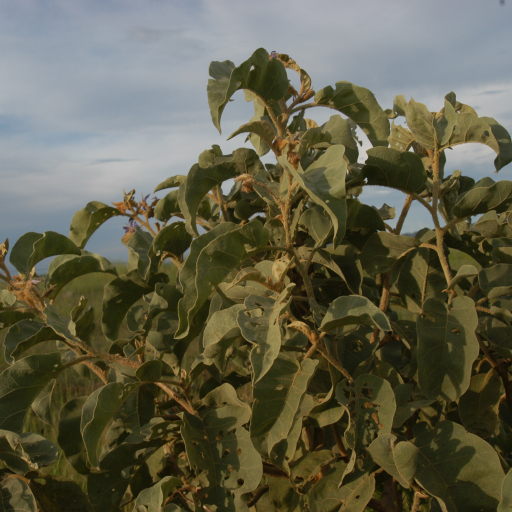
Plant Overview
Known as the Wolf Apple or Lobeira, this resilient shrub is the literal lifeblood of the Brazilian Cerrado. Its name comes from its unique relationship with the Maned Wolf, which relies on the fruit for survival and health. This plant is a true "pioneer," often being the first to reclaim land after a fire or soil disturbance, standing as a symbol of endurance in the wild savanna.
🔍 How to Identify
- 🌸 Starry Blooms: Features beautiful purple or violet flowers with five petals and a distinct cluster of bright yellow stamens in the center, typical of the nightshade family.
- 🍃 Velvety Foliage: The large, deeply lobed leaves are covered in a fine, silvery-gray fuzz, giving the plant a soft, dusty appearance and helping it retain moisture.
- 🍏 The "Apple": The fruit is large, round, and heavy, starting as a dark green and ripening to a brownish-yellow. It looks remarkably like a giant, oversized tomato or eggplant.
🏡 In Your Garden
- ☀️ Sun Worshiper: In its natural habitat, it thrives in full, punishing sun. If you are growing it, it requires an open spot with no canopy overhead to mimic the open Brazilian plains.
- 🌱 Tough Roots: It is incredibly drought-tolerant once established. It prefers well-draining, slightly acidic soil and actually thrives in "poor" soil where other plants might struggle, making it a low-maintenance choice for dry climates.
- 🦋 Wildlife Magnet: While it may not be a traditional garden ornamental, it is a powerhouse for biodiversity, attracting specialized pollinators and providing a sturdy structure for nesting.
⚠️ Safety & Toxicity
- 🚫 Status: Generally considered inedible for humans when raw.
- 🐾 Pet Safety: Like many members of the Solanum family (nightshades), the leaves and unripe fruit contain alkaloids that are toxic to dogs, cats, and livestock if ingested in large quantities.
- 🍲 Human Use: While traditional Brazilian medicine uses the fruit to make a starch or jam believed to help with diabetes, it should never be consumed without expert preparation, as the raw fruit can cause severe gastrointestinal distress.
✨ Fun Fact
The Maned Wolf depends so heavily on this fruit that it makes up nearly 50% of its diet. Biologists believe the fruit acts as a natural medicine, helping the wolf fight off a deadly giant kidney worm parasite that is common in the region!

Detailed Care Instructions
To grow Solanum lycocarpum, also known as "Wolf Apple" or "Queen Apple," you can follow these steps:
- Obtain Seeds: Obtain seeds from a reliable source. You can search for online seed sellers or check with your local nurseries or botanical gardens.
- Germination: Place the seeds in a small container filled with moist seed-starting soil. Moisten the soil without making it waterlogged. Cover the container with a plastic wrap or a lid to create a mini-greenhouse effect. Keep the container in a warm and bright location, ideally with a temperature around 70-80°F (21-27°C). Check the soil regularly to ensure it remains moist, but not waterlogged.
- Transplanting: Once the seedlings have developed a few sets of true leaves and are sturdy enough to handle, usually after 6-10 weeks, they can be transplanted to individual pots filled with well-draining potting soil. Choose pots with drainage holes.
- Light and Temperature: Solanum lycocarpum plants require full sun to thrive. Select a location for your potted plants where they will receive at least 6-8 hours of direct sunlight each day. The plant can tolerate a wide temperature range, but it prefers warm temperatures between 70-90°F (21-32°C).
- Soil and Watering: Use well-draining soil that is rich in organic matter. The soil should be kept slightly moist, but not overly saturated. Allow the top inch of soil to dry between waterings to avoid root rot. Adjust the frequency of watering based on the moisture needs of the plant, ensuring it doesn't dry out completely.
- Fertilization: Feed your Solanum lycocarpum plant with a balanced, water-soluble fertilizer diluted to half-strength every two weeks during the growing season. Follow the instructions provided on the fertilizer packaging for appropriate dosage.
- Pruning: As the plant grows, you may want to train it by pruning any excessive branches or shoots to maintain a more compact and manageable shape. Prune the plant during the dormant season or after fruiting if necessary.
- Pollination: Solanum lycocarpum plants are usually self-incompatible, meaning they require cross-pollination for fruit production. You can encourage pollination by attracting beneficial insects to your garden, such as bees and butterflies.
- Fruit Harvesting: Once the plant reaches maturity, it will produce unique, tomato-like fruits that are edible. Harvest the fruits when they turn yellowish-orange, indicating ripeness. They can be consumed raw or used for cooking.
Remember that Solanum lycocarpum plants are native to specific regions and may require special care, so it's recommended to consult with local experts or gardening resources to ensure success.

Place in a bright room that is sun drenched almost all day. Or directly in a south-facing window.

Solanum Lycocarpum is a plant that requires consistent watering to maintain its growth and health. A recommended watering technique is to water deeply and thoroughly, allowing the water to saturate the soil around the plant's root system. It is important to avoid watering the plant too frequently, as this can lead to waterlogged soil and potentially harm the plant. It is also helpful to monitor the weather conditions and adjust watering accordingly, as the plant may require more or less water depending on the season. Additionally, adding a layer of mulch around the plant can help to retain moisture in the soil and reduce the need for frequent watering.
This plant should be fertilized with a balanced fertilizer, containing equal amounts of nitrogen, phosphorus, and potassium, every two weeks during the growing season. The fertilizer should be diluted to half the recommended strength before application. Avoid over-fertilizing, as this can cause leaf burn and other problems. Additionally, make sure to water the plant thoroughly after fertilizing to prevent nutrient buildup in the soil.
Solanum Lycocarpum requires well-drained soil with a neutral to slightly acidic pH level of around 6.0-7.0. The soil should be nutrient-rich and have good water-holding capacity to support the plant's growth. It is recommended to use a mixture of sandy loam or loamy soil along with compost or other organic matter to improve the soil's fertility and structure. Additionally, the soil should be free from weed seeds, pests, and diseases to avoid any possible soil-borne problems. Adequate sunlight and proper water and nutrient management are also crucial for the plant's growth and development.
To propagate this plant, you can take stem cuttings from healthy, mature plants. Choose a stem that is several inches long and has several leaves. Cut the stem just below a node, and remove all leaves except for the top few. Dip the cut end in rooting hormone and plant it in a pot filled with moist potting soil. Water the cutting regularly and keep it in a warm, bright location, but out of direct sunlight. In a few weeks, roots should form and new growth should appear. Once the cutting has established a good root system and several new leaves, it can be transplanted to a larger pot or directly into the garden.








