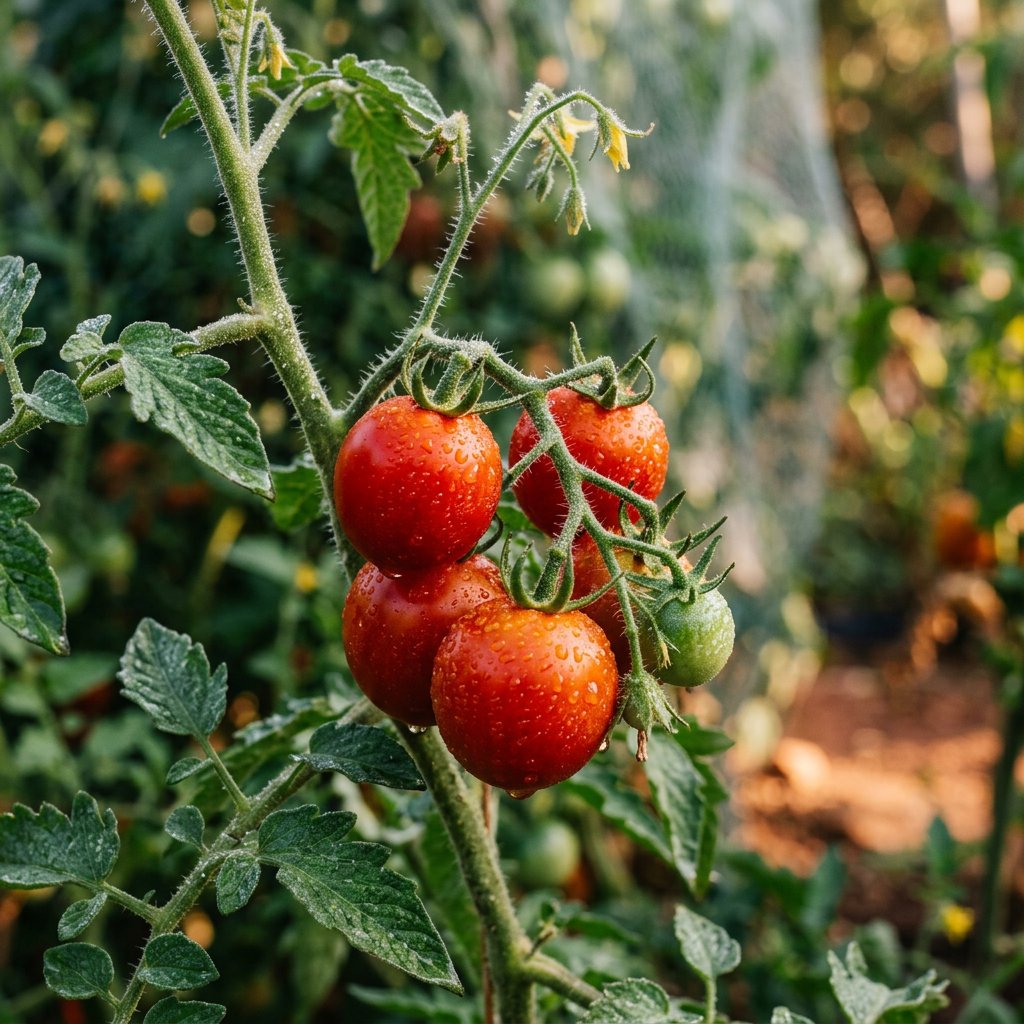
Plant Overview
Known as the "Love Apple" by the French and once feared as the "Poison Apple" by early Europeans, the Tomato is the undisputed king of the home garden. Though botanically a fruit, this member of the nightshade family has traveled from its wild roots in the Andes to become a global culinary icon. It is a plant that rewards the senses with its earthy fragrance and sun-warmed harvests.
🔍 How to Identify
- 🌿 The Foliage: The leaves are "pinnate" (resembling a feather) with jagged, saw-toothed edges. They are covered in tiny, glandular hairs called trichomes that release a distinct, musky "tomato scent" when brushed.
- 🌼 The Bloom: Small, star-shaped yellow flowers grow in drooping clusters. If you look closely, the petals peel back to reveal a central column that houses the pollen.
- 🍅 The Growth Habit: Depending on the variety, they grow as "Determinate" (bushy and compact) or "Indeterminate" (wild, sprawling vines that can reach over 10 feet if supported).
🏡 In Your Garden
- ☀️ Sun-Fueled Sugars: To produce sweet fruit, the plant requires at least 6 to 8 hours of direct sunlight. This energy is what converts simple starches into the complex sugars that give homegrown tomatoes their superior flavor.
- 🌱 Deep Rooting: Unlike most plants, tomatoes can grow roots all along their stems. Planting them deep—burying the stem up to the first set of leaves—creates a massive, resilient root system that can withstand summer droughts.
- 🍴 Heavy Feeders: These are "hungry" plants. They require nutrient-rich soil high in calcium to prevent "blossom end rot," a common frustration where the bottom of the fruit turns black and sunken.
⚠️ Safety & Toxicity
- 🚫 Toxic Greenery: While the ripe fruit is delicious and healthy, the rest of the plant is not. The leaves, stems, and green, unripe fruits contain solanine and tomatine.
- 🐾 Pet & Child Safety: Ingesting large amounts of the foliage can cause stomach upset, drooling, and lethargy in dogs and cats. It’s best to keep the garden fenced off from curious nibblers.
✨ Fun Fact
- ⚖️ In 1893, the U.S. Supreme Court legally ruled that the tomato is a vegetable. Botanically, it’s a berry, but for the purpose of trade and taxes, the court decided it belonged in the vegetable crisper because it is served with dinner rather than dessert!

Detailed Care Instructions
| Color | Yellow, Red |
| Soil Ph | 6.0 To 6.8 |
| Humidity | High |
| Lighting | Full Sun |
| Toxicity | Toxic |
| Soil Type | Rich, Loamy, Well-Draining |
| Bloom Time | Summer |
| Difficulty | Medium |
| Plant Type | Annual |
| Hibernation | Cold Period |
| Mature Size | 5 To 8 Feet Tall |
| Native Area | South America |
| Temperature | 15°C - 28°C |
| Sun Exposure | Full Sun |
| Hardiness Zones | 1-13 |
To grow Solanum Lycopersicum (tomato) plants, follow these steps:
- Choose a suitable location: Select a sunny spot in your garden with at least 6-8 hours of direct sunlight per day. Tomatoes thrive in warm conditions.
- Soil preparation: Prepare the soil by adding organic matter, such as compost or well-rotted manure, to improve drainage and fertility. Tomatoes prefer slightly acidic soil with a pH of 6-6.8.
- Seed starting: Start seeds indoors about 6-8 weeks before the last frost date in your area. Use seed trays or small pots filled with seed starting mix. Sow the seeds ¼ inch deep and keep the soil moist. Maintain a temperature of 70-80°F (21-27°C) for successful germination.
- Transplanting: Once the seedlings have developed a few true leaves and the danger of frost has passed, transplant them into larger pots or into the ground. Choose a spacing of about 24-36 inches between plants.
- Watering: Keep the soil consistently moist, but not waterlogged. Avoid wetting the leaves to prevent diseases. Water deeply and infrequently rather than shallowly and frequently.
- Fertilizing: Feed the plants with a balanced organic fertilizer every 2-3 weeks to provide necessary nutrients. Alternatively, you can use slow-release granular fertilizers at planting time.
- Pruning and staking: As the plant grows, tomato vines can become heavy and require support. Install stakes or cages to support the plants and prevent them from sprawling on the ground. Prune excessive lateral branches as they appear to promote air circulation and energy to be focused on fruit production.
- Pest and disease control: Monitor the plants regularly, and take action against pests such as aphids, hornworms, or tomato fruit worms if needed. Common diseases like blight or wilt can be prevented by practicing crop rotation and maintaining good plant hygiene.
- Harvesting: Depending on the tomato variety, the fruits will ripen in approximately 60-80 days after transplanting. Harvest tomatoes when they have reached their desired ripeness by gently twisting or cutting the stem.
Remember to check for the specific requirements of the tomato variety you are growing, as they may have certain preferences or characteristics that need additional care or special attention.

Place in a bright room that is sun drenched almost all day. Or directly in a south-facing window.

To properly hydrate this plant, you should aim to water it once or twice a week, depending on the humidity and temperature of the environment it's in. When watering, it is best to do so gently and directly into the soil surrounding the plant's roots, rather than over the leaves or flowers. You should also ensure that the soil drains well and doesn't become waterlogged, as this can lead to root rot. It's important to monitor the plant closely for signs of dehydration, such as wilting or yellowing leaves, and water it accordingly. Additionally, it can be helpful to mulch around the base of the plant to help retain moisture in the soil.
- Before planting the seeds, mix in a slow-release fertilizer to the soil.
- Once the seedlings have grown their first true leaves, begin fertilization with a balanced liquid fertilizer.
- Fertilize every two weeks or as needed with the same liquid fertilizer.
- During flowering and fruiting, switch to a fertilizer with a higher phosphorus content to encourage fruit development.
- Water the plants before and after applying fertilizer to prevent burning the roots.
- Follow the fertilizer instructions on the package for application rates and frequency.
When growing Solanum Lycopersicum, it is important to use soil that is rich in nutrients and has good drainage. The pH of the soil should be between 6.0 and 6.8. Sandy loam soil is ideal, as it provides good drainage while still retaining enough moisture for the plant. The soil should be well-aerated to allow roots to grow easily and access oxygen. Adding compost or fertilizer to the soil before planting can provide additional nutrients for the plant. It is important to avoid using soil that is compacted, heavy clay, or has poor drainage, as this can lead to root rot and other diseases. Additionally, it is recommended to rotate the crop annually to prevent soil-borne diseases and to replenish nutrients in the soil.
There are several ways to propagate this plant:
- Seeds: Collect the seeds from ripe fruit and sow them in seed-starting trays filled with a well-draining soil mix. Keep the soil moist and warm (20-25°C) until germination occurs. Then, transfer the seedlings to individual pots or to a garden bed.
- Stem cuttings: Take 8-10 cm long cuttings from healthy plants, removing the bottom leaves and flowers. Dip the cut end in rooting hormone and plant it in a pot of well-draining soil mix. Keep the soil moist and warm (20-25°C) until roots appear and the cutting starts to produce new growth.
- Layering: This method involves bending a low-hanging branch of a mature plant and burying a section of it in the soil. The buried section will eventually produce roots, and the branch can be cut and planted separately.
- Division: If the plant has multiple stems, it can be divided into smaller plants by carefully digging it up and separating the root ball into several sections. Each section can be replanted in its own pot or bed.
Regardless of the method used, it is important to keep the newly propagated plants well-watered and protected from strong winds and direct sunlight until they are established.
Common pests of the garden tomato include Spider mites, aphids, whiteflies, larvae. Make a habit of checking your garden tomato frequently for pests so that any infestations can be caught and managed early.








