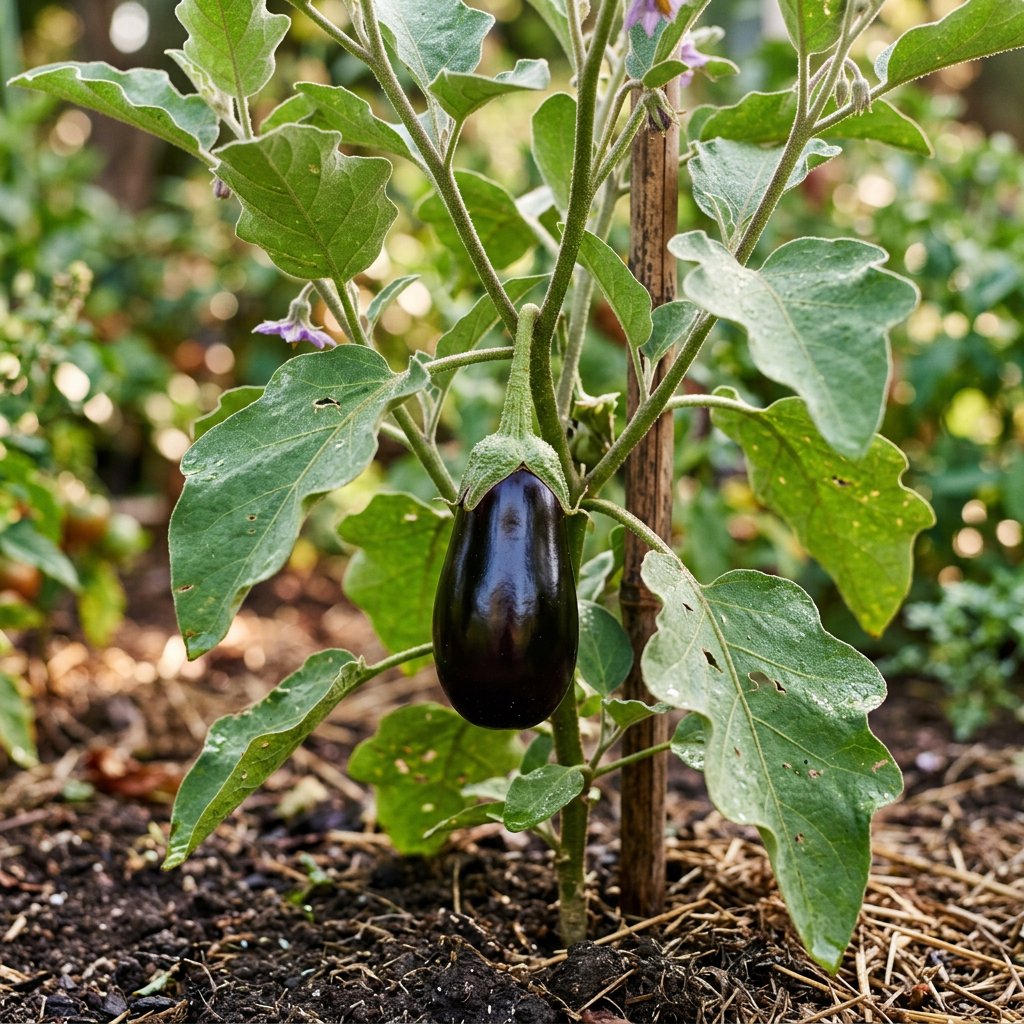
Plant Overview
Known globally as the Aubergine or Brinjal, Solanum melongena is the "King of Vegetables" in many cultures. Though we treat it as a veggie in the kitchen, it is botanically a berry and a member of the diverse Nightshade family. From its origins in Southeast Asia to the Mediterranean dinner table, this plant has been prized for centuries for its glossy, jewel-toned fruits and hardy growth.
🔍 How to Identify
- 🍆 The Fruit: Most commonly seen as a large, teardrop-shaped fruit with glossy, deep purple skin, though heirloom varieties can be white, green, striped, or even small and round like a pea.
- 🌸 The Blooms: Features beautiful star-shaped flowers that are typically violet or lavender with a distinct yellow cone of stamens at the center.
- 🍃 The Foliage: Large, alternate leaves that feel slightly fuzzy or "velvety" to the touch. The stems and leaves sometimes have small, sharp prickles, so handle them with care!
🏡 In Your Garden
- ☀️ Heat Seekers: These plants are true tropicals at heart. They require consistent warmth to produce fruit; if the temperature drops below 50°F (10°C), the plant may stop growing or drop its blossoms in protest.
- 🍴 Heavy Feeders: To produce those heavy, fleshy fruits, Solanum melongena needs rich, compost-heavy soil. They are "thirsty" plants that prefer deep, consistent watering rather than frequent light mists.
- 🪴 Support Systems: Because the fruit can become quite heavy, the branches are prone to snapping. Using a small tomato cage or a sturdy stake early in the season will prevent the plant from toppling over under its own weight.
⚠️ Safety & Toxicity
- 🚫 Toxic Foliage: Like its cousins the tomato and the potato, the green parts of the eggplant (leaves, stems, and calyx) contain solanine.
- 🐾 Pet & Human Safety: Ingesting the leaves or stems can cause gastrointestinal upset, drooling, or lethargy in pets and children. While the fruit is delicious when cooked, the raw fruit contains small amounts of solanine and is generally avoided by those with sensitive stomachs.
✨ Fun Fact
The name "Eggplant" actually comes from 18th-century European cultivars. Back then, the most common varieties were small, white, and oval, looking exactly like a cluster of goose eggs hanging from a bush!

Detailed Care Instructions
| Color | Dark Purple |
| Soil Ph | 5.5 To 7.5 |
| Humidity | High |
| Lighting | Part Sun |
| Toxicity | Toxic |
| Soil Type | Loamy, Well-Drained |
| Bloom Time | Summer |
| Difficulty | Medium |
| Plant Type | Perennial, Grown As Annual |
| Mature Size | 2 To 4 Feet Tall |
| Native Area | Asia |
| Temperature | 25°C - 30°C |
| Sun Exposure | Full Sun |
| Hardiness Zones | 9-12 |
To grow Solanum melongena, commonly known as eggplant, you can follow these steps:
- Choose a suitable location: Select a spot that receives at least 6-8 hours of direct sunlight per day and has well-drained soil. Eggplants need warm temperatures to thrive, so choose an area with a temperature of at least 70°F (21°C).
- Start seeds indoors (optional): If you have a short growing season or live in a colder climate, you can start eggplant seeds indoors about 8-10 weeks before the last expected frost. Sow the seeds in seed trays or small pots filled with seed-starting mix. Keep them moist and provide bottom heat to speed up germination.
- Transplant or sow seeds directly: Once the danger of frost has passed, you can either transplant the indoor-grown seedlings or sow seeds directly into the garden. If transplanting, space the young plants about 18-24 inches apart.
- Prepare the soil: Before transplanting or sowing seeds, prepare the soil by adding organic matter such as compost or well-rotted manure. This will help improve fertility and drainage.
- Provide support: Eggplants can benefit from staking or trellising to support their weight as the fruits develop. Insert stakes or set up a trellis system next to the plants at the time of transplanting.
- Watering: Eggplants require consistent moisture. Water the plants deeply, allowing the soil to dry slightly between waterings. Aim to keep the soil evenly moist but not waterlogged.
- Fertilize: Apply a balanced, slow-release fertilizer or side-dress with compost or organic fertilizer every few weeks to promote healthy growth and fruit production.
- Mulching: Applying a layer of organic mulch around the plants can help retain moisture, suppress weed growth, and regulate soil temperature.
- Pests and diseases: Monitor the plants for common pests such as aphids, flea beetles, and spider mites. Insecticidal soaps or organic insecticides can be used if necessary. Common diseases that can affect eggplants include fungal infections, so avoid overhead watering and provide good air circulation around the plants.
- Harvesting: Eggplants are typically ready for harvest about 60-80 days after transplanting or sowing seeds. Harvest the fruits when they are firm, glossy, and have reached their mature size. Use a sharp knife or pruners to cut the stem above the calyx.
By following these steps and providing the necessary care, you should be able to successfully grow Solanum melongena or eggplant.

Place in a window with dappled sun or a spot in the middle of a room. Or directly in a window facing west or east.

To water this plant, you should first check the soil moisture level by sticking your finger about an inch into the soil. If it feels dry, it's time to water.
Use a watering can or hose with a gentle spray nozzle to avoid damaging the plant. Water the soil around the base of the plant, rather than the leaves or fruit. Be sure not to overwater, as this can lead to root rot and other issues.
During hot weather, you may need to water more frequently to prevent the soil from drying out. Conversely, you should dial back on watering during cooler periods to avoid waterlogged soil.
It's also important to fertilize this plant regularly, as it is a heavy feeder. You can use a balanced fertilizer or one that is higher in potassium to promote fruit production.
Finally, keep an eye out for any signs of pests or diseases and address them promptly to ensure the health and vitality of the plant.
For best results, apply a balanced fertilizer with equal amounts of nitrogen, phosphorus, and potassium every four to six weeks during the growing season. Make sure to follow the package instructions for the amount to use based on the size of your plant. Avoid over-fertilizing, as this can cause damage to the plant. Always water the plants after fertilizing to help the nutrients soak into the soil.
Solanum Melongena plants thrive in well-drained soil with a balanced nutrient profile. The ideal soil for this plant should have a pH range of 5.5-6.5. It should be rich in organic matter and have good water retention capacity. A soil mix with a combination of sand, compost, and peat moss is suitable for Solanum Melongena plants. Additionally, the soil should not be compact and should allow for adequate aeration. Regular fertilization and soil amendments are necessary for the optimal growth and development of the Solanum Melongena plant.
To propagate this plant, you will first need to gather seeds or take stem cuttings from an existing plant. For stem cuttings, make sure to select a healthy stem with several leaves and a node (where a leaf meets the stem). Cut the stem at a 45-degree angle just below the node.
Next, remove all but the top few leaves from the stem cutting and dip the cut end into rooting hormone powder. Plant the stem cutting in a pot filled with well-draining soil, leaving the top few leaves above the soil line. Water the cutting well and place it in a warm, brightly lit area.
If propagating from seeds, first soak the seeds in water overnight to help with germination. Plant the seeds in a pot filled with well-draining soil and water well. Place the pot in a warm, brightly lit area and keep the soil moist.
For both methods, continue to water as needed and provide fertilizer every few weeks. Monitor the plant for any signs of stress or disease, and transplant to a larger pot as the plant grows.
Common pests of the eggplant include Spider mites, aphids, whiteflies, larvae. Make a habit of checking your eggplant frequently for pests so that any infestations can be caught and managed early.








