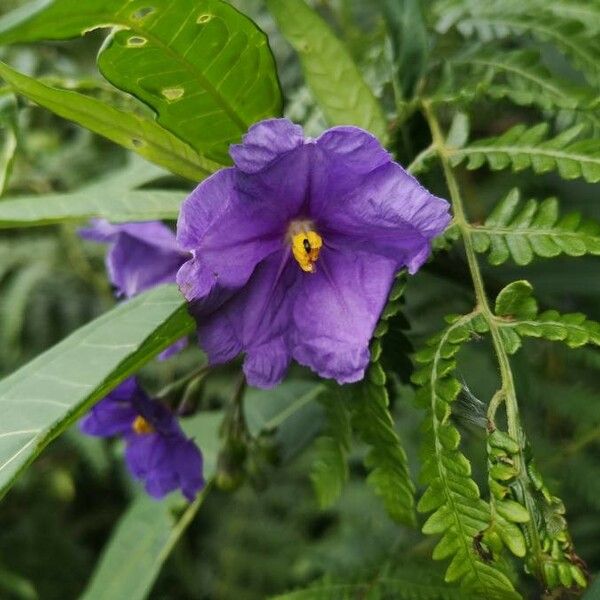
Plant Overview
Often called the Naked Nightshade, Solanum nudum is a slender, elegant shrub native to the lush cloud forests and tropical highlands of Central and South America. Unlike many of its prickly or "fuzzy" cousins in the potato family, this species stands out for its remarkably smooth, hairless stems and leaves, giving it a clean and polished appearance. In many regions, it is a silent guardian of the forest understory, known locally for its historical role in traditional folk remedies.
🔍 How to Identify
- 🌿 The "Naked" Stems: The most defining trait is the lack of hairs or prickles on the branches and foliage, which feels surprisingly smooth to the touch compared to other Solanum species.
- 🌼 Star-Shaped Blooms: It produces delicate clusters of small, white flowers with prominent yellow centers (anthers), typical of the nightshade family but smaller and more refined.
- 🟢 Glossy Berries: After flowering, it develops small, round berries that start as a vibrant green and eventually transition to a dark, almost black hue when fully mature.
🏡 In Your Garden
- ☁️ Humidity Lover: This plant thrives in "misty" conditions. If you are growing it outside its native range, it demands high humidity and protection from harsh, drying winds that can damage its smooth leaves.
- 🍃 Understory Preferences: Because it naturally grows beneath the canopy, it hates direct, scorching afternoon sun. It prefers dappled light or partial shade, mimicking the filtered sunlight of a tropical forest.
- 🌱 Soil Sensitivity: It prefers rich, organic soil that stays consistently moist but never waterlogged. It is sensitive to drought, and its leaves will quickly droop as a dramatic "thirst" signal.
⚠️ Safety & Toxicity
- 🚫 Status: TOXIC. Like many members of the Solanaceae family, Solanum nudum contains alkaloids that can be harmful if ingested.
- 🐾 Pets & Children: All parts of the plant—especially the unripe green berries—are toxic to dogs, cats, and humans. Ingestion can cause gastrointestinal distress, vomiting, or more serious neurological symptoms.
- 🧤 Handling: While not as irritating as stinging nettles, some sensitive individuals may experience mild skin irritation from the sap; it is always best to wear gloves when pruning.
✨ Fun Fact
The specific epithet nudum is Latin for "naked" or "bare," referring specifically to the plant's lack of the "trichomes" (fine hairs) that usually cover other nightshades. While it looks defenseless without thorns, it relies entirely on its internal chemical compounds to ward off hungry insects!

Detailed Care Instructions
To grow Solanum nudum plants, also known as nightshade or needlepoint nightshade, follow these steps:
- Obtaining seeds or young plants: You can purchase Solanum nudum seeds online or from a local nursery. Alternatively, you can collect seeds from mature fruits of existing plants. Young plants are also available at some nurseries.
- Choosing a suitable location: Solanum nudum prefers a sunny or partially shaded location. Ensure the area receives at least 4-6 hours of direct sunlight per day. The soil should be well-drained, fertile, and rich in organic matter.
- Planting seeds or young plants:
- Seeds: Sow the seeds in small pots or seed trays filled with a potting mix. Press the seeds lightly into the soil and cover them with a thin layer of soil.
- Young plants: If you're using young plants, dig a hole in the prepared soil that is slightly larger than the plant's root ball. Place the plant in the hole, ensuring it sits at the same level as it did in the container, and backfill with soil.
- Seeds: Sow the seeds in small pots or seed trays filled with a potting mix. Press the seeds lightly into the soil and cover them with a thin layer of soil.
- Watering: Keep the soil moist but not waterlogged. Water the plants regularly, especially during dry periods or when the plants are young and establishing their roots. Avoid overwatering, as this can lead to root rot.
- Fertilizing: Apply a balanced, slow-release fertilizer during the growing season to provide essential nutrients to the plants. Follow the instructions on the fertilizer package regarding the dosage and frequency of application.
- Pruning and training: Solanum nudum can become bushy, so occasional pruning is beneficial. Remove any dead or diseased branches and trim back excessive growth to maintain a compact shape. You can also support the plants with stakes or trellises if desired.
- Pests and diseases: Monitor the plants for common pests like aphids, mites, or whiteflies. If infestations occur, treat them with appropriate organic pest control methods or insecticidal soap. Solanum nudum is generally resistant to many diseases, but keep an eye out for signs of fungal infections or rot.
- Harvesting: Solanum nudum produces small berries that start green and turn purple or black when ripe. Harvest the berries when they are fully ripe and use them for culinary purposes (after confirming their edible safety) or for seed collection.
Remember to consult local gardening resources or experts to ensure that Solanum nudum is suitable for your specific climate and growing conditions.

Place in a bright room that is sun drenched almost all day. Or directly in a south-facing window.

To water this plant, first ensure that the soil is dry to the touch before proceeding. Use a watering can or hose to slowly water the base of the plant until the soil is moistened but not saturated. Avoid getting water on the leaves or stems as this can lead to fungal growth and other issues. Water the plant once a week during dry periods, adjusting the frequency as needed depending on the climate and season. It is important to provide adequate drainage to prevent the soil from becoming waterlogged, as this can lead to root rot. Additionally, consider adding a layer of organic mulch around the base of the plant to help retain moisture and regulate soil temperature.
Fertilizer instructions for Solanum nudum plants:
- Choose a balanced, all-purpose fertilizer, preferably one with a ratio of nitrogen (N), phosphorus (P), and potassium (K) in equal proportions or slightly higher in nitrogen.
- Apply the fertilizer during the active growing season, which is generally spring and summer.
- Dilute the fertilizer according to the manufacturer's instructions. A general guideline is to mix 1 tablespoon of fertilizer with 1 gallon of water.
- Water the plant thoroughly before applying the fertilizer to ensure the soil is moist.
- Apply the diluted fertilizer around the base of the plant, avoiding direct contact with the leaves and stems.
- Use a watering can or a hose attachment with a low-pressure sprayer to evenly distribute the fertilizer.
- Avoid over-fertilization as it can lead to nutrient burn or other plant problems. Follow the recommended application frequency mentioned on the fertilizer packaging.
- For potted Solanum nudum plants, ensure that excess water drains properly to prevent salt buildup from the soluble fertilizer.
- Observe the plant for any signs of nutrient deficiencies or excesses, such as yellowing leaves or stunted growth. Adjust the fertilizer application accordingly.
- Repeat the process every 2-4 weeks, depending on the specific fertilizer and plant requirements, throughout the growing season.
- During the dormant period, generally in fall and winter, reduce or halt fertilization as the plant's growth slows down.
It is important to note that while these instructions provide general guidelines, specific fertilizer requirements may vary based on the soil composition, environmental conditions, and the plant's individual needs.
The ideal soil for Solanum Nudum is one that is well-draining and nutrient-rich. It should have a slightly acidic to neutral pH, between 6 and 7.5. The plant prefers a loose and airy soil that allows for good root growth and avoids waterlogging. A mixture of peat moss, leaf mold, and perlite or sand can be used to achieve the desired soil structure. It is important to ensure that the soil is not compacted and that it provides good aeration for the roots to breathe. Additionally, it is advisable to keep the soil moist, but not too wet. Adding a layer of organic mulch on top of the soil can help to maintain moisture levels and keep the roots cool. Proper soil preparation and maintenance are crucial for the health and growth of this plant.
To propagate Solanum nudum, you can follow these steps:
- Obtain a mature and healthy plant: Look for a Solanum nudum plant with vibrant green leaves and strong stems. Ensure that it is free from any pests or diseases.
- Prepare the soil: Solanum nudum prefers well-draining soil. Prepare a pot or a garden bed with a mixture of rich organic compost and sand to promote good drainage.
- Take cuttings: Choose a healthy stem that is approximately 4-6 inches long. Using a sharp and clean knife or pair of garden shears, make a clean cut just below a node (the point where a leaf or branch is attached to the stem). Remove any leaves from the lower half of the cutting.
- Rooting hormone (optional): To enhance the chances of successful rooting, you may apply a powdered or liquid rooting hormone to the cut end of the stem. This can be found at garden centers or nurseries.
- Plant the cuttings: Create a hole in the prepared soil and gently insert the cut end of the stem into it. Make sure that at least 2-3 nodes are buried in the soil. Firmly press the soil around the cutting to secure it in place.
- Provide proper care: Place the potted cutting or newly planted cutting in a location that receives partial sunlight (about 4-6 hours per day) and shelter from strong winds. Water the soil regularly to keep it consistently moist but not waterlogged. Avoid overwatering, as this can lead to root rot.
- Encourage root development: To help the cutting establish roots, you can cover it with a clear plastic bag or place a clear plastic dome over the potted cutting. This will create a humid environment that promotes root growth. Mist the cutting with water occasionally to maintain humidity.
- Monitor and wait: Over the course of several weeks, check the cutting regularly for signs of new growth or roots. New leaves or shoots emerging from the nodes are indications that rooting has occurred. Gently tug on the stem to check for resistance, which suggests the presence of roots.
- Transplanting: Once the cutting has successfully rooted and is showing signs of growth, carefully transplant it into a larger pot or a prepared garden bed. Gradually expose the plant to more sunlight over a period of a week or two before placing it in its desired location.
By following these steps, you can successfully propagate Solanum nudum and expand your plant collection.








