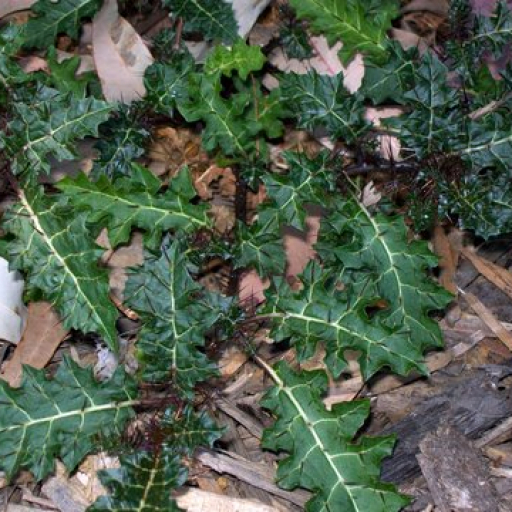
Plant Overview
Often referred to as the Forest Nightshade, this Australian native looks like a miniature, spiky version of a tomato plant. Found sprawling across the forest floors of Eastern Australia, it tells a story of resilience and defense, using its needle-like prickles to keep curious wanderers at bay. While it belongs to the same family as the humble potato, this wild relative is much more comfortable in the bush than on a dinner plate.
🔍 How to Identify
- 🍃 Lobed Foliage: The leaves are deeply indented, resembling small oak leaves, but with a sharp twist—stiff, needle-like spines run along the veins on both the top and bottom surfaces.
- 💜 Starry Blooms: It produces delicate, five-petaled flowers that range from pale lilac to deep violet, each featuring a prominent cluster of bright yellow anthers at the center.
- 🟢 Marbled Berries: The fruit looks like a tiny, 2cm watermelon; it starts green with dark stripes and matures into a pale yellow or whitish berry.
🏡 In Your Garden
- 🌱 The Pioneer Spirit: In the wild, this plant is a "pioneer," often the first to pop up after a bushfire or soil disturbance. It thrives in well-drained, sandy soils and can handle dappled shade better than most of its sun-loving nightshade cousins.
- 🧤 Sprawling Habit: Because it grows as a prostrate or sprawling herb, it can quickly cover ground. If you find it in your garden, be aware that its "scrambling" nature and prickles can make it a literal pain to weed around if it moves into your flower beds.
⚠️ Safety & Toxicity
- 🚫 Toxic Berries: Every part of the Forest Nightshade, especially the unripe green berries, contains solanine. Ingestion can cause gastrointestinal distress, sweating, and weakness.
- 🐾 Pet & Child Risk: The marbled berries are attractive to the eye but dangerous to the touch. Keep this plant away from areas where pets or children play, as the fruit is easily mistaken for a wild snack.
- ⚔️ Physical Defense: The spines are incredibly sharp and can easily pierce thin gardening gloves. Always use heavy-duty protection when handling this plant to avoid skin irritation or puncture wounds.
✨ Fun Fact
Despite its toxicity to humans, the Forest Nightshade is a crucial part of its local ecosystem. Several species of Australian native bees use "buzz pollination" to release the pollen from its yellow anthers, vibrating their bodies at a specific frequency that the plant requires to reproduce!

Detailed Care Instructions

Place in a bright room that is sun drenched almost all day. Or directly in a south-facing window.

Some plants require more regular watering than others, which should be done every few days. It's critical to maintain the soil moist all of the time. The water requirements of the same plant placed in pots with varying sizes will differ. Because the water in the smaller pot evaporates faster than the water in the larger pot, it will require more watering. Regardless of pot size, the surface should constantly be maintained moist.








