Plant Overview
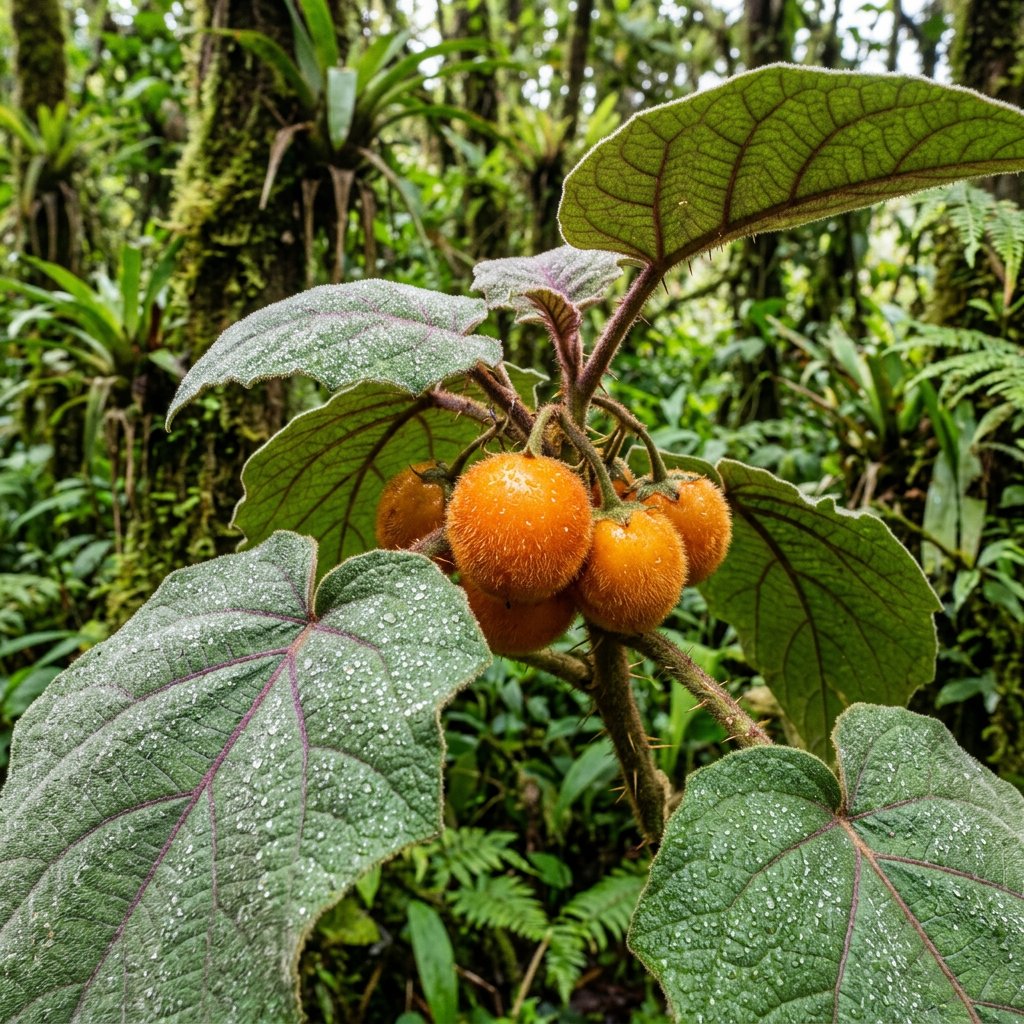
Often called the "Naranjilla" (Spanish for "little orange") or "Lulo," Solanum quitoense is a stunning tropical perennial that looks like it belongs in a prehistoric jungle. Native to the mountain forests of the Andes, this plant is a member of the Nightshade family and is prized for its dramatic, velvet-textured foliage and its tart, citrusy fruit. It’s a favorite among collectors who want a "show-stopper" plant that offers a literal taste of the tropics.
🔍 How to Identify
- 🍃 The Foliage: Massive, heart-shaped leaves that can reach up to 2 feet long. They are covered in a soft, iridescent purple fuzz that makes them glow in certain lights.
- 🌵 The Spines: Be careful! Most wild-type varieties have sharp, dark purple spines protruding from the leaf veins and stems to protect themselves from herbivores.
- 🍊 The Fruit: Round, bright orange berries that look like fuzzy tomatoes. Inside, you’ll find a vibrant, emerald-green jelly filled with tiny seeds.
🏡 In Your Garden
- ☁️ Microclimate Needs: This is a "Goldilolicls" plant; it dislikes extreme heat and freezing cold. It thrives in high humidity and dappled sunlight, mimicking the misty cloud forests of Ecuador and Colombia.
- 💧 Thirsty Nature: Because of its massive leaves, it loses water quickly. It requires consistent moisture and rich, organic soil to support its rapid growth, but it will suffer if its "feet" are left standing in soggy, compacted mud.
⚠️ Safety & Toxicity
- 🚫 Status: The ripe fruit is edible, but the rest of the plant is toxic.
- 🐾 Details: As a member of the Solanum genus, the leaves, stems, and roots contain solanine, which is toxic to dogs, cats, and humans if ingested. Additionally, the fine hairs on the fruit can be irritating to the skin and throat; they should be rubbed off with a cloth before the fruit is consumed.
✨ Fun Fact
The flavor of the Naranjilla is so complex that it is often described as a "citrus explosion"—tasting like a refreshing, tart blend of pineapple, lime, and rhubarb. In Colombia, it is the star ingredient of "Lulada," a popular icy drink.

Detailed Care Instructions
To grow Solanum quitoense, also known as naranjilla or cocona, follow these steps:
- Climate and Soil: Naranjilla prefers a warm climate, with temperatures around 20-25 degrees Celsius (68-77 degrees Fahrenheit). It can be grown in tropical and subtropical regions. The soil should be well-draining, fertile, and slightly acidic (pH 5.5-6.5).
- Seed Preparation: Soak the naranjilla seeds in water overnight before planting to help with germination.
- Planting: Plant the soaked seeds in a seed tray or small pots filled with seed-starting mix. Cover the seeds with a thin layer of soil. Keep the soil moist but not oversaturated. Place the tray or pots in a warm location with indirect sunlight.
- Seedling Care: Once the seedlings emerge, provide them with at least 6 hours of indirect sunlight or use grow lights. Keep the soil consistently moist, but avoid overwatering. After the seedlings develop a few true leaves, they can be transplanted to larger pots or directly into the ground.
- Transplanting: When the seedlings are around 6-8 weeks old and have reached a height of 8-10 inches, choose a suitable location with part shade or filtered sunlight. Prepare the soil by adding organic matter and ensuring good drainage. Space the plants around 3-4 feet apart.
- Watering and Fertilizing: Naranjilla plants require regular watering to keep the soil evenly moist. Mulching around the base of the plants helps retain moisture. Fertilize every 2-4 weeks during the growing season with a balanced fertilizer, following the manufacturer's instructions.
- Supporting the Plant: As naranjilla plants grow tall and can become top-heavy, they may require staking or trellising for support. Use bamboo stakes or similar materials to avoid damaging the plant.
- Pruning: Prune any damaged or diseased branches to maintain plant health. Additionally, pruning can help control the size and shape of the plant.
- Pests and Diseases: Watch for common pests like aphids, whiteflies, and spider mites. Treat any infestations using organic insecticides if necessary. Naranjilla plants are susceptible to some diseases, such as powdery mildew and bacterial spot. Proper spacing, good air circulation, and regular removal of diseased leaves can help prevent or manage these issues.
- Harvesting: Naranjilla fruit typically ripens after 4-5 months. The fruit should be picked when fully orange but not overripe. Cut the fruit off the stem using sanitized pruning shears. Be cautious of the plant's thorns.
Remember that Solanum quitoense may require specific care adjustments depending on your local climate and growing conditions. This guide provides a basic overview.

Place in a window with dappled sun or a spot in the middle of a room. Or directly in a window facing west or east.

To properly irrigate this specific species of plant, you should begin by assessing the soil moisture using your finger or a soil moisture meter. If the top layer of soil feels dry, it's time to water the plant.
When you water, carefully pour water around the base of the plant, slowly saturating the soil. Be careful not to overwater as this can lead to root rot.
It's important to note that this plant prefers consistently moist soil, so it's a good idea to keep an eye on the moisture levels and adjust your watering schedule accordingly. This may mean increasing your watering frequency during hot or dry periods.
In addition to proper watering, make sure your Solanum Quitoense plant is situated in a well-draining soil, as poor drainage can also lead to various problems.
To fertilize Solanum Quitoense, use a balanced fertilizer with a ratio of 10-10-10. Apply the fertilizer once every two months during the growing season, starting in early spring. Be sure to dilute the fertilizer according to the manufacturer's instructions and apply it to the soil around the plant, being careful not to get any on the leaves or stem. Water the plant immediately after applying the fertilizer to help it absorb the nutrients.
For Solanum Quitoense plants, it is important to use well-draining soil that is rich in organic matter. The ideal soil pH should be between 6.0 to 7.0, which is slightly acidic to neutral. A mixture of peat moss, perlite, and vermiculite can be used along with compost to create a light, porous soil mix. The soil should be kept consistently moist but not waterlogged and should be allowed to slightly dry out between watering. Adequate drainage is essential to prevent waterlogging, which can cause root rot and other fungal diseases. Additionally, it is recommended to fertilize the plant with a balanced, slow-release fertilizer every two to three months to promote healthy growth. Overall, the soil for Solanum Quitoense should be well-draining, rich in organic matter, slightly acidic to neutral, and consistently moist.
To propagate this plant, you will need to begin by selecting healthy parent plants with desirable characteristics. Cuttings can be taken from the parent plant and placed in a well-draining potting mix. The cuttings should be about 4-6 inches in length and be taken from the softwood portion of the stem. Remove the leaves from the bottom half of the stem and dip the cut end in rooting hormone. Insert the cutting gently into the potting mix and cover with a plastic bag or dome to maintain humidity. Place the pot in a warm, bright, but indirect light location and maintain soil moisture. After approximately six weeks, new growth should appear, and the cutting can be transplanted to a larger pot or garden bed.
Common pests of the quito-orange include Spider mites, aphids, whiteflies, larvae. Make a habit of checking your quito-orange frequently for pests so that any infestations can be caught and managed early.








