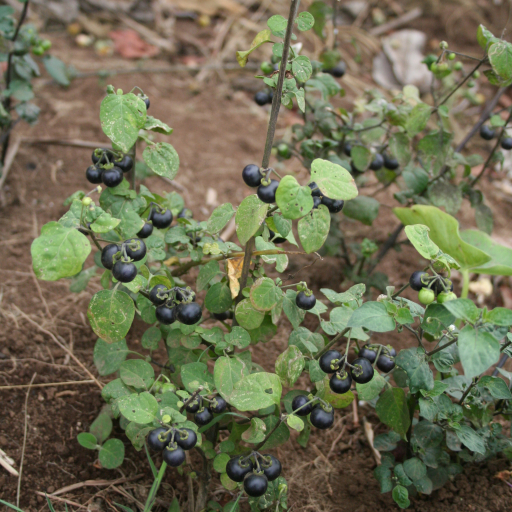
Plant Overview
Known as the Garden Huckleberry, Solanum scabrum is a fascinating member of the nightshade family that looks like a giant, bushy blueberry plant. Native to Africa, this plant has traveled the globe as a reliable food source, though it often confuses gardeners who expect it to taste sweet like a berry right off the branch. Instead, it is a culinary "transformer" that requires a bit of heat and sugar to unlock its rich, jam-like potential.
🔍 How to Identify
- 🍃 Lush Foliage: The plant grows into a sturdy, upright bush, featuring large, deep-green, ovate leaves that look remarkably similar to those of a bell pepper or a tomato.
- 🌸 Star-Shaped Blooms: It produces small, drooping clusters of white to pale violet flowers with distinct yellow centers, a classic "solanum" signature.
- 🔮 The Fruit: The berries grow in heavy clusters. They start out a bright, waxy green and transition into a deep, matte purple-black when they reach full maturity.
🏡 In Your Garden
- ☀️ Sun Seeker: This plant is a sun-lover that thrives in the same conditions as peppers and eggplants. It needs a long, warm growing season to fully ripen its heavy crop of berries.
- 💧 Thirsty Producer: Because it produces such a massive quantity of fruit, it requires consistent moisture. If the soil dries out too much, the plant may drop its unripe berries prematurely.
- 🥣 The Harvest Rule: Unlike true huckleberries, these should only be harvested when the skin turns from shiny to dull/matte. Picking them too early results in a bitter, unpalatable experience.
⚠️ Safety & Toxicity
- 🚫 Unripe Risk: Like many members of the Nightshade family, the green, unripe berries and the leaves contain solanine, which is toxic if ingested.
- 🐾 Pet Warning: Keep this plant away from curious dogs and cats. Ingesting the foliage or green berries can cause gastrointestinal distress, drooling, and lethargy.
- 🍴 Preparation is Key: While the ripe berries are technically edible raw, they are much safer and significantly tastier when cooked. Boiling them briefly helps neutralize any residual alkaloids and improves the flavor.
✨ Fun Fact
Despite its name, the Garden Huckleberry isn't a huckleberry at all! It is more closely related to the potato and the tomato. In many parts of Africa, the leaves are actually the primary crop; known as Mums, they are cooked as a nutrient-rich green much like spinach.

Detailed Care Instructions
To grow Solanum scabrum plants, also known as African nightshade or garden huckleberry, follow these steps:
- Climate: Solanum scabrum is a warm-season plant that thrives in tropical and subtropical climates. It needs temperatures between 70-85°F (21-29°C) to grow successfully.
- Soil: The plant prefers well-draining, fertile soil with a pH level between 5.5 and 7.0. Before planting, amend the soil with compost or organic matter to improve its fertility.
- Seed selection and germination: Purchase seeds from a reliable source. Soak the seeds in water overnight before sowing to promote germination.
- Sowing: Sow the seeds directly into the garden bed after the last frost has passed. Plant the seeds about ¼ inch (0.6 cm) deep and space them 12-18 inches (30-45 cm) apart.
- Sunlight: Solanum scabrum plants need full sun exposure for at least 6-8 hours a day. Choose a location in your garden that receives ample sunlight.
- Watering: Maintain even moisture in the soil during the growing season. Water the plants thoroughly when the top inch (2.5 cm) of soil feels dry. Avoid overwatering, as it may cause root rot.
- Fertilization: Apply a balanced fertilizer or organic compost every 4-6 weeks during the growing season to provide essential nutrients to the plant.
- Mulching: Apply a layer of organic mulch around the plants to conserve moisture, suppress weed growth, and regulate soil temperature.
- Pruning: Trim back the plants to encourage branching and bushier growth. Pinch off the tips of the stems regularly to promote lateral branching.
- Pests and diseases: Solanum scabrum is relatively resistant to pests and diseases. However, keep an eye out for aphids, whiteflies, or spider mites. Treat any infestation with organic insecticidal soap or neem oil.
- Harvesting: Harvest the Solanum scabrum leaves when they reach a desirable size, usually around 6-8 weeks after planting. The leaves can be used in various recipes, including soups, stews, and stir-fries.
Remember to research and adhere to any specific growing recommendations for your particular area or climate to maximize success while growing Solanum scabrum plants.

Place in a bright room that is sun drenched almost all day. Or directly in a south-facing window.

To water this particular plant, you should first check the soil moisture by inserting your finger about an inch deep into the soil. If it feels dry, it is time to water. Always water at the base of the plant, avoiding getting the leaves wet. Water evenly, being sure not to overwater as this can lead to root rot. It is best to water in the morning or late afternoon to minimize evaporation and allow the plant to absorb the water before the heat of the day.
To fertilize this plant, use a balanced, all-purpose fertilizer with equal ratios of nitrogen, phosphorous, and potassium. Apply the fertilizer once a month during the growing season, following the manufacturer's instructions for dilution and application. Avoid fertilizing during the dormant period. Water thoroughly after fertilizing to help distribute the nutrients to the roots.
When growing Solanum Scabrum plants, it is important to use well-draining soil that is rich in organic matter and nutrients. The soil should have a slightly acidic to neutral pH, with a range of 6.0 to 7.0 being ideal. The soil should be loose and easy to work with, allowing for good root penetration and water drainage. Adding compost or aged manure to the soil can improve its fertility and ensure the plant receives the necessary nutrients. Soil that is too heavy or compacted can lead to poor drainage and may cause the plant to develop root rot or other issues. Additionally, it is important to amend the soil regularly and perform soil tests to ensure it remains at the optimal pH range for the plant.
To propagate this plant, you will need to take stem cuttings from a mature parent plant. The best time to take cuttings is during the growing season when the plant is actively producing new growth. Choose a healthy stem that is at least 4-6 inches long and has several nodes. Nodes are the points where leaves emerge from the stem. Make a clean cut with a sharp, sterile tool just below a node.
Remove the leaves from the lower half of the stem, leaving at least two leaves at the top. Dip the cut end of the stem into rooting hormone powder and gently tap off any excess. Plant the cutting in a pot filled with moist soil or a mixture of peat moss and sand. Cover the pot with a plastic bag to create a mini greenhouse and place it in a warm, bright location out of direct sunlight.
Check the soil moisture regularly and mist the cuttings with water to keep them moist. In 2-4 weeks, the cuttings should begin to produce new roots. Once roots have formed, remove the plastic bag and move the pot to a bright location with indirect sunlight. Gradually acclimate the plant to its new environment by increasing the amount of light it receives over the course of several days.
Once the plant has grown enough, it can be transplanted into a larger container or planted outdoors in a sunny, well-draining location. Water the plant regularly and fertilize it with a balanced fertilizer during the growing season to promote healthy growth and flowering.








