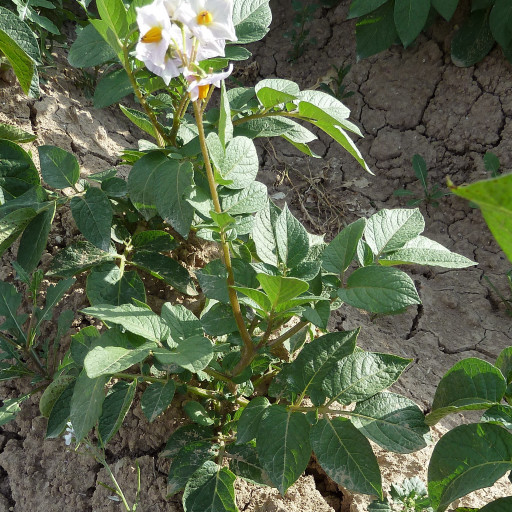
Plant Overview
Often called the "Humble Spud" or "Earth Apple," Solanum tuberosum is the world’s most famous underground treasure. Originating in the high Andes of South America, this member of the Nightshade family quite literally fueled the growth of modern civilizations. While we primarily know it as a kitchen staple, the plant itself is a lush, leafy herbaceous perennial with a surprisingly beautiful (yet deceptive) floral display.
🔍 How to Identify
- 🌿 Folliage: Large, green, compound leaves with a slightly hairy texture. They grow in a bushy, sprawling habit that can reach up to 2 feet tall.
- 🌸 Starry Flowers: The plant produces delicate five-petaled flowers that range from white and pink to soft violet, always featuring a distinct yellow "beak" (the anthers) in the center.
- 🍒 The "Fruit": Occasionally, the plant grows small, green cherry-tomato-like berries. Warning: These are highly toxic and should never be eaten.
- 🥔 The Tubers: Hidden underground, these thickened stems (tubers) come in thousands of varieties, featuring skin colors from gold and red to deep midnight purple.
🏡 In Your Garden
- 🌱 The Art of Hilling: Potatoes are unique because they grow "up" as much as they grow "down." Gardeners must perform "hilling"—piling soil around the base of the stems as they grow—to ensure the developing tubers stay buried and dark.
- ☀️ Light Sensitivity: While the leaves crave full sun to produce energy, the tubers are vampires; if they see the sun, they turn green and become bitter and toxic.
- 💧 Thirsty but Picky: They require consistent moisture to bulk up the tubers, but they hate "wet feet." Well-draining, loose soil is essential to prevent the crop from rotting before harvest.
⚠️ Safety & Toxicity
- 🚫 Status: Toxic foliage and berries; edible tubers (with caution).
- 🐾 Green is Danger: All green parts of the plant, including the berries and any part of the potato skin that has turned green, contain high levels of Solanine. This is a natural neurotoxin that can cause gastrointestinal distress or worse in humans, cats, and dogs.
- ✋ Preparation: Always sprout-proof your potatoes. If a potato has sprouted significantly or has green flesh under the skin, it is best to compost it rather than eat it.
✨ Fun Fact
In 1995, the potato became a true pioneer of the "final frontier." It was the first vegetable ever to be grown in space, traveling aboard the Space Shuttle Columbia to test if it could sustain future colonies on Mars!

Detailed Care Instructions
| Color | White, Yellow, Red |
| Soil Ph | 5.0 To 6.0 |
| Invasive | Weed |
| Toxicity | Toxic |
| Soil Type | Loamy |
| Bloom Time | Summer |
| Plant Type | Annual |
| Mature Size | 1.5 To 3 Feet Tall |
| Native Area | South America |
| Sun Exposure | Full Sun |
| Hardiness Zones | 3-10 |
To grow Solanum tuberosum, commonly known as potatoes, follow these steps:
- Choose a potato variety: There are various types of potatoes available, such as russet, red, white, or fingerling potatoes. Consider the taste, size, and texture of the potatoes you prefer.
- Select healthy seed potatoes: Seed potatoes are not actual seeds but small whole potatoes or small pieces of a larger potato. Ensure the seed potatoes are firm, free from diseases, and have at least one or two "eyes" or sprouts.
- Prepare seed potatoes: If using whole potatoes, cut them into 2-inch pieces, ensuring each piece has at least one "eye." Allow the cut edges to dry for 24-48 hours before planting.
- Choose a planting location: Potatoes prefer well-drained soil with a pH between 5.0 to 7.0. Select a sunny spot in your garden with loose, loamy soil. Avoid areas prone to waterlogging.
- Prepare the soil: Loosen the soil and remove any weeds or stones. Amend the soil with organic matter like compost or well-rotted manure to improve the soil's fertility and moisture-holding capacity.
- Plant the seed potatoes: Dig trenches in the prepared soil, about 4-6 inches deep and spaced 12-15 inches apart. Place the seed potatoes with the sprouts facing up and cover them with soil, leaving a 3-4 inch mound above the trench.
- Water regularly: Keep the soil evenly moist but not waterlogged. Water deeply once a week or more frequently during dry spells. Avoid overwatering as it can lead to diseases.
- Hill the potato plants: As the plants grow and reach about 6-8 inches in height, gently mound or hill soil around the base of the plants. This protects the developing tubers from sunlight, preventing them from turning green.
- Fertilize: Potatoes are heavy feeders, so it's beneficial to apply a balanced organic fertilizer or a potato-specific fertilizer according to the package instructions. Avoid using excessive nitrogen, which can lead to more leaf growth than tuber production.
- Monitor for pests and diseases: Keep an eye out for common potato pests like aphids, Colorado potato beetles, and potato tuber moths. Also, watch for diseases like late blight or early blight. Treat them promptly using organic or chemical insecticides or fungicides if necessary.
- Harvest potatoes: Harvest time typically comes after the plants have flowered and the foliage starts to turn yellow and die back. Carefully dig around the plants with a fork or shovel to avoid damaging the tubers. Harvest when the potatoes have reached the desired size.
Remember, potatoes require consistent care and attention throughout the growing season. Regular weeding, watering, and monitoring for pests and diseases are essential for a successful potato harvest.

Place in a bright room that is sun drenched almost all day. Or directly in a south-facing window.

When watering this plant, it is important to keep the soil consistently moist but not waterlogged. You should check the moisture level of the soil regularly by pressing your finger down into the soil a few inches. If it feels dry, it is time to water.
The plant should be watered deeply and thoroughly, ensuring that the water reaches the roots. The best time to water is in the morning, allowing the plant to absorb the water throughout the day. Avoid watering in the evening as this can increase the risk of disease.
It is important not to overwater the plant, as this can lead to root rot and other problems. Ensure that the soil has good drainage to prevent water from sitting at the bottom of the pot or container.
During periods of high temperatures or dry weather, the plant may require more frequent watering. Additionally, if the plant is in a container, it may dry out more quickly and need more frequent watering.
Overall, proper watering is crucial for the growth and health of this plant. Pay attention to the soil moisture and adjust your watering schedule accordingly.
To fertilize this plant, use a balanced fertilizer with equal parts nitrogen, phosphorus, and potassium. Apply the fertilizer evenly around the base of the plant, avoiding contact with the leaves and stem. Water the plant immediately after fertilizing to ensure that the nutrients are absorbed properly. Repeat the process every four weeks throughout the growing season. Be careful not to over-fertilize, as this can lead to stunted growth and poor yields.
The ideal soil for this plant should be rich in nutrients and have good drainage. It should have a pH range of 5.0-6.0, which is slightly acidic. The texture of the soil should be loamy, with a good balance of sand, silt, and clay. Organic material such as compost, well-rotted manure or leaf mold should be incorporated into the soil to improve its fertility and structure. Fertilizers should be added regularly to provide essential nutrients for optimal growth. Avoid using heavy, clay soils or soils that have poor drainage as these may cause waterlogging and root rot.
Solanum Tuberosum is a plant that can be propagated through a few different methods. One way to propagate this plant is through the use of seedlings, which can be started indoors in containers or directly planted outside in prepared soil. Another method is through stem cuttings, where a piece of the stem with at least one node is taken and placed in water or soil to encourage root development. Additionally, the plant can be propagated through the use of tubers, which are the underground stems that produce the edible potatoes. These tubers can simply be cut into sections, each with at least one "eye" or bud, and planted in soil to grow into new potato plants. Regardless of the propagation method chosen, it is important to provide the new plants with adequate water, nutrients, and sunlight to promote healthy growth.
Common pests of the potato include Spider mites, aphids, whiteflies, larvae. Make a habit of checking your potato frequently for pests so that any infestations can be caught and managed early.








