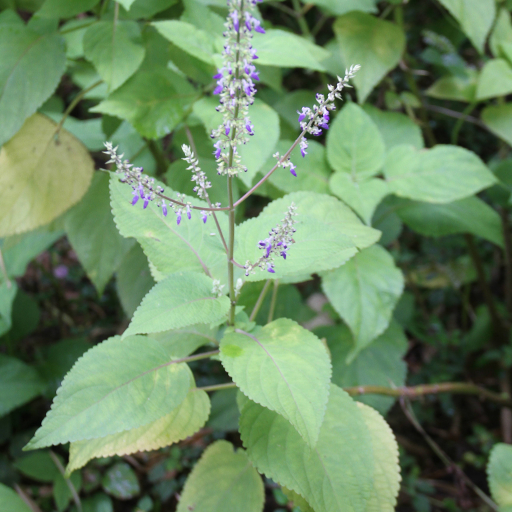
Plant Overview
Often referred to as the "Painted Nettle" or "Flame Nettle," this vibrant member of the mint family is the ultimate living kaleidoscope. Originally from Southeast Asia and Australia, it has become a staple in gardens worldwide because it trades subtle green for explosive patterns of neon pink, deep burgundy, and lime green. In Victorian times, "Coleus fever" saw collectors hunting for the most eccentric leaf patterns to decorate their elaborate parlors and conservatories.
🔍 How to Identify
- 🍃 The Foliage: The leaves are usually ovate and tooth-edged, resembling nettles but without the sting. They come in an endless variety of marbled, veined, or "edged" patterns.
- 📐 Square Stems: Like all members of the Lamiaceae family, its stems are distinctly four-angled (square), which you can feel if you roll them between your fingers.
- 🌸 The Bloom: It produces tall, thin spikes of small, two-lipped flowers, usually in shades of light blue or violet. Gardeners often pinch these off to keep the plant's energy focused on its flashy leaves.
🏡 In Your Garden
- 💡 Light for Color: While it is famous for brightening up shady corners, its colors are a reaction to light. If the colors look dull or "muddy," the plant likely needs a bit more bright, filtered sunlight to activate its vibrant pigments.
- ✂️ The "Pinch" Trick: Coleus has a tendency to get "leggy" or tall and spindly. To keep it looking like a dense, bushy mound, you must regularly pinch off the growing tips. This encourages the plant to branch out rather than up.
- 💧 Thirsty Temperament: This plant is a bit of a "drama queen" when it’s thirsty; it will wilt dramatically the moment the soil dries out, but usually bounces back within an hour of receiving a good drink.
⚠️ Safety & Toxicity
- 🐾 Pet Warning: Coleus is considered toxic to dogs, cats, and horses. It contains essential oils that can cause skin irritation, vomiting, or bloody diarrhea if ingested.
- 🧤 Skin Sensitivity: Some gardeners find that the sap or the fine hairs on the leaves cause a mild "contact dermatitis" or itchy rash. It is best to wear gloves if you are doing heavy pruning or have sensitive skin.
✨ Fun Fact
In the mid-19th century, Coleus was so popular in England that it was used as a "status symbol" in bedding displays. Single rare specimens of a specific leaf pattern would sell for the equivalent of hundreds of dollars in today’s currency!

Detailed Care Instructions
| Humidity | Normal |
| Lighting | Part Sun |
| Difficulty | Medium |
| Temperature | 21°C - 30°C |
| Hardiness Zones | 10 - 11 |
To grow Solenostemon Scutellarioides (also known as Coleus), follow these steps:
- Choose a suitable location: Coleus plants prefer bright, indirect light, so find a spot with partial shade or filtered sunlight. They also thrive in warm temperatures, ideally between 60°F and 75°F (15°C-24°C).
- Prepare the soil: Coleus plants prefer well-draining soil. Mix in compost or organic matter to improve fertility and drainage. Ensure the soil pH is between 6 and 7.
- Start with seeds or cuttings: Coleus plants can be started from seeds or cuttings. If using seeds, sow them in a seed tray or small pots filled with moistened potting soil. Cover them lightly with a thin layer of soil and keep them warm and moist until germination. If using stem cuttings, take 3-4 inch (7-10 cm) stem cuttings from a mature plant just below a leaf node. Remove the leaves from the bottom half of the stem and place it in a container filled with water or a moistened potting mix.
- Transplant seedlings or rooted cuttings: Once the seedlings are a few inches tall or the cuttings have developed roots (in about 2-3 weeks), transplant them into larger pots or outdoor beds. Space them about 12-18 inches (30-45 cm) apart to give each plant enough room to grow.
- Watering: Keep the soil consistently moist but not soggy. Water the plants when the top inch of soil feels dry. Avoid overwatering as it can lead to root rot.
- Fertilizing: Feed the plants every 4-6 weeks with a balanced, water-soluble fertilizer. Follow the manufacturer's instructions for dilution and application rates.
- Pinching and pruning: Pinch off the tips of young plants to encourage bushier growth. You can also prune mature plants to maintain their shape and prevent them from becoming leggy.
- Pests and diseases: Coleus plants are generally resistant to pests and diseases. However, keep an eye out for aphids, mealybugs, or spider mites. If detected, treat them with insecticidal soap or neem oil.
- Overwintering (optional): Coleus plants are typically grown as annuals, but they can be overwintered indoors if desired. Before the first frost, dig up the plants and pot them in containers. Place them in a sunny spot indoors and reduce watering. They may lose some leaves but should regrow when spring arrives.
By following these steps, you should be able to successfully grow Solenostemon Scutellarioides plants and enjoy their vibrant foliage.

Place in a window with dappled sun or a spot in the middle of a room. Or directly in a window facing west or east.

To water this plant, you should first check the soil to determine if it needs watering. Insert your finger about 1 inch into the soil, and if it feels dry, water the plant. When watering, be sure to pour the water slowly and evenly over the soil until water starts to seep out of the drainage holes at the bottom of the pot. Avoid getting water on the leaves as this can lead to fungal diseases. It's important not to let the soil dry out completely, but also to not overwater as this can lead to root rot. The frequency of watering will depend on the temperature, humidity, and lighting conditions in your home, as well as the size of the pot and the root system of the plant. It's important to monitor the plant regularly and adjust your watering schedule accordingly.
To properly fertilize this plant, use a balanced fertilizer with equal amounts of nitrogen, phosphorus, and potassium. Apply the fertilizer once a month during the growing season, diluting it to half the recommended strength. Avoid fertilizing during the winter months as the plant enters dormancy. To ensure proper absorption, water the plant before and after fertilizing, and avoid fertilizing when the soil is dry.
For optimal growth and health, Solenostemon Scutellarioides plants require a well-draining soil that is rich in organic matter. The soil should be slightly acidic with a pH level between 5.5 and 6.5. A good soil mixture for this plant can be achieved by combining equal parts of peat moss, perlite, and vermiculite. It is also recommended to add a slow-release fertilizer to the soil mixture to provide nutrients to the plant over an extended period of time. The soil should be kept moist but not overly wet, as this can cause root rot. It is important to also ensure proper drainage to prevent water from accumulating around the roots.
To propagate this plant, you will need a healthy mother plant that is at least 6-8 weeks old and has several stems. Prepare a potting mix with equal parts perlite and peat moss, and moisten it lightly. Choose a stem that is healthy and has several nodes, and cut it just below a node with a clean, sharp knife. Remove the leaves from the lower half of the stem, leaving only a few leaves at the top. Dip the cut end of the stem into rooting hormone and gently tap off any excess.
Using a pencil or your fingers, make a hole in the potting mix and insert the stem carefully. Firm the soil around the stem, making sure it is well supported. Water the cutting lightly and cover it with a plastic bag or wrap to create a humid environment. Place the pot in a bright, indirect area, but not in direct sunlight. Mist the plant every few days to keep it hydrated.
After 3-4 weeks, check for roots by carefully tugging on the stem. If it resists pulling, roots have formed. Remove the bag or wrap and begin to acclimate the plant to lower humidity by gradually exposing it to open air. Once the plant has developed a healthy root system, it can be transplanted into a larger pot or into the garden.
Common pests of the coleus include Mealybugs, spider mites, fungus gnats, thrips. Make a habit of checking your coleus frequently for pests so that any infestations can be caught and managed early.








