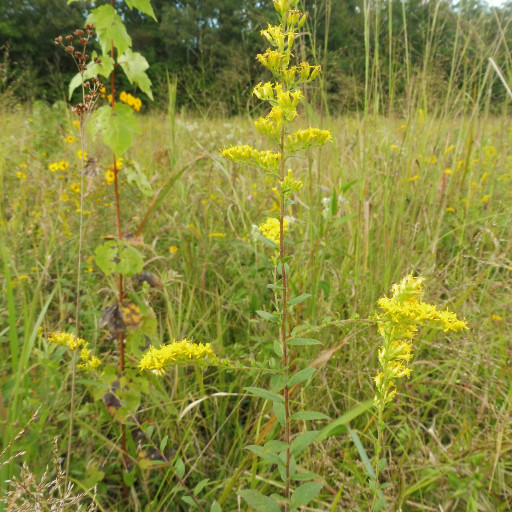
Plant Overview
Commonly known as the Wrinkleleaf Goldenrod, Solidago rugosa is a late-summer superstar that transforms meadows and gardens into a sea of molten gold. While many people mistake its bright yellow plumes for the cause of their hay fever, this native North American beauty is actually a pollinator’s best friend. Its most famous cultivar, "Fireworks," is a garden favorite because its blossoms look like exploding streaks of light captured in slow motion.
🔍 How to Identify
- 🍃 The Leaves: The most distinct feature is the foliage—deeply veined, rough-textured, and "wrinkled" (rugose) to the touch, with serrated edges that taper to a point.
- 🎇 The Blooms: Tiny, vivid yellow flower heads are arranged along the upper side of arching branches, creating a cascading or "weeping" effect.
- 📏 The Stature: Depending on the variety, it can grow anywhere from 2 to 5 feet tall, standing on sturdy, often hairy stems that resist flopping even in late-season rain.
🏡 In Your Garden
- 💧 Moisture Lover: Unlike many other Goldenrods that prefer dry prairies, Solidago rugosa thrives in moist-to-wet soils. It is an excellent choice for rain gardens or those "soggy spots" in the yard where other perennials might rot.
- 🦋 Pollinator Magnet: This plant is a critical food source for migrating Monarch butterflies and native bees. It provides high-energy nectar during the autumn "bridge" when other flowers have already faded.
- ✂️ Growth Habit: It spreads via underground rhizomes. While it isn't as aggressive as some of its wild cousins, it can form large clumps over time, making it perfect for naturalizing a meadow or filling a wide border.
⚠️ Safety & Toxicity
- ✅ Safe Status: Solidago rugosa is considered non-toxic to humans, cats, and dogs.
- 🤧 The Big Myth: It is almost always unfairly blamed for seasonal allergies. Its pollen is heavy and sticky (designed to be carried by bees), not wind-borne. The true culprit is usually the inconspicuous green Ragweed that blooms at the same time.
- 🍵 Skin Sensitivity: While not toxic, the rough hairs on the stems and leaves may cause mild skin irritation for people with very sensitive skin if handled extensively without gloves.
✨ Fun Fact
After the Boston Tea Party, American colonists began brewing a tea made from dried Goldenrod leaves and flowers, which they proudly called "Liberty Tea." It became a popular herbal substitute for the boycotted British tea.

Detailed Care Instructions
Here are some steps you can follow to grow Solidago Rugosa (also known as the rough-stemmed goldenrod) plant:
- Choose the right location: Solidago Rugosa plants prefer full sun to partial shade. Make sure you select a location in your garden that receives at least six hours of direct sunlight per day.
- Prepare the soil: Goldenrods thrive in well-draining soil that is rich in organic matter. Amend the soil with compost or well-rotted manure to improve its fertility and drainage capacity. Remove any weeds or grasses from the planting area.
- Planting: Dig a hole that is deep and wide enough to accommodate the plant's root ball. Gently place the plant into the hole and backfill with soil, pressing it down gently to remove any air pockets around the roots. Water the plant thoroughly after planting.
- Watering: Solidago Rugosa plants are drought-tolerant once established but will benefit from regular watering during the first growing season. Water deeply at least once a week, ensuring the soil is evenly moist. Reduce watering during periods of rainfall or if the plant shows signs of wilting.
- Fertilizing: Goldenrods generally do not require much fertilization. However, you can apply a balanced slow-release fertilizer in early spring or use organic fertilizers such as compost or well-rotted manure. Follow the package instructions for application rates.
- Mulching: Apply a layer of organic mulch, such as wood chips or straw, around the base of the plant. Mulching helps retain moisture, suppress weed growth, and improve soil health.
- Pruning: Deadhead the spent flowers regularly to encourage more blooms and prevent the plant from self-seeding. Cut back the entire plant to the ground in late fall or early spring to promote new growth.
- Pests and diseases: Solidago Rugosa is generally resistant to pests and diseases. However, keep an eye out for aphids, spider mites, or powdery mildew. Treat infestations or fungal issues using appropriate organic insecticides or fungicides.
- Division: Every few years, you may need to divide mature Solidago Rugosa plants to maintain their vigor. Dig up the plant in early spring or late fall, separate the clumps into smaller sections, and replant them in well-prepared soil.
By following these steps, you should be able to successfully grow Solidago Rugosa in your garden.

Place in a bright room that is sun drenched almost all day. Or directly in a south-facing window.

To water this plant, it is recommended to wait until the soil has dried out slightly before adding water. When watering, be sure to water at the base of the plant to avoid wetting the foliage, which can promote fungal growth. Water deeply and thoroughly, allowing the water to penetrate the soil around the roots. Avoid overwatering, as this can lead to root rot. It is also important to ensure proper drainage to prevent water from accumulating around the roots.
To fertilize the Solidago Rugosa plant, apply a balanced fertilizer in early spring before new growth begins. Use a slow-release fertilizer, applying it according to the package instructions. During the growing season, apply a liquid fertilizer every two to four weeks to promote healthy growth and flowering. Avoid using high-nitrogen fertilizers, as this can cause excessive vegetative growth at the expense of flower production. Water the plant thoroughly after fertilizing to help distribute the nutrients evenly in the soil.
Solidago Rugosa is a type of flowering plant that requires a specific type of soil in order to thrive. The ideal soil for this plant is a well-draining soil that is rich in nutrients. This type of soil should have a pH level that is slightly acidic to neutral, ranging between 6.0 and 7.0.
It is important to ensure that the soil is well-draining to prevent waterlogging, which can lead to root rot. The soil should also be moist but not waterlogged. The plant prefers slightly sandy soil with good drainage, but can also grow in loamy or clay soils with proper amendments.
To enhance the soil's nutrition, it is recommended to mix in organic matter such as compost, leaf mold or well-rotted manure. This will provide the plant with the necessary and beneficial elements to grow healthily.
It is important to note that this plant prefers full sunlight and regular watering, so the soil should be checked regularly to ensure it maintains the right level of moisture. This will help the plant to establish a strong root system and support its overall growth.
To propagate this plant, you will need to take stem cuttings in the late spring or early summer. Choose healthy, non-flowering stems and cut them to about 4 inches (10 centimeters) long. Remove the lower leaves, leaving only a few leaves at the top. Dip the cut end in rooting hormone and place it in a well-draining potting mix. Keep the soil moist and place the pot in a warm and bright location, but not in direct sunlight. After a few weeks, roots should form and new growth can be seen. Once the new plant has established roots, it can be transplanted to a larger container or in the garden.








