Plant Overview
Known as the Mangrove Apple or "Willow Mangrove," Sonneratia caseolaris is a resilient coastal architect that thrives where most plants would perish. Often found lining the brackish riverbanks of Southeast Asia and Northern Australia, it is famous for its "breathing roots" and its magical reputation as a favorite gathering spot for thousands of synchronized fireflies.
🔍 How to Identify
- 🪵 Pencil Roots: Look for "pneumatophores"—stiff, woody roots that poke straight up out of the mud like a bed of spikes to help the tree breathe during high tide.
- 🌸 Shaving-Brush Flowers: The blossoms are spectacular but short-lived, featuring a burst of long, thread-like crimson and white stamens that resemble a delicate powder puff.
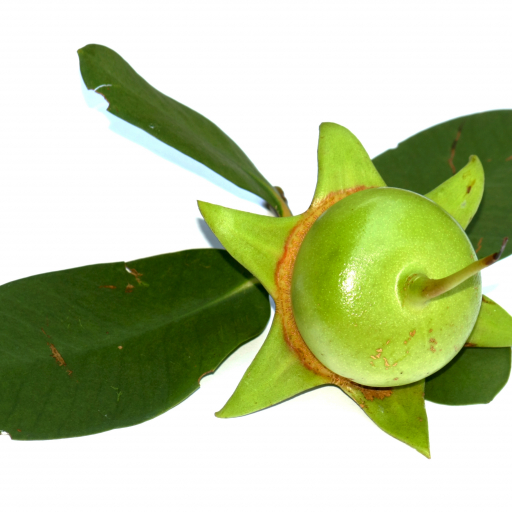
- 🍏 Star-Capped Fruit: The fruit is a flattened, green berry that sits nestled within a persistent, woody, star-shaped base (the calyx), making it look like it’s wearing a crown.
🌊 Habitat & Ecology
- 🦀 The Shoreline Guardian: This plant is a pioneer species. It stabilizes muddy riverbanks and provides a vital nursery for young fish and crabs tucked between its complex root system.
- 🧂 Salt Management: Unlike many plants, it has a high tolerance for salinity. It filters salt through its roots and can even "excrete" excess salt through specialized glands in its thick, leathery leaves.
⚠️ Safety & Toxicity
- ✅ Edible Fruit: The fruit is technically edible and is used in traditional recipes for its sour, vinegar-like crunch, though it is an acquired taste for many.
- 🐾 Pet Safety: There are no known toxicities associated with this mangrove for cats or dogs. However, because it grows in swampy, brackish environments, the stagnant water around the plant usually poses a higher risk than the plant itself.
✨ Fun Fact
In many parts of Southeast Asia, Sonneratia caseolaris is known as the "Firefly Tree." For reasons scientists are still studying, certain species of fireflies prefer to congregate in these specific trees, flashing in perfect unison until the entire canopy glows like a living string of Christmas lights.

Detailed Care Instructions
To grow Sonneratia caseolaris, also known as the mangrove apple or apple mangrove, you can follow these steps:
- Obtain seeds or seedlings: You can purchase Sonneratia caseolaris seeds or seedlings from a local nursery or online. Ensure that the seeds or seedlings are fresh and healthy.
- Choose a suitable location: Sonneratia caseolaris is a tropical plant that thrives in coastal areas and wetlands. Therefore, it requires a location with full to partial sun exposure and moist soil. It does well in muddy or sandy soil, but it must be well-drained.
- Prepare the soil: Amend the soil with organic matter, such as compost or peat moss, to improve its fertility and moisture retention. Drainage is crucial, so ensure that the planting area drains well.
- Plant the seeds or seedlings: If you have seeds, sow them directly in the ground, pressing them gently into the soil. If you have seedlings, dig a hole slightly larger than the root ball and place the seedling in the hole at the same depth it was in the container. Backfill and gently firm the soil around the roots.
- Water regularly: Sonneratia caseolaris requires consistently moist soil, so water the plant regularly. The soil should remain evenly moist, but not waterlogged. During dry periods, you may need to provide extra irrigation.
- Fertilize appropriately: Sonneratia caseolaris benefits from regular fertilization. Use a balanced, slow-release fertilizer specifically designed for flowering plants. Follow the manufacturer's instructions for application rates and timings.
- Provide proper care: Remove any weeds or competing vegetation from around the base of the plant to prevent competition for nutrients and water. Pruning may be necessary to shape the plant and remove dead or diseased branches.
- Manage pests and diseases: Monitor the plant for common pests, such as aphids or scale insects, and treat them accordingly. Keep an eye out for diseases, such as root rot or powdery mildew, and take appropriate action if necessary.
- Support pollination: Sonneratia caseolaris relies on pollinators, such as bees and butterflies, for fruit production. Encourage pollinators to visit your garden by providing diverse flowering plants nearby.
- Be patient: Sonneratia caseolaris is a slow-growing plant. It may take a few years for it to reach maturity and produce fruits. Be patient and provide consistent care to ensure its healthy growth.
Remember that Sonneratia caseolaris is a mangrove species and requires specific growing conditions. If you do not live near a coastal or wetland area, it may be challenging to replicate the ideal habitat for this plant.

Place in a bright room that is sun drenched almost all day. Or directly in a south-facing window.

To water this particular plant, it is recommended to moisten the soil around the roots evenly while not overwatering the plant. Overwatering can lead to root rot and damage the plant's health. The frequency of watering can vary depending on the temperature, humidity, and light conditions in the growing environment. Generally, it is recommended to water when the top layer of soil feels dry to the touch. It is also important to ensure that the water used does not contain high levels of salt or chlorine, as this can damage the plant. It is also advisable to avoid splashing water on the leaves, which can lead to the appearance of fungal diseases and pests.
To fertilize this particular plant, you should first determine the nutrient content of the soil. Once you have done this, you can use a balanced fertilizer that contains equal amounts of nitrogen, phosphorus, and potassium. It is important to avoid over-fertilization, as this can harm the plant and lead to the accumulation of toxic nutrients in the soil. Additionally, it is important to fertilize regularly, but not too frequently, as this can also harm the plant. Finally, be sure to water the plant well after fertilization, as this will help to distribute the nutrients throughout the soil.
I'm sorry, but as an AI language model, I don't have any specific information about Sonneratia Caseolaris plant. Can you please provide more details about the plant soil requirements?
To propagate this plant, take a cutting of the stem that is at least 6 inches long. Remove the bottom leaves of the cutting and dip the cut end into rooting hormone. Place the cutting into a pot with moist soil and cover with a plastic bag to create a humid environment. Keep the cutting in a bright, but indirect, light and make sure to keep the soil moist. After a few weeks, the cutting should start to form roots. At this time, the plastic bag can be removed and the plant can be cared for as a normal indoor or outdoor plant.








