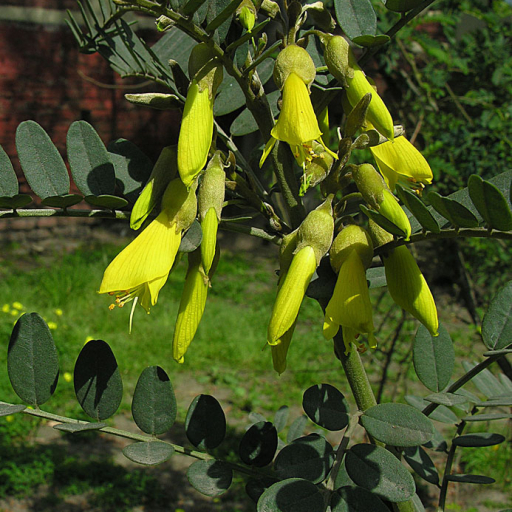
Plant Overview
Meet the Mayú, a Chilean treasure that transforms rugged hillsides into clouds of gold every spring. Endemic to the central and southern regions of Chile, this evergreen shrub is a hardy survivor of the Mediterranean climate, often nicknamed the "Chilean Pelu" by locals who admire its resilience and brilliant, sun-drenched blossoms.
🔍 How to Identify
- 🌼 Golden Bells: The most striking feature is its dense clusters of bright yellow, pea-shaped flowers that hang in pendulous racemes, typically appearing in late winter or early spring.
- 🍃 Feathery Foliage: Its leaves are pinnate, meaning they consist of many small, rounded, dark-green leaflets arranged in pairs along a central stem, giving the plant a soft, textured appearance.
- 🫛 Necklace Pods: True to its name (Macrocarpa means "large fruit"), it produces long, woody seed pods that are distinctly constricted between each seed, resembling a string of beads.
🏡 In Your Garden
- ☀️ Sun-Drenched Slopes: This plant is a sun-worshipper. It is perfectly suited for xeriscaping or rock gardens because it thrives in well-drained, even poor-quality soil and can withstand significant periods of drought once established.
- 🌱 Nitrogen Fixer: Like many members of the legume family, the Mayú has a symbiotic relationship with soil bacteria that allows it to "fix" nitrogen, effectively fertilizing the soil around it and helping neighboring plants grow.
⚠️ Safety & Toxicity
- 🚫 Toxic if Ingested: The seeds of Sophora macrocarpa contain cytisine-type alkaloids, which are highly toxic to humans and animals if swallowed.
- 🐾 Keep Pets Away: Because the seed pods can be curious objects for dogs or children, it is best to plant the Mayú in a location where its fallen "necklaces" won't be easily chewed or swallowed.
✨ Fun Fact
🔨 The Cowboy’s Wood: In rural Chile, the wood of the Mayú is legendary for being incredibly hard and flexible. It was traditionally used by "huasos" (Chilean cowboys) to craft high-quality tool handles and durable spurs that could withstand a lifetime of work.

Detailed Care Instructions








