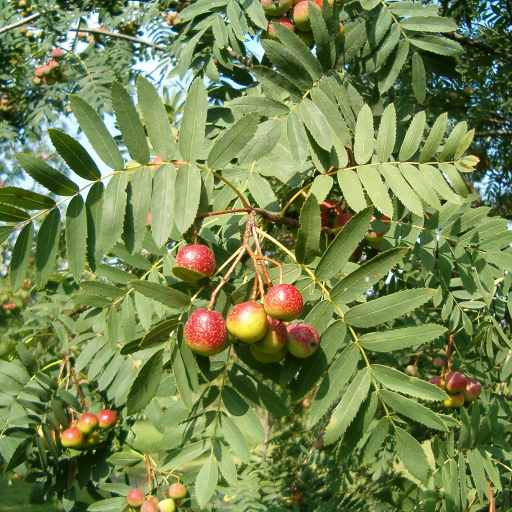
Plant Overview
Known as the Service Tree or the "Sorb Apple," Sorbus domestica is a Mediterranean native that feels like a cross between a Rowan and a miniature fruit orchard. In medieval times, it was a staple of the countryside, prized for its exceptionally hard wood and its unique "bletted" fruits. Today, it is a rare and noble sight in gardens, often living for over 500 years as a stately, silver-barked guardian.
🔍 How to Identify
- 🍃 The Foliage: Feathery, pinnate leaves with 13 to 21 leaflets. They look remarkably similar to the common Rowan (Mountain Ash) but are typically larger and turn a stunning golden-bronze in the autumn.
- 🌸 The Blooms: Large, creamy-white clusters of flowers appear in late spring. Each individual flower has five petals and a sweet, heavy scent that attracts a wide variety of pollinators.
- 🍐 The Fruit: Unlike the small berries of the Rowan, this tree produces larger pomes shaped like tiny pears or apples. They start green with a rosy blush and turn a deep brownish-red as they ripen.
🏡 In Your Garden
- 🌳 The Deep Root Advantage: Because it develops a deep taproot, the Service Tree is incredibly resilient against wind and drought once established. This also means it hates being moved, so pick its permanent home carefully—it prefers sunny spots with well-drained, lime-rich soil.
- 🥧 A Forgotten Harvest: You cannot eat the fruit straight from the tree; they are incredibly astringent. You must "blet" them (allow them to over-ripen until they look brown and mushy). Once bletted, the flesh tastes like a rich, spiced mixture of dates and apple butter.
⚠️ Safety & Toxicity
- ✅ Status: Generally safe and non-toxic to humans and livestock.
- 🐾 Pet Caution: While the fruit flesh is safe, the seeds contain tiny amounts of cyanogenic glycosides (common in the apple/rose family). While a few seeds won't hurt, it is best to keep pets from munching on the cores or large quantities of fallen fruit.
✨ Fun Fact
The wood of the Service Tree is one of the densest and heaviest in Europe. It was historically the number one choice for making the screws for wine presses and high-quality mathematical instruments because it is almost impossible to warp or break!

Detailed Care Instructions
To grow Sorbus domestica, also known as the European mountain ash or serviceberry, follow these steps:
- Planting: Choose a suitable planting location with well-draining soil. The plant prefers full sun to partial shade. Dig a hole twice as wide and deep as the plant's root ball. Place the plant in the hole, making sure the crown is slightly above ground level. Fill the hole with soil, gently firming it around the roots.
- Watering: Keep the soil evenly moist, especially during the first year of growth. Water deeply and frequently during hot and dry periods. Avoid overwatering, as excessive moisture can lead to root rot.
- Mulching: Apply a layer of organic mulch around the base of the plant, but avoid mulch directly touching the trunk. Mulching helps retain moisture, inhibit weed growth, and regulate soil temperature.
- Pruning: Prune the plant during its dormant season, which is typically in late winter or early spring. Remove any dead, damaged, or crossing branches to maintain a well-shaped and healthy tree. Thinning the crown can improve air circulation and reduce disease susceptibility.
- Fertilizing: Sorbus domestica does not require excessive fertilization, but a light application of balanced fertilizer in early spring can help promote healthy growth. Follow the manufacturer's instructions for dosage and application method.
- Pests and diseases: Monitor the plant for common pests such as aphids, caterpillars, or sawfly larvae. If detected, use organic or chemical insecticides to control the infestation. Sorbus domestica is generally resistant to diseases but may occasionally be susceptible to fire blight or powdery mildew. Regularly inspect the plant for any signs of disease and take prompt action if necessary.
- Harvesting: The plant produces small, edible fruits that resemble mini apples. The fruits generally ripen in late summer or early autumn. Harvest the fruits when they turn a deep red color and have a sweet taste. You can eat them fresh, use them in cooking, or make jams and jellies.
Remember, growing Sorbus domestica requires patience, as it may take a few years for the tree to establish and bear fruits. Provide proper care, and enjoy the beauty and bounty of this unique fruit tree.

Place in a bright room that is sun drenched almost all day. Or directly in a south-facing window.

1. Determine the watering needs of the plant based on the soil, temperature, and humidity levels in its environment.
2. Water the plant deeply and evenly, ensuring that the entire root ball is saturated.
3. Allow the soil to dry out slightly between waterings to prevent root rot.
4. Use a watering can or hose with a gentle spray to avoid disturbing the soil and foliage.
5. Avoid getting water on the leaves and branches as this can promote fungal growth.
6. Consider using rainwater or distilled water if the tap water in your area is high in minerals that could harm the plant.
7. Adjust the frequency of watering based on the time of year and the plant's growth cycle.
8. Monitor the plant for signs of over or under watering, such as yellow or wilted leaves, and adjust accordingly.
To fertilize this plant, you will need to use a balanced fertilizer that contains Nitrogen, Phosphorus, and Potassium. In the early spring, before new growth begins, apply the fertilizer around the base of the plant and water it in well. Repeat this process every 4-6 weeks throughout the growing season. Be careful not to over-fertilize as this can damage the plant. Always follow the instructions on the fertilizer label and adjust the amount of fertilizer used based on the size and age of your plant.
The recommended soil for the Sorbus Domestica plant is a well-draining, nutrient-rich soil with a pH level between 6.0 and 7.0. The soil should have good water retention properties while also allowing for adequate drainage to prevent waterlogging. It's also important to avoid heavy, compacted soils that could hinder root development. Adding organic matter, such as compost or aged manure, can improve soil structure and provide additional nutrients. A light application of balanced fertilizer can also be beneficial during the growing season.
First, locate a healthy and mature plant of the Sorbus Domestica species. Take a cutting of a stem that is approximately 6-8 inches long, making sure to make a clean cut at a 45-degree angle using a sharp, clean pair of pruning shears.
Remove the leaves from the bottom third of the cutting and dip the cut end into a rooting hormone powder. Plant the cutting into a small pot filled with moist potting soil and ensure that the soil remains consistently moist.
Place the pot in a warm and bright spot but out of direct sunlight. Cover the pot with a clear plastic bag or place it in a propagator to create a humid environment around the cutting.
After approximately 4-6 weeks, check for roots by gently tugging on the base of the cutting. Once roots have formed, transplant the new plant to a larger pot or outside in a well-draining and sunny area if the weather permits.
Care for the new plant by ensuring that it receives adequate water and sunlight, and consider adding organic fertilizer to encourage healthy growth and development.








