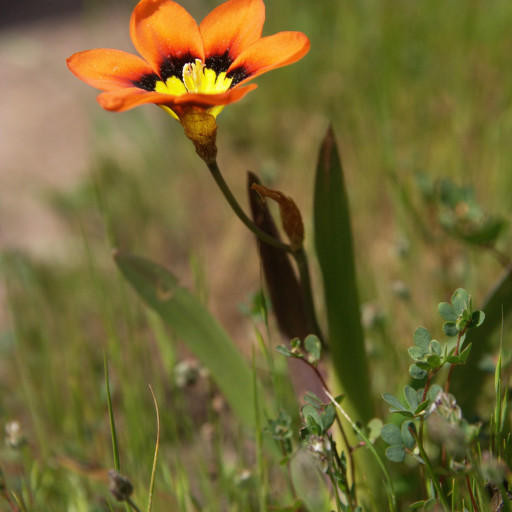
Plant Overview
Often called the Harlequin Flower, Sparaxis tricolor is a show-stopping South African native that brings a circus of color to spring gardens. Its blooms look like they were hand-painted by a bold artist, featuring concentric circles of contrasting hues that create a "stained-glass" effect. These hardy bulbs are beloved by gardeners for their ability to transform a simple patch of dirt into a vibrant Mediterranean-style meadow.
🔍 How to Identify
- 🎨 The "Harlequin" Pattern: Six-petaled flowers typically featuring a bright outer ring (often orange, red, or magenta), a stark black or dark purple "eye" ring, and a bright yellow throat.
- 🗡️ Sword-Like Foliage: Fans of slender, bright green leaves that resemble a small Iris, growing in a compact, upright clump.
- 🎋 Wiry Stems: Elegant, thin stems that are surprisingly tough, holding several star-shaped blooms that open one by one from the bottom up.
🏡 In Your Garden
- ☀️ Sun-Worshiper: These flowers only fully open their "eyes" when bathed in direct sunlight. If you plant them in the shade, they will stay shy and keep their petals tightly tucked away.
- 🏜️ The Dry Sleep: Hailing from the Cape of South Africa, this plant expects a "summer bake." Once the flowers fade and the leaves turn yellow, the plant goes dormant. It is crucial to let the soil dry out during this time to prevent the underground corms from rotting.
- 🌱 Naturalizing Pro: If you find a spot with excellent drainage (think rock gardens or sandy borders), they will happily multiply on their own, coming back thicker and more colorful every year.
⚠️ Safety & Toxicity
- 🐾 Pet Safety: Sparaxis tricolor is generally considered non-toxic to cats and dogs. However, the underground corms are concentrated storage organs and can cause mild stomach upset if dug up and eaten in large quantities.
- 👶 Kid-Friendly: These are safe, non-thorny plants perfect for sensory gardens. They do not produce caustic sap or skin irritants.
✨ Fun Fact
📜 The "Tattered" Name: The genus name Sparaxis comes from the Greek word sparasso, which means "to tear." This sounds aggressive, but it actually refers to the dry, papery, and "shredded" look of the bracts (the little scales) that protect the flower buds before they bloom!

Detailed Care Instructions
To grow Sparaxis Tricolor, also known as harlequin flower or wandflower, you can follow the steps below:
- Choose the right location: Sparaxis Tricolor prefers a sunny location with well-draining soil. Ensure that the spot you choose receives at least 6-8 hours of direct sunlight each day.
- Prepare the soil: Before planting, prepare the soil by removing any weeds, rocks, or debris. You can amend the soil with compost or well-rotted manure to improve fertility and drainage.
- Planting: Sparaxis Tricolor is usually planted from bulbs. Plant the bulbs in the spring, after the frost has passed, or in the fall, at least 6 weeks before the ground freezes. Dig a hole that is twice as deep as the height of the bulb, place the bulb in the hole with the pointed side facing up, and cover it with soil. Space the bulbs about 3-4 inches apart.
- Watering: Water the newly planted bulbs thoroughly to ensure proper establishment. After that, water Sparaxis Tricolor sparingly, allowing the soil to dry out slightly between waterings. Overwatering can cause the bulbs to rot.
- Fertilization: You can apply a balanced, slow-release fertilizer or a bulb-specific fertilizer once or twice during the growing season to provide nutrients. Follow the instructions on the fertilizer packaging for proper application rates.
- Mulching: Mulching around the plants can help retain moisture, regulate soil temperature, and suppress the growth of weeds. Apply a layer of organic mulch, such as wood chips or straw, around the plants, leaving a small space around each stem to prevent rotting.
- Maintenance: Deadhead the flowers as soon as they start to fade to promote further blooming. After the foliage turns yellow, you can cut it back to ground level. This helps the bulbs store energy for the next season.
- Division: Sparaxis Tricolor bulbs can become overcrowded over time. To prevent this, you can dig up the bulbs after the foliage has died back, separate the clumps, and replant them with sufficient spacing. Dividing the bulbs every few years helps maintain their vigor and flowering.
By following these steps, you can successfully grow Sparaxis Tricolor and enjoy its beautiful and vibrant blooms.

Place in a bright room that is sun drenched almost all day. Or directly in a south-facing window.

To water this plant, first make sure that the top layer of soil has dried out before watering again. It is important not to water it too frequently or else it may rot. When watering, pour the water directly onto the soil and avoid getting the leaves wet. Additionally, it is best to use room temperature or lukewarm water as cold water can shock the roots and cause damage. Finally, make sure that there is proper drainage in the pot or container to allow excess water to escape.
Sparaxis Tricolor thrives in well-draining soil with a neutral pH level. To fertilize, mix a balanced fertilizer into the soil before planting. Once every month during the growing season, apply a low-nitrogen fertilizer to prevent excessive foliage growth and encourage flowering. Water deeply after fertilizing to help the nutrients reach the roots. Avoid over-fertilizing, as this can lead to salt buildup in the soil and damage the plant.
Sparaxis Tricolor plant requires a well-draining soil that is rich in organic matter and has a slightly acidic to neutral pH. The soil should be moderately moist but never waterlogged. A combination of sandy loam and peat-based soil can be used for optimal growth. Avoid using heavy clay soils as they can retain too much moisture and lead to root rot. It is also important to ensure good drainage by adding perlite or coarse sand to the soil mix. Additionally, fertilize the soil with a balanced fertilizer every 2-3 months during the growing season.
To propagate this plant, the first step is to collect the corms in late summer or early autumn when the plant has finished flowering and the foliage has wilted. Choose healthy and firm corms that are about 1-2 inches in diameter.
Next, prepare a well-draining potting mix by combining equal parts perlite, sand, and peat moss. Fill a shallow tray or container with the mix and moisten it slightly.
Gently place the corms on top of the mix, making sure they are spaced apart. Cover them with a thin layer of the mix and water lightly.
Place the tray in a bright, warm location with indirect sunlight and keep the soil moist but not waterlogged. Within a few weeks, small shoots should emerge from the corms.
Continue to water the young plants regularly and fertilize them every two weeks with a balanced liquid fertilizer. After a few months, the plants should be large enough to transplant into individual pots or into a garden bed.
Transplant the plants into a well-draining soil mix and water regularly. The plants should bloom in their second year, producing striking and colorful flowers.








