Plant Overview
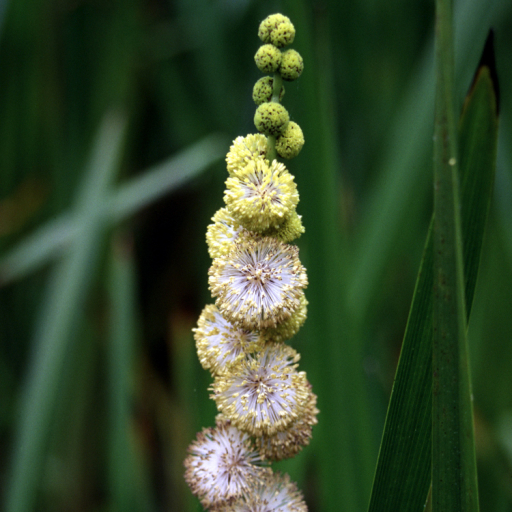
Often called the Giant Bur-reed, this native North American wetland warrior is known for its distinctive, spherical seed heads that look like miniature maces or medieval flails. It stands as a lush, green sentinel along the edges of ponds, marshes, and slow-moving streams, providing essential structure to the shoreline. While it might look like a simple reed from a distance, its geometric flowering patterns tell a much more intricate story of architectural survival in the mud.
🔍 How to Identify
- 🌿 The Foliage: Long, strap-like leaves that are sword-shaped and distinctly "keeled" (V-shaped in cross-section), which provides the structural integrity needed to stand upright in windy marshlands.
- 🔮 The Fruit: Clusters of green, spiky spheres that transition to a woody brown as they mature. These "burs" are actually collections of individual nutlets packed tightly together.
- 📏 The Stature: A robust grower that can reach heights of 3 to 5 feet, often forming dense, emerald-green colonies that emerge directly from shallow water or saturated mud.
🏡 In Your Garden
- 🌊 Wet Feet Mandatory: This is an obligate wetland plant, meaning it requires "wet feet" to survive. It thrives in saturated soil or standing water up to 12 inches deep, making it a champion for stabilizing pond edges and preventing shoreline erosion.
- 🚜 Space Conqueror: It spreads vigorously via thick underground rhizomes. If you are planting it in a small decorative water feature, it is best kept in a submerged container to prevent it from staging a "hostile takeover" of your other aquatic species.
- ☀️ Sun Seeker: To produce those iconic mace-like seed heads, it requires full sun. In shaded areas, the growth will be lanky and the unique fruit clusters will be sparse.
⚠️ Safety & Toxicity
- ✅ General Safety: Sparganium eurycarpum is considered non-toxic to humans, dogs, and cats. It is a "friendly" plant for backyard biodiversity.
- 🧤 Mechanical Irritation: While not chemically toxic, the dried seed heads are very hard and prickly. Handle with care or wear gardening gloves when pruning in late autumn to avoid minor skin punctures or scratches.
✨ Fun Fact
- 🦦 The Marsh Hotel: The Giant Bur-reed is a "supermarket" for local wildlife. Muskrats use the sturdy stalks to build their lodges and eat the starchy roots, while wood ducks and rails rely on the heavy seeds as a high-energy food source during their long migrations.

Detailed Care Instructions
To grow Sparganium Eurycarpum (Broadleaf Bur-reed) plant, follow these steps:
- Choose the right location: Select a site that offers full sun to partial shade, as Sparganium Eurycarpum prefers these light conditions. Ensure the soil is moist and organically rich.
- Acquire seeds or rhizomes: You can obtain Sparganium Eurycarpum seeds or rhizomes from online suppliers or local nurseries specializing in native plants. Rhizomes are usually the preferred method for propagation.
- Prepare the planting area: Clear the area from weeds, rocks, and debris. Loosen the soil and amend it with organic matter, such as compost or well-rotted manure, to enrich the soil and improve drainage.
- Planting seeds: If using seeds, sow them in late fall or early spring directly in wet soil or submerged up to 1 inch. Keep the soil consistently moist until germination occurs, which may take several weeks.
- Planting rhizomes: If using rhizomes, dig a trench in the prepared soil, slightly wider than the rhizome. Place the rhizome horizontally in the trench, with the growth buds facing upward. Cover with soil, ensuring the rhizome is fully buried and aligned with the soil surface.
- Watering: Sparganium Eurycarpum requires consistently moist soil. Regularly water the plants, either by rainfall or manual irrigation, to keep the soil consistently wet.
- Mulching: Apply a layer of organic mulch, such as wood chips or straw, around the planted area. Mulching helps conserve moisture, suppresses weeds, and maintains a cooler soil temperature.
- Maintenance: Sparganium Eurycarpum requires minimal maintenance. Ensure the soil remains consistently wet by regular watering or natural water sources. If growing in a container, keep it partially submerged in water.
- Propagation: Sparganium Eurycarpum can spread through rhizomes, so it may self-propagate. However, if desired, you can divide the plant in early spring to create new plants. Dig up the rhizome and carefully separate it into sections, ensuring each section contains viable growth buds. Replant the divided sections according to steps 3-5.
- Monitoring: Regularly monitor the plant for any signs of pests, diseases, or weed competition. Address any issues promptly using organic methods or consult a local horticulturist.
Remember to check your specific growing zone and local regulations regarding the planting and growth of Sparganium Eurycarpum plants, as they may vary depending on your location.

Place in a bright room that is sun drenched almost all day. Or directly in a south-facing window.

The Sparganium Eurycarpum plant should be watered regularly to maintain healthy growth. The soil should be kept moist but not waterlogged, as excess water can lead to root rot and other issues. It is important to avoid letting the soil dry out completely between waterings.
When watering, it is best to apply water directly to the soil around the base of the plant rather than getting the foliage wet. This helps to prevent fungal growth and can help prevent disease from spreading throughout the plant.
The frequency of watering will depend on the specific growing conditions, such as the temperature, humidity, and sunlight. Generally, the plant will need more water in hot, dry conditions, and less water in cooler, more humid conditions.
In addition to regular watering, it is important to make sure the plant is getting enough nutrients to support healthy growth. Fertilizing with a well-balanced fertilizer can help ensure that the plant is getting the nutrients it needs to thrive.
Overall, by providing regular watering and proper nutrient support, the Sparganium Eurycarpum plant can grow strong and healthy, producing attractive foliage and potentially even flowers.
To fertilize Sparganium Eurycarpum plants, follow these instructions:
- Begin fertilizing in early spring when new growth starts to emerge.
- Use a balanced slow-release fertilizer with an NPK ratio of 10-10-10 or 14-14-14.
- Measure and apply the fertilizer according to the package instructions. Use a water-soluble fertilizer, if preferred, diluted to half strength.
- Scatter the fertilizer evenly around the base of the plant, taking care not to let it touch the leaves or stems.
- Gently work the fertilizer into the top few inches of soil, using a small hand trowel or rake.
- Water the plant thoroughly after fertilizing, ensuring the nutrients penetrate the soil and reach the roots.
- Repeat the fertilization process every 4 to 6 weeks throughout the growing season, typically until late summer or early fall.
- Monitor the plant for signs of over-fertilization, such as yellowing leaves, stunted growth, or burning of the foliage. If these occur, decrease the frequency or strength of fertilization.
- In the fall, discontinue fertilizing as the plant prepares for dormancy.
- Resume fertilizing the following spring when new growth appears again.
Remember to always read and follow the instructions on the specific fertilizer product you choose for Sparganium Eurycarpum plants.
Sparganium Eurycarpum plant prefers to grow in soil that is rich in organic matter, slightly acidic, and well-draining. It does not tolerate soil that is too wet or too dry. A mix of peat moss, sandy loam, and compost is ideal for Sparganium Eurycarpum plant. It is important to ensure that the soil pH is between 6.5 and 7.5. The plant also benefits from regular fertilization with a balanced, slow-release fertilizer in the spring and early summer. When planting, ensure that the soil is loose and well-aerated to allow for adequate root growth.
One method of propagating this particular plant species is by collecting its seeds during the summer months. The seeds can be sown in containers or directly in the ground during the fall months. It is important to keep the soil moist during germination and to ensure that the site is well-drained.
Another method of propagation is by dividing the plant's rhizomes in the spring or fall. Rhizomes are underground stem structures that produce new shoots and roots. To divide the plant, carefully dig up the rhizomes and separate them into smaller sections, each with its own root system and shoot. These sections can then be planted in the desired location.
Cuttings can also be taken from Sparganium Eurycarpum. This involves cutting off a stem from the parent plant and planting it in a container with moist soil. It is important to keep the soil moist and to provide the cutting with enough sunlight until it establishes a root system and begins to grow.
Layering is another method of propagation for this plant species. This involves bending a low-growing branch or stem down to the ground and covering it with soil, leaving the tip of the stem exposed. Over time, the stem will develop roots, and once established, can be cut from the parent plant and transplanted.








