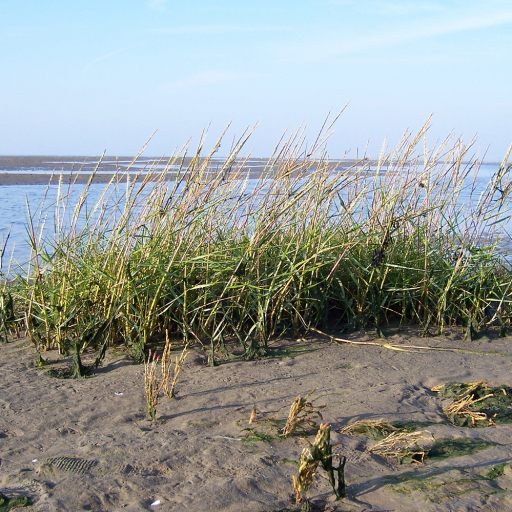
Plant Overview
Often called the "Land-Builder" or Common Cordgrass, Spartina anglica is a biological marvel and an ecological powerhouse. Born from a chance natural hybridization on the English coast in the late 19th century, it quickly evolved the ability to conquer shifting mudflats where other plants failed to thrive. While it is a hero of coastal defense against erosion, its aggressive spread has made it a controversial figure in many parts of the world.
🔍 How to Identify
- 🌾 Stiff Blades: The leaves are characteristically yellowish-green, rigid, and taper to a very sharp, fine point.
- 📏 Upright Stature: It grows in dense, tufted clumps that can reach over 3 feet in height, creating a "meadow" look across muddy coastlines.
- 🌾 One-Sided Flowers: During late summer, it produces narrow, stiff flower spikes where the tiny florets are arranged primarily along one side of the stem.
🌊 Habitat & Ecology
- 🏗️ Sediment Trapper: This grass uses its complex root system to catch silt and debris from the tide. Over time, it literally builds new land by raising the level of the seabed, transforming soft mud into solid salt marsh.
- 🚫 Invasive Nature: Because it is so efficient at spreading, it often outcompetes native salt marsh plants. In many regions, it is treated as a "weed" because it can turn diverse tidal flats into monocultures, removing the feeding grounds used by migratory shorebirds.
⚠️ Safety & Toxicity
- 🛡️ Safe but Sharp: This plant is not toxic to humans, dogs, or cats. However, the leaves are quite tough and can be sharp enough to cause minor skin irritation or "paper-cut" style scratches if handled roughly.
- 🛑 Ecological Warning: The biggest "safety" concern is for the environment. Before considering this plant for a coastal property, check local regulations, as planting it is often prohibited due to its invasive potential.
✨ Fun Fact
🧬 A Genetic Miracle: Spartina anglica is a textbook example of "allopolyploidy." It didn't just evolve slowly; it was created when two different grass species hybridized and then spontaneously doubled their chromosome count, instantly becoming a new, more vigorous species that could no longer breed with its parents!

Detailed Care Instructions








