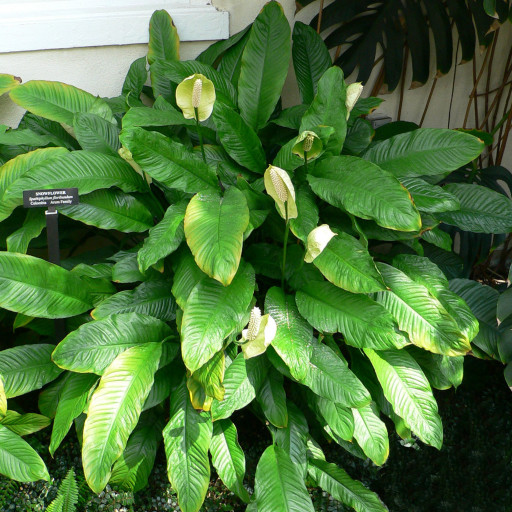
Plant Overview
Often called the "Snowflower" or simply the "Peace Lily," this Colombian native is the quintessential indoor companion for those seeking a touch of the tropics. Known for its elegant white "flowers"—which are actually modified leaves called bracts—it brings a sense of serenity and architectural grace to any room. It is a symbol of peace and sympathy, making it one of the most popular gift plants in the world.
🔍 How to Identify
- 🌿 Matte Foliage: Unlike some of its shinier relatives, Spathiphyllum floribundum features many-veined, lance-shaped leaves with a soft, matte green finish that arch gracefully from the soil.
- 🏳️ The Spathe: A striking, pure white, hood-like leaf (the spathe) that curves around a central spike. As the "bloom" ages, it often transitions into a soft lime green.
- 🍦 The Spadix: The central "finger" inside the white hood is a creamy-white spike covered in tiny, bumpy texture—these are the plant's actual, microscopic flowers.
🏡 In Your Home
- ☁️ Low-Light Champion: Because it evolved on the dim rainforest floor, this plant thrives in shaded spots where other plants might struggle. If the leaves start to look scorched or yellow, it is likely getting too much direct sunlight.
- 💧 The "Diva" Lean: This plant is famous for its dramatic communication style; it will visibly wilt or "faint" when it is thirsty, serving as a living moisture meter that pops back up shortly after being watered.
- 🌫️ Humidity Seeker: It craves moisture in the air. To prevent the leaf tips from turning brown and crispy, it appreciates regular misting or being placed in a naturally humid room like a bathroom.
⚠️ Safety & Toxicity
- 🚫 Toxic Status: High Caution. All parts of the plant contain insoluble calcium oxalate crystals.
- 🐶 Pets & Kids: If leaves are chewed or swallowed, they cause intense oral irritation, drooling, and swelling of the throat. It is best kept on high pedestals or shelves out of reach of curious cats, dogs, and toddlers.
- 🧤 Skin Sensitivity: The sap can cause mild skin irritation or "itchiness" for some people; wearing gloves while pruning is a smart precaution.
✨ Fun Fact
🚀 NASA Approved: The Peace Lily was a star performer in NASA’s Clean Air Study. It was found to be one of the most effective plants at filtering common indoor toxins, including benzene, formaldehyde, and even mold spores from the air.

Detailed Care Instructions
To grow Spathiphyllum floribundum, also known as peace lily, follow these steps:
- Light: Choose a location with bright, indirect sunlight. Direct sunlight can scorch the leaves, while too little light may result in slow growth and fewer flowers.
- Temperature: Keep the plant in a warm environment. Peace lilies prefer temperatures between 65-85°F (18-29°C). Avoid placing it near drafts or air conditioning vents.
- Watering: Ensure the soil is consistently moist, but not waterlogged. Water the plant once the top inch of soil feels dry, but make sure to drain any excess water to prevent root rot. Peace lilies can tolerate short dry periods, but prolonged neglect may lead to wilting and yellowing.
- Humidity: Peace lilies thrive in high humidity environments. To increase humidity, place the pot on a tray filled with water and pebbles or use a humidifier. Misting the leaves occasionally can also help.
- Fertilization: Feed the plant every 2-3 months with a balanced, water-soluble fertilizer. Dilute the fertilizer to half the recommended strength as peace lilies are sensitive to strong concentrations.
- Repotting: Repot the plant every year or two, using a well-draining potting mix. When roots start to emerge from the drainage holes, it's a sign that repotting is necessary.
- Pruning: Remove any yellow or brown leaves to maintain the plant's appearance. You can also cut back stems that have stopped producing flowers to encourage new growth.
- Propagation: Peace lilies can be propagated by dividing the larger plants. When repotting, separate the offsets from the main plant, ensuring each division has several roots and leaves. Plant them in separate pots with well-draining soil.
By following these care guidelines, you should be able to successfully grow Spathiphyllum floribundum.

Place in a dark room with little light, like a dark bedroom or a spot far away from a window or directly in a north-facing window.

This plant should be watered regularly but not overly so. It is important to allow the top layer of soil to dry out between waterings to prevent overwatering and root rot. When watering, pour slowly and evenly into the soil until the excess water drains out of the bottom of the pot. It is recommended to use room temperature water and avoid watering the leaves or flowers of the plant. Additionally, it is important to make sure the pot has proper drainage to prevent waterlogged soil.
To fertilize this plant, first ensure that the soil is moist. Then, use a balanced fertilizer with equal parts nitrogen, phosphorus, and potassium. Apply the fertilizer once every two to four weeks during the plant's growing season, which typically occurs in the spring and summer. Be sure to follow the instructions on the fertilizer packaging for dosing and application. Avoid over-fertilization, as this can lead to burning or other damage to the plant.
When planting a certain type of plant in a pot, the choice of soil is crucial. For the Spathiphyllum Floribundum plant, a soil mix that is rich in organic matter and well-draining is important. The soil should not be too heavy or compact as it can cause poor drainage and lead to root rot.
A suitable soil mix for the Spathiphyllum Floribundum plant can be a combination of peat moss, perlite, and vermiculite. These ingredients are perfect for ensuring proper drainage and moisture retention. The peat moss adds organic matter to the soil, while the perlite and vermiculite help create air pockets in the soil, allowing better circulation for the roots to breathe.
It is also important to note that Spathiphyllum Floribundum prefers slightly acidic soil with a pH level between 5.5 to 6.5. Therefore, adding a small amount of acidic organic matter such as pine needles or aged bark can be beneficial.
Overall, a soil mix that is well-draining, rich in organic matter, slightly acidic, and with good air circulation is recommended for the successful growth and development of the Spathiphyllum Floribundum plant.
To propagate this plant, you will need to first select a healthy mother plant with several healthy leaves and a strong root system. Using a clean, sharp knife or pruning shears, cut a small section of the stem with a few leaves and a root node. Dip the end of the cutting in rooting hormone powder to encourage the growth of roots and plant it in a pot with well-draining soil. Water the cutting thoroughly and keep it in a warm, humid place with indirect sunlight. Mist the cutting regularly to maintain the humidity levels. Within a few weeks, the cutting should start developing roots and new growth. Once the cutting has developed sufficient roots, it can be transplanted to a larger pot or moved to its permanent location.
Common pests of the snow flower include Mealybugs, spider mites, fungus gnats. Make a habit of checking your snow flower frequently for pests so that any infestations can be caught and managed early.








