Plant Overview
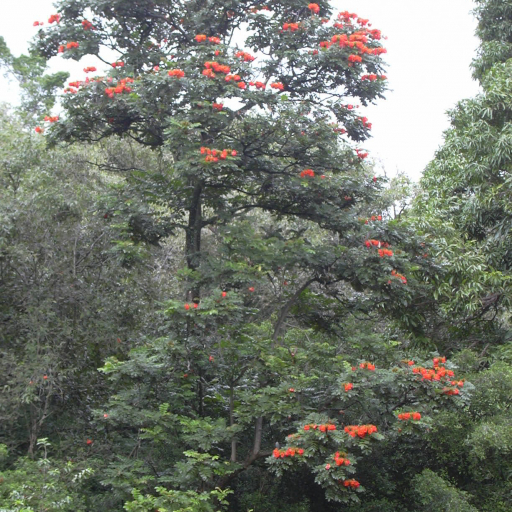
Often called the African Tulip Tree or the Flame of the Forest, this tropical giant is famous for its crown of fiery, crinkled blossoms that look like glowing embers against the sky. Native to West Africa, it has traveled the globe as a popular ornamental, though it is so vigorous that it’s considered "invasive" in many island ecosystems. It earned the nickname "Fountain Tree" because its unopened flower buds are filled with a pressurized, watery nectar that squirts out when squeezed.
🔍 How to Identify
- 🔥 The Flowers: Large, bell-shaped blooms that are typically a brilliant orange-red with a distinct yellow "fringe" or border along the ruffled petals.
- 🍃 The Foliage: Massive, bronze-to-deep-green compound leaves. Each leaf is made up of several smaller leaflets that feel slightly velvety to the touch.
- 🏺 The Buds: The flower buds are curved, bronze-colored, and grouped in heavy clusters. They are pressurized and hold a surprising amount of water before they open.
🏡 In Your Garden
- 🚀 Growth & Space: This is a "pioneer" species, meaning it grows incredibly fast. Because it can reach towering heights quickly, it is best suited for large estates rather than small suburban yards where it might shade out everything else.
- 🌬️ Brittle Beauty: While stunning, the wood is surprisingly soft and brittle. It is prone to dropping branches during heavy storms or high winds, so it shouldn't be planted too close to a house or a parked car.
- 🧹 The "Mess" Factor: Be prepared for a colorful carpet! The tree drops large volumes of nectar-filled flowers and heavy seed pods, which can be slippery on walkways and require regular cleanup.
⚠️ Safety & Toxicity
- 🐾 Status: Generally considered non-toxic to humans and common household pets like cats and dogs.
- 🦟 The "Trap" Effect: Interestingly, the flowers are known to be "entomophagous" (insect-killing). The sticky nectar can sometimes trap and kill small bees or ants, though the tree doesn't "eat" them like a Venus Flytrap—it's more of an accidental defense mechanism.
✨ Fun Fact
In its native African regions, children often use the unopened flower buds as natural water pistols. By pinching the base and squeezing the tip, they can squirt a jet of water at their friends! Additionally, the seeds are edible and are sometimes used as a food source in parts of the Caribbean.

Detailed Care Instructions
| Humidity | Normal |
| Lighting | Full Sun |
| Difficulty | Medium |
| Temperature | 26°C - 33°C |
| Hardiness Zones | 10B - 11 |
To grow Spathodea Campanulata, also known as African Tulip Tree, follow these steps:
- Climate: African Tulip Tree thrives in tropical and subtropical climates. It prefers warm temperatures ranging from 65 to 85°F (18 to 29°C). Ensure that the plant receives adequate sunlight, at least 6 to 8 hours of direct sunlight per day.
- Soil: Choose well-draining soil with a pH level of 6 to 7.5. The soil should be rich in organic matter and have good water retention capacity. If the soil in your area is heavy or clayey, improve its drainage by amending it with sand or compost.
- Planting: Dig a hole that is twice as wide and slightly deeper than the root ball of the plant. Place the plant in the hole and backfill with soil, gently firming it around the roots. Water the plant thoroughly after planting to help settle the soil.
- Watering: Spathodea Campanulata requires regular watering, especially during the first year of growth. Keep the soil moist but not waterlogged. A deep watering once or twice a week should suffice, but adjust the frequency based on your local weather conditions.
- Fertilizing: Feed the plant with a balanced slow-release fertilizer during the growing season to promote healthy growth and blooming. Follow the instructions on the fertilizer packaging for proper dosage and application.
- Pruning: Prune the tree to maintain its desired shape and remove dead or diseased branches. Prune in late winter or early spring before the new growth starts. Avoid drastic pruning as it can affect flowering.
- Mulching: Apply a layer of organic mulch around the base of the tree to conserve moisture, suppress weed growth, and regulate soil temperature. Keep the mulch a few inches away from the trunk to prevent rot.
- Pests and diseases: Monitor the tree for common pests like aphids, scale insects, or spider mites, and treat them using organic or chemical insecticides if necessary. African Tulip Tree is generally resistant to diseases, but watch out for fungal infections, especially in overly wet conditions.
Remember that patience is key when growing Spathodea Campanulata, as it can take several years to reach its full potential and start blooming.

Place in a window with dappled sun or a spot in the middle of a room. Or directly in a window facing west or east.

To water this plant, you should first check the soil for moisture by sticking a finger into the top inch of soil. If it feels dry, it is time to water. Use a watering can or hose to water the soil around the base of the plant, being careful not to wet the leaves or flowers. Water until you see the water start to run out of the bottom of the pot or until the soil feels moist to the touch. Avoid letting the soil become soggy, as this can lead to root rot. In general, this plant prefers moist but well-drained soil. Watering once a week or when the soil feels dry to the touch is typically sufficient.
To fertilize this plant, use a balanced fertilizer with equal amounts of nitrogen, phosphorus, and potassium. Apply the fertilizer around the drip line of the plant (where the leaves extend to) and mix it into the topsoil. It is important to water the plant thoroughly before and after fertilizing to prevent burning of the roots. Fertilize every two to three months during the growing season, which is typically from spring to fall. Avoid overfertilizing as this can lead to excessive growth and reduce the plant's overall health.
The optimal soil for this plant is rich in nutrients and well-draining to prevent waterlogging. It should have a pH range of 6.0 to 7.5 with a mixture of organic matter such as compost or well-rotted manure. The soil should also have good porosity, allowing air to penetrate into the soil while retaining moisture. Avoid using heavy or compacted soils that may retain water for too long, causing the roots to rot. Additionally, the soil should not have a high salt content as it can damage the plant.
Spathodea Campanulata plant can be propagated by using either stem cuttings or seeds.
To propagate the plant using stem cuttings, select a healthy stem that is at least 6 inches long. Cut the stem just below a node, and remove any leaves from the lower half of the stem. Dip the cut end of the stem into rooting hormone. Place the cutting into a pot filled with a well-draining potting mix. Water the cutting, and cover the pot with plastic to create a greenhouse effect. Keep the pot in a warm, bright spot, and mist the cutting with water every day. After about 4-6 weeks, the cutting should have roots and can be transplanted to its permanent location.
To propagate the plant using seeds, harvest the pods when they are brown and dry. Collect the seeds and soak them in warm water for 24 hours. Plant the seeds in a pot filled with a well-draining potting mix and keep the pot in a warm, bright spot. Water the seeds regularly, and after about 2-3 weeks, the seeds should start to sprout. Once the seedlings are a few inches tall, they can be transplanted to their permanent location.
Propagation of Spathodea Campanulata plant requires patience, care, and commitment. With the right conditions and care, however, the plant will thrive and bring beauty to any garden.








