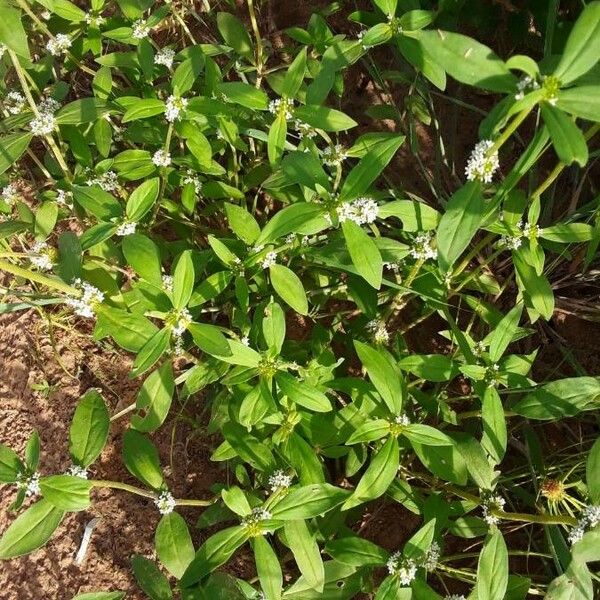
Plant Overview
Meet the Smooth Buttonweed, a humble inhabitant of the American wetlands. Often overlooked due to its tiny flowers, this plant is a master of the muddy riverbank and the damp ditch. Its botanical name, glabra, literally means "bald" or "smooth," a nod to its clean, hairless stems that distinguish it from its rugged, "rough" cousins.
🔍 How to Identify
- 🍃 Leaf Arrangement: The leaves grow in pairs directly opposite each other along the stem. They are lance-shaped, narrow, and feature prominent veins that give them a slightly quilted appearance.
- 🌼 The "Buttons": You’ll find clusters of tiny, four-petaled white flowers tucked into the axils (the "armpits" where the leaf meets the stem). These tight bunches look like miniature white buttons sewn onto the plant.
- 📏 The Stem: True to its name, the stem is hairless and smooth. While it usually grows upright, it can sometimes sprawl across the mud, creating a low-growing green mat.
🏡 In Your Garden
- 💧 The Mud Lover: If this plant pops up in your yard, it is a natural "water gauge." It thrives in soggy, poorly drained soil and is usually found near ponds, rain gardens, or low spots where water tends to sit after a storm.
- 🐝 Pollinator Support: While it isn't a showstopper for humans, it is a vital resource for the "little guys." Its nectar-rich flowers are a favorite for small native bees and delicate butterfly species that larger garden flowers might ignore.
⚠️ Safety & Toxicity
- ✅ Safe Status: Smooth Buttonweed is generally considered non-toxic to humans, cats, and dogs.
- 🌱 Foraging Note: While not poisonous, it is not considered an edible herb and has no significant history of culinary use. It is best left in the ground to support the local ecosystem.
✨ Fun Fact
The genus name Spermacoce comes from the Greek words sperma (seed) and akoke (point). This refers to the sharp, pointed capsules that hold the seeds once the "buttons" of flowers have finished blooming!

Detailed Care Instructions
To grow Spermacoce Glabra plant, follow these steps:
- Obtain seeds or cuttings: You can either buy seeds of Spermacoce Glabra from a local nursery or collect them from mature plants. Alternatively, you can also take stem cuttings from a healthy plant.
- Prepare the soil: Spermacoce Glabra prefers well-draining soil. Mix equal parts of garden soil, compost, and perlite to create a loose and fertile soil mix.
- Sow the seeds: If you are using seeds, sow them in a shallow seed tray or directly in the prepared soil. Cover the seeds with a thin layer of soil and lightly press them down.
- Watering: Keep the soil evenly moist, but not waterlogged. It's important to water regularly to ensure germination and healthy growth.
- Light and temperature: Spermacoce Glabra prefers full sun to partial shade. Place the pot or tray in a location where it receives at least 6 hours of direct sunlight. The plant thrives in warm temperatures ranging from 65°F to 80°F (18°C to 27°C).
- Transplanting: Once the seedlings are a few inches tall or the cuttings have rooted, you can transplant them into individual pots or directly into the ground. Dig a hole slightly larger than the root ball and gently place the plant in it. Fill the hole with soil and press it down lightly.
- Maintenance: Water the plants regularly, allowing the soil to dry out slightly between watering. Fertilize with a balanced liquid fertilizer every two weeks during the growing season. Remove any weeds that may compete with the plant for nutrients.
- Pruning: Spermacoce Glabra can be pruned lightly to maintain its shape and encourage bushier growth. Pruning in early spring or after flowering can stimulate new growth and enhance the plant's overall appearance.
- Pest and disease control: Monitor the plant regularly for pests such as aphids, mealybugs, or spider mites. Treat any infestation with appropriate organic insecticides or insecticidal soap. Keep an eye out for any signs of diseases like powdery mildew or leaf spot and take necessary measures to control them.
With proper care and attention, your Spermacoce Glabra plant should grow well and produce attractive clusters of flowers.

Place in a bright room that is sun drenched almost all day. Or directly in a south-facing window.

Spermacoce Glabra is best watered using a watering can or hose with a gentle stream of water. It is important to avoid getting the leaves wet as this can lead to fungal diseases. It is recommended to water deeply once a week, allowing the soil to dry out slightly between waterings. This plant prefers a well-draining soil and does not tolerate standing water. It is also important to avoid over-watering as this can cause root rot. Additionally, it is beneficial to water in the morning or evening when temperatures are cooler to prevent water loss through evaporation.
To fertilize this plant, use a balanced fertilizer with equal amounts of nitrogen, phosphorus, and potassium. Apply the fertilizer every four to six weeks during the growing season, which typically runs from spring through summer. Water the plant before and after applying the fertilizer to prevent root burn. Follow the instructions on the fertilizer package for specific application rates.
Spermacoce Glabra prefers a well-drained soil that is rich in organic matter. The soil should be slightly acidic with a pH between 6.0 and 6.5. A loamy soil texture with good water retention properties is ideal for this plant. It is also important to ensure that the soil is free of weeds and has good drainage to prevent waterlogging. Adding compost or other organic matter to the soil can improve its texture and nutrient content, which will benefit the plant's growth and development. Additionally, Spermacoce Glabra is known to prefer soil that is moderately fertile and not excessively nutrient-rich, as too much fertilizer can cause issues with growth and flowering.
Propagation of this plant can be done through stem cuttings. Take a healthy stem cutting about 6 inches in length, cutting it just below the node. Remove the lower leaves from the cutting and dip the bottom end in rooting hormone. Plant the cutting in a pot filled with moist soil, making sure to keep the soil moist but not waterlogged. Place the pot in a warm, bright spot, out of direct sunlight. The cutting should develop new roots within a few weeks, after which it can be transplanted into a larger pot or outdoors.








