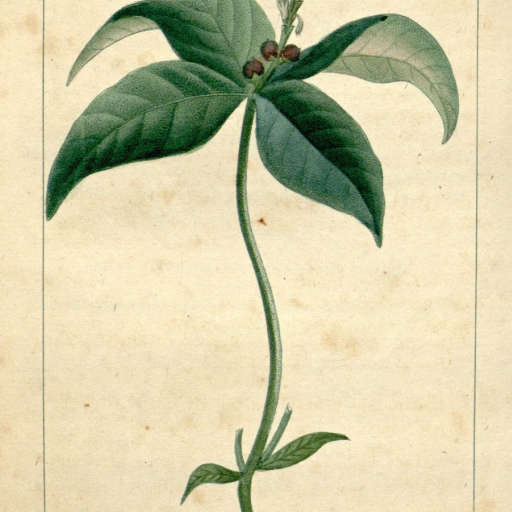
Plant Overview
Known as West Indian Pinkroot or the more ominous Wormgrass, Spigelia anthelmia is a small but potent tropical herb with a history tied to ancient medicine. While its delicate pink-and-white flowers might look charming in a humid garden, this plant carries a reputation for being as dangerous as it is useful. Native to the Caribbean and parts of South America, it has traveled the globe, often appearing as a "stealthy" visitor in tropical landscapes.
🔍 How to Identify
- 🍀 The "Whorled" Top: The most striking feature is its arrangement of leaves; at the very top of the stem, four leaves usually sit in a flat, cross-like whorl, making it easy to spot from above.
- 🌸 One-Sided Flowers: The tiny, tubular flowers are pale pink or white and grow along one side of a curved spike (a cyme), resembling a tiny, elegant toothbrush.
- 🍒 Twin Seed Pods: After flowering, it produces small, two-lobed green seed capsules that look like miniature twin globes. When dry, these pods can "explode" to scatter seeds.
🏡 In Your Garden
- 🌱 Shady Opportunist: You will rarely find this plant in harsh, direct sun. It prefers the damp, rich soils of shaded garden corners, forest floors, or the edges of cultivated fields.
- 💧 Moisture Lover: It thrives in high humidity. If you find it growing voluntarily, it’s a sign that your soil is consistently moist and nutrient-rich. It is often considered a weed because it grows rapidly from seed in disturbed tropical soils.
⚠️ Safety & Toxicity
- 🚫 Status: HIGHLY TOXIC.
- 🐾 The Danger: Every part of the West Indian Pinkroot contains the alkaloid spigeline. If ingested by pets or humans, it can cause severe symptoms including dizziness, blurred vision, heart palpitations, and even respiratory failure.
- 🧤 Handling: It is best to wear gloves when removing this plant from your garden, as the sap may cause mild skin irritation for sensitive individuals. Keep it far away from curious children and livestock.
✨ Fun Fact
The name Anthelmia comes from the Greek words "anti" (against) and "helmins" (worm). Historically, it was used by indigenous peoples and early settlers as a powerful—though incredibly risky—remedy to expel intestinal parasites. One wrong drop, however, could be fatal, earning it the nickname "Brinvilliers" in some regions, named after a notorious 17th-century French poisoner!

Detailed Care Instructions
To grow Spigelia anthelmia, also known as Carolina pinkroot or wormgrass, follow these steps:
- Climate and Soil Requirements: Spigelia anthelmia thrives in warm and humid climates. It can be grown in tropical, subtropical, and warm temperate regions. Ensure the soil is well-draining and rich in organic matter.
- Selecting a Location: Choose a location that receives partial shade to full sun. The plant prefers a few hours of direct sunlight in the early morning or late afternoon and some shade during the hottest part of the day.
- Planting: Spigelia anthelmia can be grown from seeds or cuttings. If planting from seeds, scatter them on the soil surface and lightly press them into the soil. If planting cuttings, ensure they are about 4-6 inches long and remove the lower leaves.
- Watering: Keep the soil consistently moist but not waterlogged. Water the plant deeply whenever the top inch of soil feels dry.
- Fertilizing: Apply a balanced, slow-release fertilizer once in early spring and again in mid-summer. Follow the package instructions for the appropriate dosage. Additionally, you can amend the soil with compost or well-rotted manure before planting.
- Pruning: Prune the plant regularly to maintain its shape and encourage bushier growth. Remove any dead or damaged branches. Pruning also helps prevent the plant from becoming too leggy.
- Mulching: Apply a layer of organic mulch, such as bark chips or straw, around the base of the plant to help retain moisture, suppress weed growth, and insulate the roots.
- Pests and Diseases: Spigelia anthelmia is relatively resistant to pests and diseases. However, keep an eye out for aphids, spider mites, or fungal issues. Treat them promptly with appropriate organic or chemical solutions.
- Propagation: You can propagate Spigelia anthelmia by division or by taking stem cuttings. Dividing the plant every 2-3 years helps maintain its health and vitality.
- Enjoying the Flowers: Spigelia anthelmia produces clusters of beautiful, tube-shaped pink or red flowers with yellow throats. These flowers attract hummingbirds and butterflies, adding to the charm of your garden.

Place in a bright room that is sun drenched almost all day. Or directly in a south-facing window.

To water this plant, you should keep the soil consistently moist but not waterlogged. Check the soil regularly by inserting your finger one inch deep and watering when the top inch feels dry. Use room temperature water and water slowly at the base of the plant to avoid getting water on the leaves. Avoid overwatering or allowing the soil to completely dry out.
To promote growth and blooming for this plant, it is recommended to fertilize it every 4-6 weeks during the growing season using a balanced fertilizer with equal parts of nitrogen, phosphorus, and potassium. Avoid over-fertilizing, as this can cause damage to the delicate roots. Use a liquid fertilizer and dilute it according to the package instructions. Apply the fertilizer directly to the soil around the base of the plant, making sure not to get any on the foliage. Water the plant thoroughly after fertilizing.
Spigelia Anthelmia plant prefers a well-draining and slightly acidic soil. The ideal soil pH range is between 5.5 and 6.5. A good soil mix for this plant would be a combination of peat moss, perlite or vermiculite, and sand or small stones. These ingredients will help to improve drainage and prevent the soil from becoming too compacted. It is also important to ensure that the soil is rich in organic matter, so adding some compost or well-rotted manure to the mix can be beneficial. When planting this plant, it is important to avoid burying the crown of the plant beneath the soil level.
Spigelia Anthelmia is a plant that can be propagated by seeds or cuttings. To propagate from seeds, first harvest mature seeds from the plant. Then, sow the seeds in a well-drained soil mixture and keep them moist. The seeds should germinate in about two weeks.
To propagate from cuttings, select a healthy stem from the plant that is several inches long and has several leaves attached. Cut the stem just below a node and remove the bottom couple of leaves. Then, dip the cuttings in rooting hormone and plant them in a well-drained soil mixture. Place the cuttings in a warm, moderately-lit area and keep the soil moist.
After several weeks, the cuttings should develop roots and can be transplanted into individual pots. Once the plants have established themselves and are growing well, they can be transferred to their permanent location in the garden.








