Plant Overview
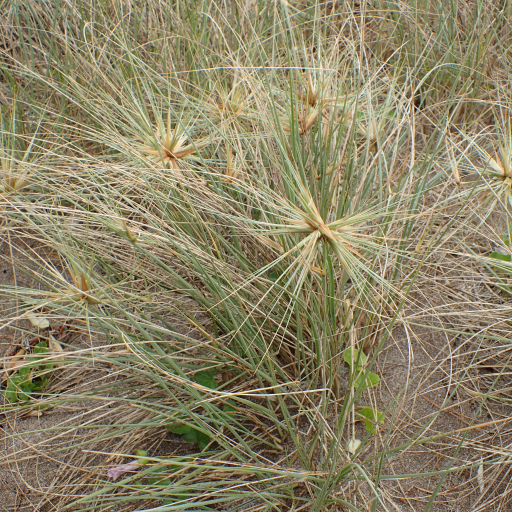
Often called the Hairy Spinifex or "Rolling Spinifex," this hardy coastal grass is the unsung hero of the shoreline. If you’ve ever walked along a beach in Australia or New Zealand and seen silver-blue tufts holding the sand together, you’ve likely met this plant. It is most famous for its dramatic, spiky seed heads that break off and cartwheel across the beach like miniature tumbleweeds.
🔍 How to Identify
- 🌾 Silvery Foliage: The leaves are a distinct grey-green or silver color, covered in fine, silky hairs that protect the plant from salt spray and intense sun.
- 🏃 Creeping Stolons: It spreads via thick, woody runners that "crawl" across the sand, often stretching for several meters to anchor the plant.
- 🎾 Spiky Spheres: The female plants produce large, globular flower heads that look like sea urchins or pincushions, while the male flowers are smaller and more cluster-like.
🏡 In Your Garden
- 🏖️ Dune Specialist: This is not a plant for a standard potting mix. It requires deep, well-draining sand and thrives in the salt-spray zone where most other plants would perish.
- 🌬️ Erosion Control: If you live on the coast, this is your best friend for stabilizing shifting sand. It is a "pioneer species," meaning it is one of the first plants to move into harsh environments to build and hold the dunes.
- 🚿 Low Maintenance: Once established, it requires almost no watering or fertilizer, as it has evolved to scavenge nutrients in the nutrient-poor seaside environment.
⚠️ Safety & Toxicity
- 🛡️ Non-Toxic: Spinifex sericeus is generally considered safe and is not known to be poisonous to humans, dogs, or cats.
- 🌵 Physical Hazard: The "spines" on the female seed heads are stiff and quite sharp. Stepping on a dried seed head barefoot or having a curious pet get one stuck in their fur can be a painful and prickly experience.
✨ Fun Fact
The female seed heads are nature’s high-tech travelers. Designed to catch the wind, they detach from the plant and "cartwheel" along the beach. As they tumble, they drop seeds into the sand, ensuring the grass can colonize new areas of the coastline.

Detailed Care Instructions

Place in a bright room that is sun drenched almost all day. Or directly in a south-facing window.

Some plants require more regular watering than others, which should be done every few days. It's critical to maintain the soil moist all of the time. The water requirements of the same plant placed in pots with varying sizes will differ. Because the water in the smaller pot evaporates faster than the water in the larger pot, it will require more watering. Regardless of pot size, the surface should constantly be maintained moist.








