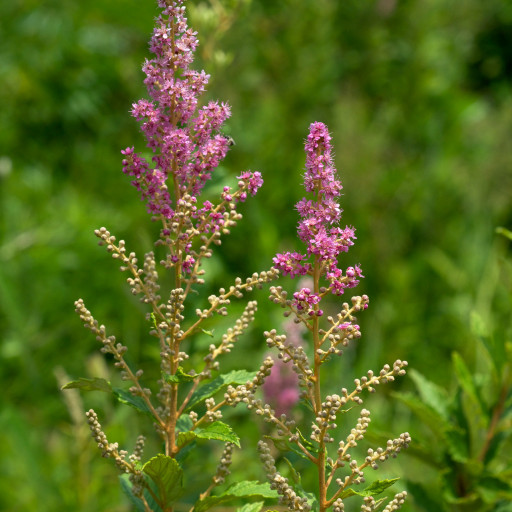
Plant Overview
Known affectionately as Steeplebush or Hardhack, this native North American beauty is a true wetland wonder. It earns its nicknames from its pointed, church-spire flower clusters and its incredibly tough, woody stems that once challenged the scythes of early farmers. If you have a soggy corner in your yard where other plants struggle with "wet feet," this resilient shrub is ready to turn that mud into a pink masterpiece.
🔍 How to Identify
- 🌸 Pink Spires: The most striking feature is its 4- to 8-inch upright, pyramidal clusters of tiny, star-shaped rose-pink flowers that uniquely bloom from the top of the spike downward.
- ☁️ Fuzzy Foliage: The undersides of the oval, serrated leaves are covered in a dense, wooly "tomentum" (tiny hairs) that can appear silvery-white or tawny brown.
- 🪵 Tough Stems: The branches are remarkably stiff, upright, and covered in a reddish-brown bark that provides structural interest even after the leaves have fallen.
🏡 In Your Garden
- 💧 Moisture Lover: Unlike many ornamental Spiraeas that require perfect drainage, Steeplebush thrives in acidic, boggy soil. It is a premier choice for rain gardens, pond edges, or low-lying areas of the landscape.
- 🦋 Pollinator Hub: Its mid-to-late summer blooming period provides a critical nectar source for swallowtail butterflies, honeybees, and specialized native bees when other spring flowers have faded.
- ✂️ Spring Grooming: Since this plant produces flowers on "new wood" (the growth of the current season), you can prune it back significantly in late winter to maintain a tidy shape without losing any of the summer display.
⚠️ Safety & Toxicity
- ✅ Non-Toxic: Spiraea tomentosa is generally considered safe and non-toxic for humans, dogs, and cats.
- 🌱 Texture Warning: While safe, the "hard" stems and fuzzy leaves aren't particularly palatable. Curious pets might find the woody texture irritating to the mouth if they try to chew on the branches, but it is not a poisoning risk.
✨ Fun Fact
The common name "Hardhack" was coined by frustrated early American settlers; the stems of the plant were so fibrous and strong that they would "hack" and dull the blades of hand-tools used to clear meadows for livestock.

Detailed Care Instructions
| Humidity | Normal |
| Lighting | Shade |
| Difficulty | Medium |
| Hardiness Zones | 3 - 8 |
To grow Spiraea tomentosa (also known as Steeplebush), you can follow these steps:
- Select a suitable location: Choose a spot in your garden that receives full sun to partial shade. The soil should be well-draining and preferably slightly acidic.
- Prepare the soil: Remove any weeds or grass from the planting area. Loosen the soil using a garden fork or tiller. Incorporate organic matter like compost or aged manure to improve soil fertility and drainage.
- Planting: Dig a hole that is slightly wider and deeper than the root ball of the Spiraea tomentosa plant. Place the plant in the hole, making sure the root ball is level with or slightly above the soil surface. Backfill the hole with soil, lightly firming it around the plant to eliminate air pockets.
- Watering: After planting, thoroughly water the Spiraea tomentosa to settle the soil around the roots. The plant prefers consistently moist soil, especially during establishment. Water it regularly, especially during dry spells, to keep the soil evenly moist.
- Mulching: Apply a layer of organic mulch around the base of the plant, keeping it a few inches away from the stem. Mulching helps retain moisture, suppress weeds, and regulate soil temperature.
- Pruning: Spiraea tomentosa benefits from yearly pruning in late winter or early spring to maintain its shape and promote healthy growth. Cut back any dead or damaged branches and shape the plant as desired.
- Fertilizing: In early spring, you can apply a balanced slow-release fertilizer according to the manufacturer's instructions to provide nutrients for the plant's growth.
- Division (optional): If your Spiraea tomentosa becomes overcrowded or you want to propagate new plants, you can divide the plant every few years in early spring. Dig up the plant, divide the root mass into smaller clumps, and replant them in prepared soil.
Remember to regularly monitor your plant's health and promptly address any issues such as pests or diseases. With proper care and maintenance, your Spiraea tomentosa should thrive and grow beautifully.

Place in a bright room that is sun drenched almost all day. Or directly in a south-facing window.

To properly water this plant, you should wait for the top layer of soil to dry out before watering again. When watering, make sure to thoroughly soak the soil with room temperature water, ensuring that the water reaches the roots of the plant. Avoid overwatering, as this can lead to root rot. If the plant is in a pot with drainage holes, allow excess water to drain out before returning it to its spot. If the plant is in the ground, make sure the surrounding soil is also moist to encourage healthy root growth.
To fertilize this plant, apply a slow-release fertilizer in early spring before new growth appears. Use a balanced fertilizer with equal parts nitrogen, phosphorus, and potassium, and follow the instructions on the package for the recommended amount to apply. Water deeply after fertilizing to ensure the nutrients reach the roots. Avoid fertilizing in late summer or fall, as this can encourage new growth that may be damaged by winter weather.
For best results, Spiraea Tomentosa plant should be planted in well-draining soil that is rich in organic matter. The pH level of the soil should be slightly acidic to neutral, with a range of 5.5 to 7.5. The soil should be kept moist, but not waterlogged, as the plant does not tolerate wet feet. Adding a layer of mulch around the plant can help retain soil moisture and suppress weed growth. Additionally, fertilizing the plant with a balanced fertilizer every spring can help promote healthy growth and blooming.
To propagate this plant, take softwood cuttings in early summer. Cut a healthy stem that is about 4-6 inches in length. Remove all the leaves from the bottom half of the cutting. Dip the cut end of the stem into a rooting hormone powder. Place the cutting into a pot filled with a mixture of sand and peat moss. Water the cutting and cover it with a clear plastic bag. Keep the pot in a bright location but out of direct sunlight. Mist the cutting every few days to keep it moist. In about 4-6 weeks, roots should start to form. When the cutting has developed a strong root system, you can transplant it into a larger container or directly into the ground.








