Plant Overview
Known as the "Field Woundwort" or the more ominous "Staggerweed," Stachys arvensis is a humble, low-creeping member of the mint family. While it lacks the fragrant punch of its peppermint cousins, it is a world traveler that has naturalized across many continents by hitching rides in grain shipments and settling quietly into garden borders.
🔍 How to Identify
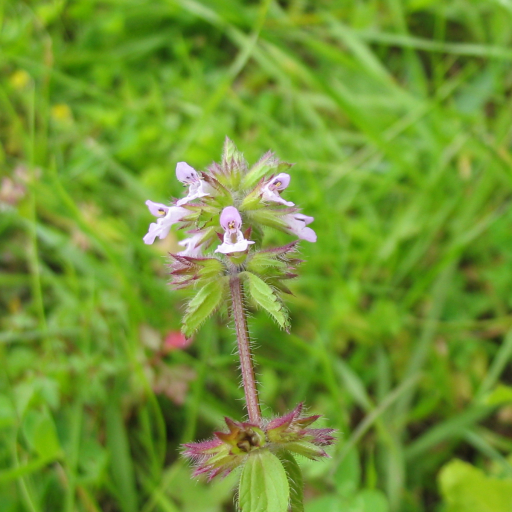
- 🌸 Petite Blooms: The flowers are tiny, tubular, and pale pink to white with delicate purple spots. They grow in small, tiered clusters called "whorls" around the upper parts of the stem.
- 🍃 Fuzzy Foliage: The leaves are heart-shaped or oval with scalloped (crenate) edges. Both the leaves and the stems are covered in soft, fine hairs, giving the plant a slightly dusty or velvety appearance.
- 📐 Square Stems: True to its heritage in the Lamiaceae family, the stems are distinctly four-sided. They are relatively weak and often sprawl across the ground rather than standing tall.
🏡 In Your Garden
- 🌱 The Opportunist: This plant is a "pioneer species," meaning it is one of the first to pop up in freshly tilled or disturbed soil. It doesn't require high-quality fertilizer and actually prefers the loose, aerated soil of flower beds or vegetable patches.
- 🌾 Persistent Seeder: As an annual, its main goal is to drop seeds quickly. Those seeds are incredibly hardy and can wait in the soil for years until conditions are just right to sprout, making it a "permanent resident" once it arrives.
⚠️ Safety & Toxicity
- 🐄 Livestock Warning: The name "Staggerweed" is a literal description of its effect on grazing animals. If sheep, goats, or cattle eat large quantities, it causes a neurological condition where they tremble and lose coordination (the "staggers").
- 🐾 Pet Safety: While humans and household pets like dogs and cats rarely ingest enough to be harmed, it should be considered potentially toxic. It is best to remove it from areas where pets might forage on greens.
✨ Fun Fact
The genus name Stachys is derived from the Greek word for "ear of grain," referring to the way the flower spikes look similar to a head of wheat or barley.

Detailed Care Instructions
To grow Stachys arvensis, also known as field woundwort, follow these steps:
- Choose a suitable location: Stachys arvensis prefers full sun to partial shade and well-drained soil. Make sure the area has good air circulation.
- Prepare the soil: Loosen the soil and remove any weeds or grass. Add organic matter such as compost to improve soil fertility and drainage.
- Planting: Sow seeds directly in the ground in early spring or early fall, or you can start seeds indoors and later transplant them. The recommended spacing is about 12-18 inches apart.
- Watering: Keep the soil moist but not waterlogged. Water regularly, especially during dry periods. Avoid overwatering, as Stachys arvensis prefers slightly dry conditions over excessive moisture.
- Fertilization: Fertilize lightly with a balanced, slow-release fertilizer in the spring. Avoid excessive fertilization, as it can promote excessive foliage growth at the expense of flower production.
- Mulching: Apply a layer of organic mulch around the plants to help conserve moisture and suppress weeds.
- Pruning: Stachys arvensis doesn't require much pruning, but you can remove any dead or damaged foliage to maintain its appearance.
- Pests and Diseases: Stachys arvensis is generally resistant to pests and diseases but may occasionally face issues like powdery mildew or aphids. Monitor the plants regularly and take appropriate measures if any problems arise.
Overall, Stachys arvensis is a fairly low-maintenance plant that should thrive with proper care and suitable growing conditions.

Place in a bright room that is sun drenched almost all day. Or directly in a south-facing window.

The most recommended way to water this plant is to use a watering can or hose with a gentle spray. Make sure the water is at room temperature and not too cold or hot. Water the soil evenly around the plant's base, making sure not to splash the leaves. Avoid overwatering, as this can lead to root rot. Check the soil's moisture level by inserting your finger into the soil about an inch deep. If the soil feels dry, it's time to water the plant. Water the plant as necessary, usually once a week, or more frequently during hot weather.
To fertilize this plant, use a balanced fertilizer, such as a 10-10-10 or 20-20-20 formula, in the spring and summer months. Apply according to package instructions, taking care not to over-fertilize as this can lead to excessive foliage growth at the expense of flowers. Water the plant thoroughly after fertilizing to ensure the nutrients reach the roots. If the plant appears stunted or lacks vigor, consider using a slow-release fertilizer or supplementing with organic matter such as compost or aged manure.
The ideal soil for this plant should have good drainage and be nutrient-rich. It should be slightly acidic with a pH level of around 6.0 to 7.0. A mixture of loamy soil and organic matter such as compost or leaf mold is recommended. The soil should be well-aerated and have good water retention. Avoid using heavy clay soils or soils with poor drainage as they can lead to root rot and other diseases. Adding perlite or sand to the soil mix can help improve drainage.
To propagate this plant, you can use stem cuttings. Select a healthy stem with several leaves and no flowers. Cut it at a 45-degree angle just below a node. Remove the lower leaves and pinch off any flower buds. Dip the cutting in rooting hormone and plant it in well-draining soil in a small pot. Water the soil and cover the pot with a clear plastic bag to create a humid environment. Place the pot in a bright spot, but not in direct sunlight. Check the soil weekly and water as needed to keep it moist. After a few weeks, you should see new growth, which indicates that the cutting has rooted. Gradually acclimate the new plant to normal conditions by removing the plastic bag for longer periods each day.








