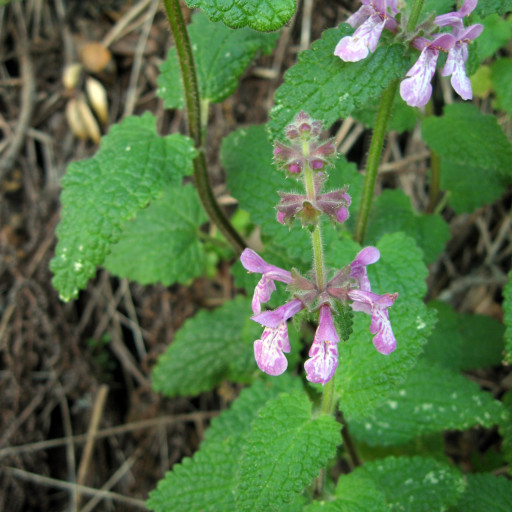
Plant Overview
Despite its name, this "nettle" is a gentle friend that won't leave you with a sting! Known as the California Hedge Nettle, Stachys bullata is a woodland sweetheart native to the coastal hills and canyons of the Golden State. It is famous for its "bullate" (puffy or blistered) leaves and a distinctive, woodsy aroma that fills the air when the sun hits its foliage.
🔍 How to Identify
- 🌿 The Leaves: The leaves are heart-shaped with scalloped edges and a deeply wrinkled, "quilted" texture that gives them a puffy appearance.
- 🟦 Square Stems: True to its membership in the Mint family, the stems are distinctly four-sided (square) and covered in fine, soft hairs.
- 🌸 Orchid-like Blooms: Tiny, two-lipped flowers appear in tiered clusters. They range from pale pink to deep magenta, often featuring delicate white "landing strip" patterns for bees.
🏡 In Your Garden
- 💧 Moisture Seeker: This plant thrives in "bright shade" and prefers soil that stays consistently moist. It is the perfect candidate for those tricky, damp corners of the garden where other plants might struggle.
- 🐝 Pollinator Magnet: While humans enjoy the scent, hummingbirds and native bees are the real fans. The tubular shape of the flowers is specifically designed for long-tongued pollinators.
- 🏃 Spreading Habit: It spreads via underground runners (rhizomes). In a garden setting, it can become a lush groundcover, but keep an eye on it if you have a very small space, as it loves to travel.
⚠️ Safety & Toxicity
- 🟢 Non-Stinging: Unlike the "True Nettle" (Urtica dioica), the California Hedge Nettle lacks stinging hairs and is perfectly safe to touch.
- 🐾 Pet & Child Friendly: This plant is generally considered non-toxic to humans, dogs, and cats. However, because it contains strong essential oils, it is not recommended for consumption as it may cause minor stomach upset if eaten in large quantities.
✨ Fun Fact
The species name bullata comes from the Latin word for "bubble" or "stud." It refers specifically to the blistered, bumpy texture of the leaves, which helps the plant maximize its surface area for photosynthesis in the dim light of the forest floor!

Detailed Care Instructions
To grow Stachys Bullata, also known as California hedge nettle, follow these steps:
- Climate: Determine if your climate is suitable for growing Stachys Bullata. It is native to California and thrives in Mediterranean-like climates with mild, wet winters and dry summers. It can also be grown as an annual in colder climates.
- Soil: Prepare well-draining soil with organic matter. Stachys Bullata prefers loamy or sandy soil.
- Light: Choose a location that receives full sun to partial shade. However, it can tolerate more shade than other Stachys varieties.
- Watering: Provide regular watering to keep the soil moist, especially during the plant's active growth period. Reduce watering during hot, dry periods.
- Planting: Sow Stachys Bullata seeds directly into the soil in early spring, as the last frost has passed. Alternatively, start seeds indoors 6-8 weeks before the expected transplanting date. Plant seeds 1/8 inch deep and keep them moist until germination occurs. Space the plants 12-18 inches apart.
- Maintenance: Keep the area around the plant weed-free to avoid competition. Mulching can help retain soil moisture and prevent weed growth.
- Pruning: Prune back Stachys Bullata after it finishes flowering to promote bushier growth and prevent self-seeding.
- Fertilization: Stachys Bullata generally does not require heavy fertilization. However, you can apply a balanced, slow-release fertilizer in early spring to encourage healthy growth.
- Pest and disease control: Monitor the plant for any signs of pests or diseases, such as aphids or powdery mildew. If necessary, treat with appropriate organic or chemical controls.
By following these steps, you can successfully grow Stachys Bullata and enjoy its lovely foliage and flowers.

Place in a window with dappled sun or a spot in the middle of a room. Or directly in a window facing west or east.

To properly water this plant, it is important to consider its specific water requirements. First, it is recommended to use a well-draining soil mix in the pot or garden bed where this plant is grown. This will prevent excess water from accumulating around the roots, which can cause them to rot. When watering, it is important to avoid getting the leaves wet, as this can increase the risk of fungal diseases.
The amount and frequency of watering will vary depending on factors such as the plant's age, size, and environmental conditions. As a general rule, it is better to water deeply and less frequently rather than giving small, frequent waterings. This will encourage the roots to grow deeper and become more resilient. During dry spells or hot weather, the plant may need more frequent watering to prevent the soil from drying out completely.
To check whether the plant needs water, you can insert a finger into the soil to a depth of about an inch. If the soil feels moist, it is not yet time to water. If it feels dry, you can water the plant until water begins to come out of the drainage holes in the pot or garden bed. After watering, wait until the soil has dried out slightly before watering again. Overwatering can be just as harmful as under-watering, so it is important to find the right balance.
To fertilize the Stachys Bullata plant, use a balanced liquid fertilizer during the growing season. Apply the fertilizer once every 2-4 weeks, depending on the plant's growth rate. Dilute the fertilizer according to the manufacturer's instructions and apply to the plant's base, avoiding foliage. Water the plant thoroughly after fertilizing. Avoid fertilizing during the winter months, when the plant is dormant.
Stachys Bullata plant thrives in well-draining soil that is rich in organic matter and nutrients. It prefers a soil pH range of 6.0 to 7.5 and requires good drainage to prevent root rot. The ideal soil type for this plant is sandy loam that is moist but not waterlogged. It is recommended to add compost or aged manure to the soil prior to planting to provide additional nutrients for the plant. It is important to avoid using heavy clay soils as it can cause the plant to struggle and not grow well. Additionally, the plant can benefit from mulching around the base of the plant to retain moisture.
- First, locate a mature plant from which you wish to propagate.
- Cut a stem from the plant that is around 4-6 inches long. Make sure the stem is healthy and has several leaves.
- Remove all the leaves from the lower half of the stem. You can do this using your fingers or a pair of scissors. Leave 2-3 leaves on the top of the stem.
- Dip the cut end of the stem into rooting hormone. This will help the new plant grow roots faster.
- Fill a small pot with a well-draining potting mix. Moisten the soil.
- Make a hole in the soil with your finger and gently insert the stem into the hole. Make sure the stem is buried up to the first set of leaves.
- Water the cutting and cover the pot with a clear plastic bag to create a humid environment.
- Place the pot in a bright location but out of direct sunlight.
- Check the soil moisture daily and water as needed. Make sure the soil does not dry out completely.
- After 2-3 weeks, gently tug on the stem to see if it has rooted. If it resists, it has likely formed roots. If it easily comes out of the soil, give it a little more time.
- Once roots have formed, remove the plastic bag and transplant the new plant into a slightly larger pot. Alternatively, you can plant it directly into the garden.








