Plant Overview
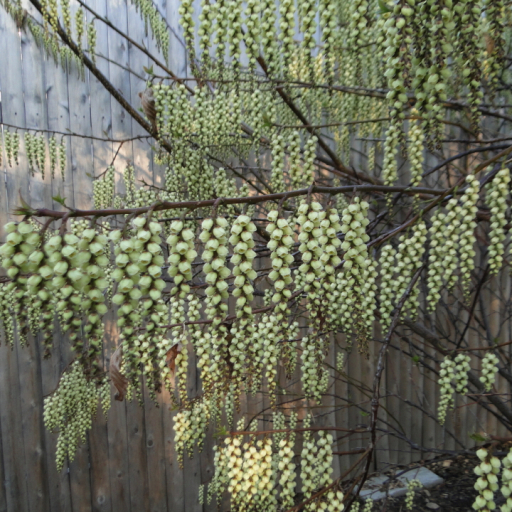
Known as the "Early Stachyurus" or "Golden-Spike," this Japanese native is a true herald of spring. While most of the garden is still shaking off the winter frost, this elegant shrub begins its performance, dripping with unique, bell-shaped flowers that look like strings of pale yellow pearls. It is highly prized by landscape designers for its architectural "fountain" shape and its ability to bloom on bare wood before any leaves appear.
🔍 How to Identify
- 🌸 The "Earring" Blooms: The most distinct feature is the 2-to-4-inch long pendulous racemes (flower spikes) that hang stiffly downward like delicate beaded necklaces.
- 🎋 Polished Stems: Even in winter, you can spot it by its arching, mahogany-red or purplish-brown stems which have a smooth, polished sheen.
- 🍃 Late-Season Foliage: After the flowers fade, large, ovate leaves with finely toothed edges emerge. These leaves often turn a lovely soft yellow or rosy-burgundy in the autumn.
🏡 In Your Garden
- 🌬️ Shelter is Key: Because it blooms so early, the delicate flower tassels are vulnerable to late frosts and "wind-burn." It performs best when tucked into a sheltered spot, such as near a woodland edge or a south-facing wall.
- 🧪 Acidic Appetites: This plant behaves much like a Camellia or Rhododendron; it craves humus-rich, acidic soil. If your soil is too alkaline, the leaves may turn yellow (chlorosis), so adding a bit of peat moss or leaf mold during planting is a wise move.
⚠️ Safety & Toxicity
- 🟢 General Status: Stachyurus praecox is considered non-toxic and is generally safe for home gardens.
- 🐾 Pets & Kids: There are no known records of this plant being poisonous to cats, dogs, or horses. However, as it is an ornamental shrub and not a food crop, it’s always best to discourage curious toddlers or pets from snacking on the foliage to avoid minor stomach upset.
✨ Fun Fact
The genus name Stachyurus is derived from the Greek words stachys (meaning "spike") and oura (meaning "tail"), which perfectly describes the way the flower clusters look like the twitching tails of golden squirrels hanging from the branches.

Detailed Care Instructions
Stachyurus Praecox, also known as Japanese Spiketail or early stachyurus, is a beautiful shrub with drooping racemes of yellow flowers that bloom in late winter or early spring. Here are some tips on how to grow Stachyurus Praecox successfully:
- Plant in the right location: Stachyurus Praecox prefers a partially shaded to full sun location with well-draining soil. It can tolerate a wide range of soil types, but prefers slightly acidic soil.
- Watering: Keep the soil consistently moist, especially during the drier months. Avoid overwatering as it can lead to root rot.
- Fertilizing: Use a balanced fertilizer in the spring to promote healthy growth and flowering.
- Pruning: Prune Stachyurus Praecox after flowering to maintain its shape and encourage new growth.
- Mulching: Apply a layer of mulch around the base of the plant to help retain moisture and suppress weeds.
- Propagation: Stachyurus Praecox can be propagated from semi-hardwood cuttings taken in the summer or by layering in the spring.
- Pests and diseases: Keep an eye out for common pests such as aphids and scale insects, and treat as needed. Avoid overhead watering to prevent fungal diseases.
By following these tips, you can successfully grow and enjoy the beautiful blooms of Stachyurus Praecox in your garden.

Place in a bright room that is sun drenched almost all day. Or directly in a south-facing window.

Stachyurus Praecox plants prefer to be watered consistently but not excessively. The soil should be kept evenly moist, but not waterlogged. It is important to water the plant at the base, avoiding wetting the foliage which can lead to fungal diseases. Watering in the morning is ideal to allow excess moisture to evaporate throughout the day and prevent issues such as root rot. During the growing season, typically spring and summer, the plant may require more frequent watering, while in the winter months it may need less water as it goes dormant. Always check the soil moisture before watering to ensure the plant's specific needs are being met.
To fertilize Stachyurus Praecox, apply a balanced, slow-release fertilizer in early spring before new growth appears. Use a fertilizer with a ratio of 10-10-10 or similar. Spread the fertilizer evenly around the base of the plant, taking care not to let it come into direct contact with the stems. Water the plant thoroughly after fertilizing to help the nutrients penetrate the soil. Repeat this fertilization process annually for optimal growth and flowering.
Stachyurus Praecox plant thrives best in well-draining, slightly acidic soil with a pH level between 5.5 and 6.5. The ideal soil type for this plant is loamy and rich in organic matter, such as compost or peat moss. It is important to avoid heavy clay or compacted soil, as it can lead to poor drainage and root rot. Additionally, adding a layer of mulch around the base of the plant can help retain moisture and suppress weeds. Overall, providing the right soil conditions will help Stachyurus Praecox plant to establish strong roots and thrive in your garden.
To propagate Stachyurus Praecox, it is best to take semi-ripe cuttings from the plant during the summer months. Select healthy stems that are not too young or too old, as these are more likely to root successfully. Cut the stems at a 45-degree angle and make sure they are about 4-6 inches long.
Remove the lower leaves from the cutting to promote root growth and dip the cut end into rooting hormone to encourage faster rooting. Plant the cutting in a well-draining potting mix, making sure to water it thoroughly and place it in a warm, bright location with indirect sunlight.
Keep the soil consistently moist but not waterlogged, and mist the cutting regularly to maintain humidity. It is important to avoid direct sunlight and excessive heat, as this can cause the cutting to dry out.
After a few weeks, check for root development by gently tugging on the cutting. If it resists pulling, it has likely formed roots and can be transplanted into a larger pot or directly into the garden.
Overall, propagating Stachyurus Praecox from cuttings is a cost-effective and reliable method to grow new plants from an existing specimen. With proper care and attention, the cutting should establish itself and grow into a healthy plant over time.








