Plant Overview
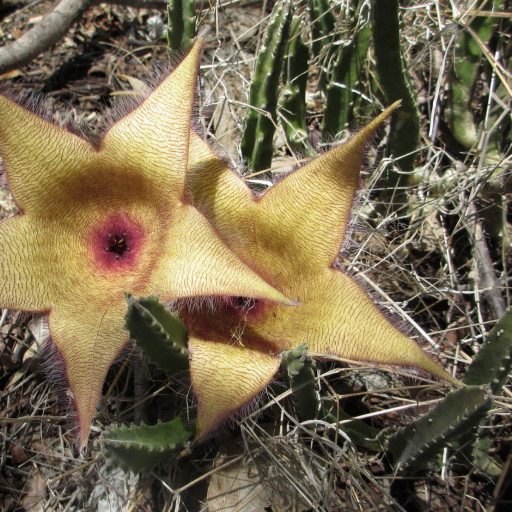
Often called the "Zulu Giant" or the "Carrion Plant," Stapelia gigantea is a master of deception. Native to Southern Africa, this succulent produces some of the largest and most dramatic flowers in the plant kingdom, looking more like a prehistoric starfish than a garden inhabitant. While it looks stunning, it has a famous secret: it attracts pollinators by mimicking the scent and appearance of decaying organic matter.
🔍 How to Identify
- 🌵 Fleshy Stems: The plant grows in clumps of upright, green, four-angled stems that lack leaves. They are velvety to the touch and can reach about 8–10 inches in height.
- 🌟 Colossal Flowers: The star-shaped blooms are the real showstoppers, reaching up to 10–14 inches in diameter. They are pale ochre or yellow, intricately patterned with thin, reddish-brown transverse lines.
- 🧶 Hairy Texture: If you look closely, the flower petals are covered in fine, silky purple hairs that ripple in the breeze, further mimicking the appearance of animal fur to deceive flies.
🏡 In Your Garden
- ☀️ Light & Resilience: While it loves bright light to trigger those massive blooms, it prefers indirect sunlight during the hottest part of the day. In its natural habitat, it often hides under the shade of larger shrubs to avoid being scorched.
- 💧 The "Drought-First" Rule: Because it is a succulent, it stores water in its stems. It is highly susceptible to root rot, so it requires exceptionally gritty, well-draining soil. It’s best to let it go completely dry in the winter when the plant enters a resting phase.
⚠️ Safety & Toxicity
- 🐾 Pet Friendly: Unlike many other succulents (like Euphorbias), Stapelia gigantea is generally considered non-toxic to cats, dogs, and horses.
- 👃 The Scent Warning: While safe to touch, be warned—when the flower opens, it emits a distinct odor of rotting meat. If you are growing it indoors, you may want to move it to a porch or balcony once it begins to bloom to avoid the "fragrance" filling your living room.
✨ Fun Fact
🪰 The Great Deceiver: The plant doesn't just smell like carrion; it looks like it too. The wrinkled texture and reddish veins are designed to convince blowflies that they’ve found a carcass. The flies are so thoroughly tricked that they often lay their eggs in the center of the flower, unintentionally pollinating the plant in the process!

Detailed Care Instructions
| Humidity | Dry |
| Lighting | Full Sun |
| Difficulty | Easy |
| Temperature | 18°C - 24°C |
| Hardiness Zones | Min 10A |
To grow Stapelia Gigantea, also known as carrion flower or starfish flower, you can follow these steps:
- Purchase or obtain a healthy plant: Look for a well-established plant from a reputable nursery or consider propagating it from cuttings.
- Choose the right container: Use a pot or container with good drainage holes as Stapelia Gigantea prefers well-drained soil.
- Select the proper soil mix: Use a cactus or succulent mix, or create your own by combining regular potting soil with sand and perlite for improved drainage.
- Planting: Place the plant in the container, ensuring that the roots are covered with soil and leaving space for growth.
- Light requirements: Stapelia Gigantea thrives in bright indirect light, so place it near a window with filtered sunlight or in a well-lit area with bright shade.
- Temperature: These plants prefer warm temperatures ranging between 65 to 85°F (18 to 29°C). Protect them from frost and cold drafts.
- Watering: Allow the soil to dry out completely between waterings. Water thoroughly and then let the excess moisture drain away. Avoid overwatering as it may cause root rot.
- Fertilizer: Use a balanced, diluted fertilizer for succulents and cacti during the growing season (spring and summer). Follow the instructions on the package for dosage and frequency.
- Pruning and maintenance: Trim off any dead or damaged stems or remove unwanted growth to maintain the desired shape.
- Pests and diseases: Inspect the plant regularly for signs of pests such as aphids, mealybugs, or scale insects. Treat infestations promptly and isolate the affected plant if needed.
- Propagation: You can propagate Stapelia Gigantea by taking stem cuttings during the growing season. Allow the cut ends to dry for a few days before planting them in a well-draining potting mix.
- Blooming and pollination: Stapelia Gigantea produces large star-shaped flowers with a strong odor resembling rotting flesh. The plant relies on flies for pollination. Be patient, as blooms may take several years to appear.
Remember to research and be aware of any specific care requirements for each specific plant species.

Place in a bright room that is sun drenched almost all day. Or directly in a south-facing window.

When watering this plant, it is important to avoid getting water on the leaves or stem as this can cause rot. Instead, direct the water towards the soil or substrate around the base of the plant. Allow the soil to dry slightly between waterings, as this plant is adapted to survive periods of drought. Use a well-draining soil mix and a pot with drainage holes to prevent waterlogged roots. Additionally, avoid overwatering as this can cause root rot and ultimately kill the plant. When in doubt, use a moisture meter to determine when it is time to water.
To fertilize this particular plant, it is best to use a balanced fertilizer with a nitrogen-phosphorus-potassium (N-P-K) ratio of 10-10-10. During the growing season, which is typically in the spring and summer months, apply the fertilizer every two to four weeks. However, during the fall and winter months, reduce the frequency to once every six to eight weeks. It is crucial not to over-fertilize as this can lead to salt build-up and harm the plant. Always follow the instructions on the fertilizer packaging and dilute it properly before application.
The ideal soil for the Stapelia Gigantea plant should be well-draining and sandy. The plant prefers soil that is slightly acidic with a pH range of 5.5 to 7.5. The soil should contain organic matter, such as compost or peat moss, to improve soil structure and nutrient availability. The plant does not tolerate heavy, compacted soils, so it is recommended to mix in some perlite or coarse sand to increase drainage and aeration. Additionally, it is important to avoid using soil that contains a high amount of clay as this can cause waterlogging and root rot. Overall, the soil used should be able to hold some moisture but not become waterlogged, and allow for good air circulation around the roots.
To propagate this plant, you will need to obtain a healthy and mature stem cutting from the original plant. Use a sharp and sterile knife or scissors to cut a stem measuring around 4 to 6 inches long, with at least a few nodes or leaf pairs intact. Allow the cut end to dry in a cool, dry place for a few days to form a dry callus.
Prepare a well-draining and nutrient-rich potting mix, using a combination of coarse sand, perlite, and peat moss in equal parts. Fill a small container, such as a 4-inch nursery pot, with the potting mix, leaving a space of about 1 inch from the rim.
Make a small hole in the center of the potting mix with a dowel or pencil, and gently insert the stem cutting into the hole. Make sure that the base of the stem is buried in the potting mix, and gently press the surrounding soil to hold it in place. Water the soil lightly, but avoid soaking it or overwatering.
Place the potted cutting in a warm and bright location, where it can receive indirect sunlight for most of the day. Avoid exposing it to direct sunlight or extreme temperatures, which can damage the young plant.
Monitor the moisture level of the potting mix, and water it only when the top inch of soil becomes slightly dry to the touch. Avoid overwatering or letting the soil sit in standing water, which can cause root rot.
After a few weeks, the stem cutting should start to develop roots and new shoot growth. Once the new plant becomes established and starts to form new leaves, you can gradually reduce the frequency of watering and start feeding it with a balanced and diluted fertilizer. With proper care, your new plant will grow into a healthy and blooming specimen of Stapelia Gigantea.
Common pests of the zulu giant include Scale insect, mealybugs, spider mites, thrips. Make a habit of checking your zulu giant frequently for pests so that any infestations can be caught and managed early.








