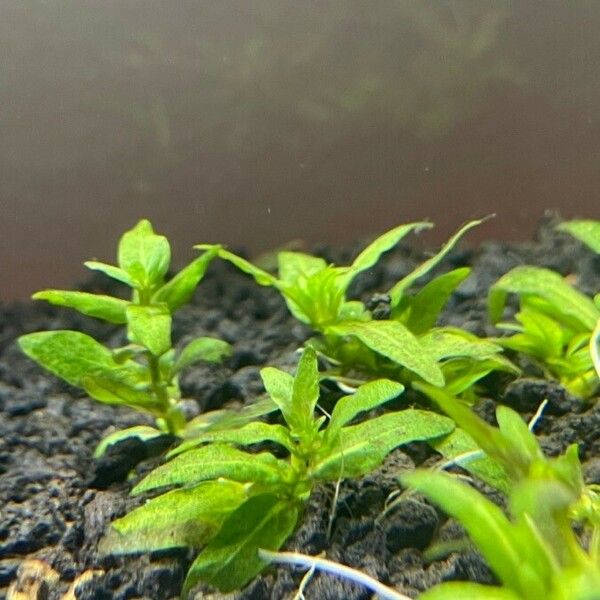
Plant Overview
Often called the "Miniature Forest Maker," Staurogyne repens is a vibrant green gem originally discovered in the rocky banks of the Rio Cristalino in the Brazilian Amazon. It has quickly become a legendary choice for aquascapers due to its ability to create lush, bushy thickets that look like tiny underwater shrubberies. Whether you are building a high-tech "nature aquarium" or a simple low-maintenance tank, this plant adds a professional, structured feel to any aquatic landscape.
🔍 How to Identify
- 🌿 Leaf Shape: It features small, oval to lance-shaped leaves that are a crisp, bright green. The leaves grow in a tight, symmetrical pattern along the stem.
- 🪵 Sturdy Stems: Unlike many delicate foreground plants, "Stauro" has relatively thick, woody stems that allow it to stand firm against water currents.
- 📏 Growth Habit: It is a creeping plant. While it can grow tall if left unpruned, its natural tendency is to spread horizontally, forming a dense, carpet-like mound.
🏡 In Your Garden (Aquarium Context)
- ✂️ The "Pinch" Technique: To keep this plant looking like a carpet, you must be brave with the scissors. By "topping" the vertical stems, you force the plant to send out lateral runners, creating a much thicker and more compact look.
- 🍽️ Root Feeding: While many aquatic plants drink from the water, Staurogyne repens is a heavy root-feeder. It thrives best when tucked into a nutrient-rich substrate or provided with "root tab" fertilizers to keep its colors vivid.
- ☀️ Light Demands: If it doesn’t get enough light, the plant will "stretch" toward the surface, losing its bushy charm. High light and a little CO2 will keep it hugging the ground and looking its best.
⚠️ Safety & Toxicity
- ✅ Fish & Shrimp Safe: This plant is 100% safe for all aquatic life. Its dense foliage provides an excellent "nursery" for baby shrimp and fry to hide from larger tank mates.
- 🐾 Pet & Child Safety: It is non-toxic to cats, dogs, and humans. However, it is strictly an ornamental plant; while it looks like a herb, it isn't meant for the dinner table!
✨ Fun Fact
Despite being one of the most popular plants in the hobby today, Staurogyne repens was a complete mystery to aquarists until 2008. It made its world debut at an international trade show and skyrocketed to fame after being used by world-class aquascapers to win prestigious layout competitions.

Detailed Care Instructions
To grow Staurogyne repens, you will need to provide it with the right conditions and proper care. Here are the steps to grow Staurogyne repens plant:
- Lighting: Staurogyne repens requires moderate to high lighting conditions. Use a full spectrum LED light or a fluorescent light with a color temperature of around 6500K. Aim for at least 8-10 hours of light per day.
- Substrate: Use a nutrient-rich substrate like soil or aquarium plant substrate for optimal growth. Staurogyne repens prefers a slightly acidic substrate.
- CO2 supplementation: Staurogyne repens will benefit from the addition of CO2 in the aquarium. If you have a planted tank setup, consider adding a CO2 system to provide carbon dioxide to the plants.
- Water conditions: Keep the water temperature between 72-82°F (22-28°C) for optimal growth. Staurogyne repens prefers slightly soft to moderately hard water with a pH range of 6-7.5.
- Fertilization: Regularly supplement the aquarium with a liquid fertilizer or root tabs to provide essential nutrients for the plant. Look for fertilizers specifically formulated for aquarium plants.
- Planting: Plant the Staurogyne repens in the substrate by gently pushing its roots into the substrate. Make sure to leave enough space between each plant to allow for growth and avoid overcrowding.
- Pruning: Regularly trim the plant to promote bushier and more compact growth. Cut off any wilted or yellowing leaves to maintain healthy foliage.
- Maintenance: Clean the aquarium regularly, removing any debris or dead plant matter. Perform regular water changes to ensure a clean and stable environment.
- Propagation: Staurogyne repens can be propagated by taking stem cuttings. Cut a healthy stem and replant it in the substrate. It will develop roots and grow into a new plant.
Remember to observe your Staurogyne repens and adjust care as needed. With proper lighting, substrate, fertilization, and regular maintenance, your Staurogyne repens plant should grow and thrive in your aquarium.
To water this particular plant, it is recommended to wait until the topsoil is dry before watering it again. When watering, it is important to aim for the base of the plant and avoid getting water on the leaves as this can cause damage and promote the growth of mold and mildew. A good way to water is to slowly pour water onto the substrate until it begins to drain from the bottom. It is important not to overwater the plant as this can lead to root rot. Additionally, it is recommended to use water that has been allowed to sit out overnight or has been treated with a dechlorinating agent as chlorine can harm the delicate roots of the plant.
- Begin by selecting a high-quality fertilizer that is specifically formulated for aquatic plants.
- Dilute the fertilizer according to the instructions on the package.
- Using a pipette, carefully add the diluted fertilizer directly into the aquarium water.
- Be sure to target the Staurogyne Repens plant carefully with the pipette to avoid over-fertilizing adjacent plants.
- Fertilize once a week, or as recommended by the fertilizer's instructions.
- Monitor the plant's growth and adjust fertilization as necessary, taking care to avoid over-fertilization which can cause algae blooms and harm aquatic life.
The ideal soil type for Staurogyne Repens plants is one that is nutrient-rich and well-draining. This plant prefers a substrate that is made up of porous, inert materials such as sand, gravel, or porous stones. The pH level of the soil should be around 6.5 to 7.5, which is slightly acidic to slightly alkaline. The soil should be aerated and loose, allowing for good root development and drainage. Adding a layer of activated carbon on the substrate is recommended to keep the water clean as well as prevent any bad odors. It is also recommended to have a layer of soil that is at least 5cm deep to provide enough root space for this plant. It is important to keep the soil moist, but not waterlogged. Overwatering may result in the plant dying off or developing root rot. As such, it is recommended to water your Staurogyne Repens plant on a regular basis, but only when the top of the soil starts to dry out. Finally, it is good practice to fertilize the soil with a good quality plant fertilizer which provides the necessary nutrients for plant growth and development.
To propagate this plant, remove a healthy stem from the parent plant with a pair of clean, sharp scissors. Make sure the stem has a few leaves on it. Cut off any unhealthy or damaged leaves. Trim the stem to about 3 inches in length.
Prepare a small container with fresh potting soil. Moisten the soil with a spray bottle or by pouring a small amount of water into the soil. Make a small hole in the soil using your finger or a pencil.
Dip the cut end of the stem into rooting hormone. This will help the plant to create roots quickly. Insert the stem into the hole you created in the soil and gently press the soil around the stem.
Place the container in a warm and bright location, but out of direct sunlight. Keep the soil moist but not waterlogged. The new plant should start to show roots within a few weeks.
Once the new plant has established roots and has started to grow new leaves, it can be transplanted into a larger pot or moved to a new location in an aquarium.








